Show all chapters ▸Hide chapters ▾
- 1PLM History 101: PDM (Part 1) - Evolution of Assembly Modeling into PDM Systems - PTC (1980s–1990s)
- 2PLM History 101: PDM (Part 2) Evolution of Assembly Modeling into PDM Systems - Unigraphics (1990s–2000s)
- 3PLM History 101: PDM (Part 3) IBM’s ProductManager and Dassault’s VPM: The CATIA Journey
- 4PLM History 101: PDM (Part 4) Mid-Market Solutions: SolidWorks PDM and Autodesk Vault (2000s)
- 5History 101: PDM (Part 5) - Dassault Systèmes VPM V5, CATIA V5, and SmarTeam in the 2000s
- 6PLM History 101: PDM (Part 6) - Toward PLM and the Digital Thread
Key Takeaways
- SmarTeam targeted mid-market businesses
- SmarTeam integrated with CATIA V5
- PDM expanded to workgroup scale
- ENOVIA VPM rebranded from IBM ProductManager
- Assembly relationships managed in database
🎧 Audio Version
Listen to "History 101: PDM (Part 5) - Dassault Systèmes VPM V5, CATIA V5, and SmarTeam in the 2000s"
More audio articles at DemystifyingPLM/listen
Short Answer
SmarTeam was a mid-market PDM solution that complemented Dassault's VPM V5 by offering affordability and ease of use for smaller enterprises. It ran on Windows with SQL, targeting SolidWorks users and CATIA V5 users needing basic PDM functionalities.
- Dassault acquired 75% stake in Smart Solutions in early 1999
- SmarTeam was positioned for SolidWorks users and small manufacturing businesses
- It provided an affordable alternative to VPM V5
- SmarTeam ran on Windows with a SQL database
Why it matters: For PLM practitioners, SmarTeam expanded Dassault's market reach by providing a cost-effective PDM solution that could be easily integrated into existing workflows.
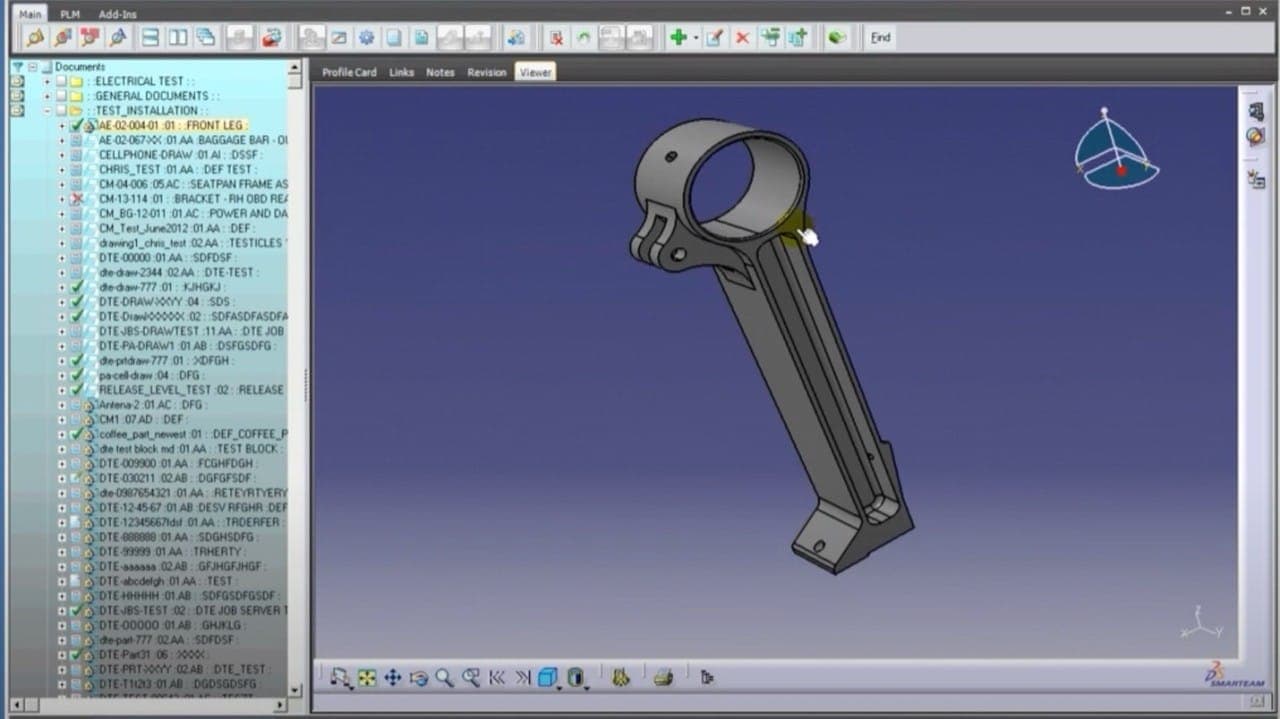
While VPM V5 targeted the high end (large enterprises with CATIA V5), Dassault also had a mid-market strategy. In early 1999, they acquired a 75% stake in an Israeli company called Smart Solutions, whose product SmarTeam was a more affordable, department-level PDM. Initially, SmarTeam was positioned for SolidWorks users (Dassault had bought SolidWorks in 1997) and smaller manufacturing businesses. Over time, SmarTeam also became an option for CATIA V5 users who needed PDM but perhaps not the full complexity of VPM. SmarTeam ran on Windows with a SQL database and had a reputation for being easier to deploy. It could manage CATIA V5’s CATParts and CATProducts in a simpler way, offering check-in/check-out, version control, and basic BOM management. IBM (which remained Dassault’s distribution partner) ended up selling both ENOVIA VPM and SmarTeam: ENOVIA for the big accounts and SmarTeam for mid-size ones. This two-tier approach showed how PDM had expanded – it was no longer one-size-fits-all but tailored to enterprise scale or workgroup scale.
By the end of the 1990s, the CATIA ecosystem had fully embraced PDM as a core component. The transition from IBM ProductManager to Dassault’s ENOVIA VPM was more than just a rebranding; it symbolized the merging of CAD and PDM into an integrated solution. Assemblies in CATIA could now be managed through their entire lifecycle: from initial design in CATIA, to iterative changes with check-in/check-out, to formal release with a controlled BOM and change process. The assembly relationships (which parts are used where, in what position, in which configuration) became tightly woven into the database, rather than being an afterthought. This integration laid a foundation for the 2000s, where such PDM systems would further evolve into full-fledged PLM platforms.
Show all chapters ▸Hide chapters ▾
- 1PLM History 101: PDM (Part 1) - Evolution of Assembly Modeling into PDM Systems - PTC (1980s–1990s)
- 2PLM History 101: PDM (Part 2) Evolution of Assembly Modeling into PDM Systems - Unigraphics (1990s–2000s)
- 3PLM History 101: PDM (Part 3) IBM’s ProductManager and Dassault’s VPM: The CATIA Journey
- 4PLM History 101: PDM (Part 4) Mid-Market Solutions: SolidWorks PDM and Autodesk Vault (2000s)
- 5History 101: PDM (Part 5) - Dassault Systèmes VPM V5, CATIA V5, and SmarTeam in the 2000s
- 6PLM History 101: PDM (Part 6) - Toward PLM and the Digital Thread
Looking up PLM terminology? Browse the canonical reference.
PLM Glossary →Cite this article
Finocchiaro, Michael. “History 101: PDM (Part 5) - Dassault Systèmes VPM V5, CATIA V5, and SmarTeam in the 2000s.” DemystifyingPLM, July 9, 2025, https://www.demystifyingplm.com/history-101-pdm-part5-dassault-systemes-vpm-v5-catia-v5-and-smarteam-in-the-2000s
Michael Finocchiaro (opens in a new tab)
PLM industry analyst · 35+ years at IBM, HP, PTC, Dassault Systèmes
Firsthand knowledge of the evolution from early 3D modeling kernels to today's cloud-native platforms and agentic AI — the history, strategy, and future of PLM.
Related Articles
PLM History 101: PDM (Part 6) - Toward PLM and the Digital Thread
Aug 3, 2025 · 4 min read
PLM History 101: PDM (Part 4) Mid-Market Solutions: SolidWorks PDM and Autodesk Vault (2000s)
Jul 25, 2025 · 4 min read
PLM History 101: PDM (Part 2) Evolution of Assembly Modeling into PDM Systems - Unigraphics (1990s–2000s)
Jul 9, 2025 · 3 min read