Show all chapters ▸Hide chapters ▾
- 1PLM History 101: PDM (Part 1) - Evolution of Assembly Modeling into PDM Systems - PTC (1980s–1990s)
- 2PLM History 101: PDM (Part 2) Evolution of Assembly Modeling into PDM Systems - Unigraphics (1990s–2000s)
- 3PLM History 101: PDM (Part 3) IBM’s ProductManager and Dassault’s VPM: The CATIA Journey
- 4PLM History 101: PDM (Part 4) Mid-Market Solutions: SolidWorks PDM and Autodesk Vault (2000s)
- 5History 101: PDM (Part 5) - Dassault Systèmes VPM V5, CATIA V5, and SmarTeam in the 2000s
- 6PLM History 101: PDM (Part 6) - Toward PLM and the Digital Thread
Key Takeaways
- IBM ProductManager managed revisions and changes for CATIA
- Dassault acquired IBM’s ProductManager in 1998 for $45 million
- CATIA V5 introduced .CATPart and .CATProduct file types
- VPM V4 rebranded as part of ENOVIA after acquisition
- ENOVIA focused on expanding PDM into full PLM
🎧 Audio Version
Listen to "PLM History 101: PDM (Part 3) IBM’s ProductManager and Dassault’s VPM: The CATIA Journey"
More audio articles at DemystifyingPLM/listen
Short Answer
IBM's ProductManager and Dassault Systèmes' CATIA were pivotal in the 1990s for PLM, with ProductManager handling revisions and configurations while CATIA managed CAD data. Their integration allowed for robust product lifecycle management.
- ProductManager handled revisions and configurations
- CATIA excelled in managing CAD assemblies
- Integration between both systems was crucial
- Supported aerospace and automotive industries
Why it matters: Understanding these tools is essential for PLM practitioners to grasp the evolution of integrated PLM solutions.
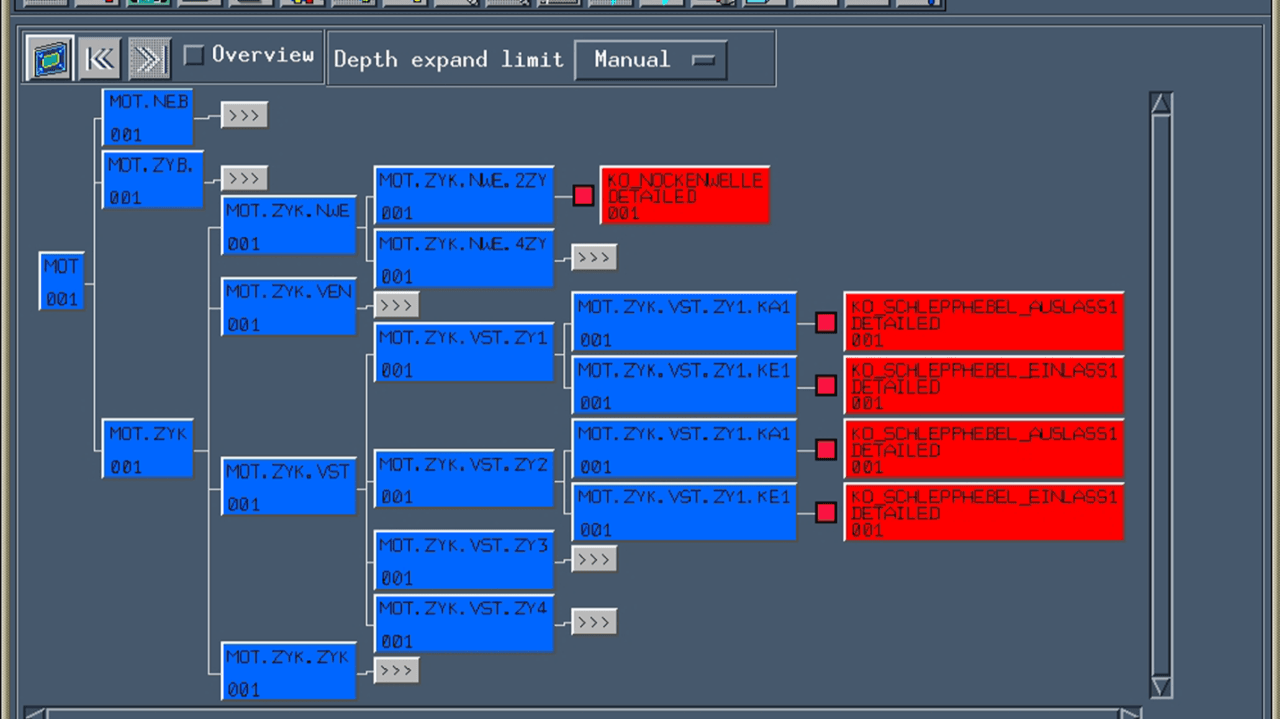
No discussion of 1990s PDM would be complete without IBM and Dassault Systèmes, the team behind CATIA. CATIA was a dominant CAD system in aerospace and automotive, known for handling massive assemblies (airplanes, for instance!). In the early ’90s CATIA (then in Version 4) had basic assembly management through its CAD interface – the CATIA Data Management (CDM) module could represent a product structure graphically. However, managing revisions, configurations, and changes for CATIA data was the domain of IBM’s separate PDM product called ProductManager. IBM ProductManager was essentially a database application that handled Configuration Management and change control for CATIA users. One could think of it as the back-end vault complementing CATIA’s front-end assembly design. By the mid-90s, a CATIA user would use CDM to build an assembly (hierarchy of parts), and ProductManager to formalize that assembly into a controlled BOM, manage part numbers, track who checked out what, and run engineering change workflows.
IBM ProductManager evolved through the 1990s and started adopting more modern tech – by 1996–97 it even added a Java-based web browser client, presaging web-driven PDM for CATIA users. Even so, by the late ’90s IBM and Dassault faced criticism that their PDM offerings were “mediocre” compared to rivals like Metaphase. In 1998, a pivotal change occurred: Dassault Systèmes (which had spun off from the aviation parent and gone public) decided to take direct control of the PDM side. In February 1998, Dassault announced a new PLM business unit named ENOVIA, based in the U.S., and hired IBM’s own Joel Lemke (head of IBM’s manufacturing software division) to run it. At the same time, Dassault acquired IBM’s ProductManager software for $45 million, including its development team. This move effectively transferred the heart of CATIA’s PDM into Dassault’s hands and signaled that Dassault was serious about enterprise data management. ENOVIA (the brand name was born with this acquisition) would focus on expanding PDM into full PLM (Product Lifecycle Management).
Under ENOVIA, the old ProductManager was rebranded and modernized. In the late CATIA V4 era, the solution became known as VPM (Virtual Product Model or Product Manager) V4, continuing to serve large customers in automotive/aerospace who were using CATIA V4. But the biggest change was on the horizon: CATIA V5. Launched in 1999, CATIA V5 was a complete rewrite of CATIA, built on a new architecture, with Windows support and a more object-oriented data model. CATIA V5 introduced the concept of separate file types for parts and assemblies: a .CATPartfile for each part, and a .CATProduct file defining an assembly of parts (and sub-assemblies). This was a departure from CATIA V4 (which stored 3D geometry in monolithic model files or required add-on structure files). The new CATPart/CATProduct scheme meant that an assembly was a collection of links to many lightweight part files, rather than one huge file. Managing these links and files was a task tailor-made for PDM.
Show all chapters ▸Hide chapters ▾
- 1PLM History 101: PDM (Part 1) - Evolution of Assembly Modeling into PDM Systems - PTC (1980s–1990s)
- 2PLM History 101: PDM (Part 2) Evolution of Assembly Modeling into PDM Systems - Unigraphics (1990s–2000s)
- 3PLM History 101: PDM (Part 3) IBM’s ProductManager and Dassault’s VPM: The CATIA Journey
- 4PLM History 101: PDM (Part 4) Mid-Market Solutions: SolidWorks PDM and Autodesk Vault (2000s)
- 5History 101: PDM (Part 5) - Dassault Systèmes VPM V5, CATIA V5, and SmarTeam in the 2000s
- 6PLM History 101: PDM (Part 6) - Toward PLM and the Digital Thread
Looking up PLM terminology? Browse the canonical reference.
PLM Glossary →Cite this article
Finocchiaro, Michael. “PLM History 101: PDM (Part 3) IBM’s ProductManager and Dassault’s VPM: The CATIA Journey.” DemystifyingPLM, July 9, 2025, https://www.demystifyingplm.com/plm-ibms-productmanager-and-dassaults-vpm-the-catia-journey-part-3a
PLM industry analyst · 35+ years at IBM, HP, PTC, Dassault Systèmes
Firsthand knowledge of the evolution from early 3D modeling kernels to today's cloud-native platforms and agentic AI — the history, strategy, and future of PLM.
Related Articles
PLM History 101: PDM (Part 6) - Toward PLM and the Digital Thread
Aug 3, 2025 · 4 min read
PLM History 101: PDM (Part 4) Mid-Market Solutions: SolidWorks PDM and Autodesk Vault (2000s)
Jul 25, 2025 · 4 min read
History 101: PDM (Part 5) - Dassault Systèmes VPM V5, CATIA V5, and SmarTeam in the 2000s
Jul 9, 2025 · 1 min read