
MCAD Platform Timelines
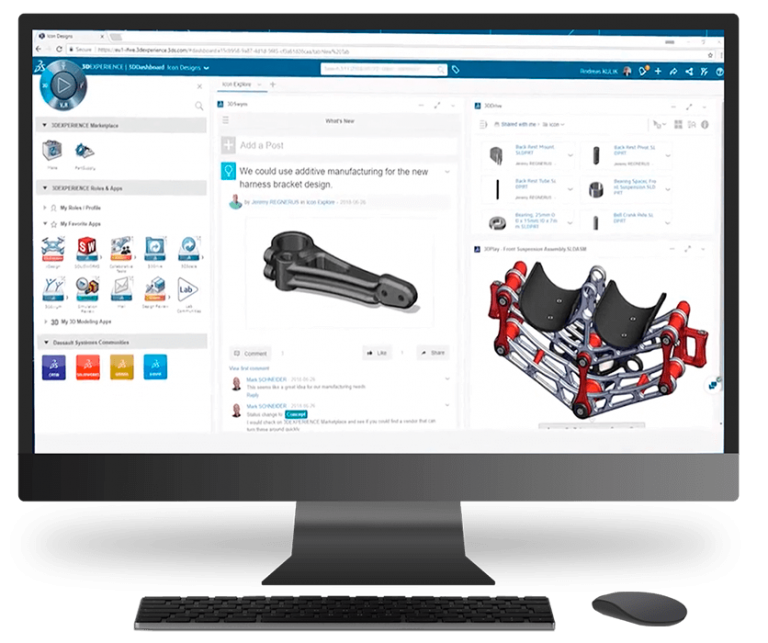
CATIA Timeline
1977 - Initial development begins at Avions Marcel Dassault for internal aircraft design needs
1981 - CATIA V1 released commercially, first 3D CAD system with surface modeling capabilities
1984 - CATIA V2 introduced with improved surface modeling and drafting capabilities
1988 - CATIA V3 launched with solids modeling and advanced surfacing tools
1992 - CATIA V4 released with parametric modeling and feature-based design
1993 - Dassault Systèmes spun off from Dassault Aviation as independent software company
1995 - Strategic partnership with IBM for global distribution and support
1998 - CATIA V5 released - major architecture overhaul with hybrid modeling, knowledge-based engineering
2000 - Introduction of DMU (Digital Mock-Up) capabilities in V5
2002 - CATIA V5 R12 adds advanced surfacing and generative shape design
2004 - Product Lifecycle Management (PLM) integration with ENOVIA
2008 - CATIA V6 released with unified PLM platform architecture
2010 - 3DEXPERIENCE platform launch integrating CATIA with social collaboration
2012 - CATIA V6 R2013x with enhanced simulation and analysis tools
2014 - CATIA on 3DEXPERIENCE cloud platform introduced
2016 - CATIA V5-6R2017 with improved performance and usability
2018 - xGenerative Design app launched for topology optimization
2019 - CATIA V5-6R2020 with enhanced virtual reality integration
2020 - 3D Sculptor role introduced for subdivision surface modeling
2021 - CATIA V5-6R2022 with AI-powered design assistance
2022 - Enhanced cloud collaboration and real-time design review capabilities
2023 - CATIA V5-6R2024 with advanced materials simulation
2024 - Integration with generative AI for design automation
Siemens NX Timeline
1973 - Unigraphics development begins at McDonnell Douglas for aerospace applications
1975 - Unigraphics V1 released as one of first commercial 3D CAD systems
1983 - Unigraphics V7 introduces parametric modeling capabilities
1986 - Electronic Data Systems (EDS) acquires Unigraphics from McDonnell Douglas
1990 - Introduction of feature-based modeling in Unigraphics V10
1995 - Unigraphics V13 with advanced surfacing and manufacturing capabilities
1997 - I-deas acquired by EDS, beginning integration with Unigraphics
1999 - Unigraphics V16 with synchronized technology and constraint-based assembly
2002 - Siemens acquires EDS PLM business including Unigraphics and I-deas
2007 - NX 5 released - unified platform combining Unigraphics and I-deas technologies
2008 - NX 6 introduces HD-PLM (High Definition PLM) integration with Teamcenter
2009 - NX 7 with synchronous technology for direct and parametric modeling
2011 - NX 8 adds advanced simulation and validation capabilities
2012 - NX 8.5 with enhanced manufacturing and tooling solutions
2014 - NX 10 introduces convergent modeling for hybrid geometry
2015 - NX 11 with additive manufacturing support and generative design
2017 - NX 12 adds artificial intelligence and machine learning capabilities
2018 - NX 1847 with cloud-connected design and collaboration tools
2019 - NX 1926 introduces continuous release model with bi-annual updates
2020 - NX 2007 with enhanced simulation and virtual reality integration
2021 - NX 2206 adds sustainability analysis and eco-design tools
2022 - NX 2306 with AI-powered design optimization and automation
2023 - NX 2312 introduces advanced materials modeling and multi-physics simulation
2024 - NX 2406 with enhanced cloud capabilities and real-time collaboration
PTC Creo Timeline
1985 - Pro/ENGINEER development begins at Parametric Technology Corporation (PTC)
1987 - Pro/ENGINEER 1.0 released - first fully parametric, feature-based CAD system
1990 - Pro/ENGINEER 2.0 introduces assembly modeling and advanced surfacing
1993 - Pro/ENGINEER 3.0 adds manufacturing and NC programming capabilities
1996 - Pro/ENGINEER 18 with improved user interface and performance
1998 - Pro/ENGINEER 2000i introduces internet-enabled collaboration features
2000 - Pro/ENGINEER 2001 with enhanced assembly management and large assembly support
2002 - Pro/ENGINEER Wildfire 1.0 - major interface redesign and usability improvements
2004 - Pro/ENGINEER Wildfire 2.0 with behavioral modeling and advanced simulation
2006 - Pro/ENGINEER Wildfire 3.0 adds direct modeling capabilities
2008 - Pro/ENGINEER Wildfire 4.0 with enhanced rendering and visualization
2010 - Creo Elements/Pro (Pro/ENGINEER Wildfire 5.0) - transition branding begins
2011 - Creo 1.0 released - unified suite replacing Pro/ENGINEER product line
2012 - Creo 2.0 with direct and parametric modeling integration
2014 - Creo 3.0 introduces smart connected design and IoT integration
2016 - Creo 4.0 with additive manufacturing, augmented reality, and smart connected design
2017 - Creo 5.0 adds topology optimization, multibody design, and advanced simulation
2019 - Creo 6.0 with real-time simulation, generative design, and enhanced ergonomics
2020 - Creo 7.0 introduces model-based definition improvements and manufacturing enhancements
2021 - Creo 8.0 with composites design, simulation-driven design, and enhanced collaboration
2022 - Creo 9.0 adds sustainability analysis and advanced materials modeling
2023 - Creo 10.0 with AI-powered design assistance and cloud collaboration
2024 - Creo 11.0 introduces enhanced generative design and multi-CAD collaboration
SolidWorks Timeline
1993 - SolidWorks development begins with founding by Jon Hirschtick
1995 - SolidWorks 95 released - Windows-native parametric solid modeling CAD
1997 - Dassault Systèmes acquires SolidWorks Corporation
1998 - SolidWorks 98 introduces assembly modeling and improved performance
1999 - SolidWorks 99 adds advanced surfacing and sheet metal design
2000 - SolidWorks 2001 with configurations and design tables
2001 - SolidWorks 2001 Plus introduces PhotoWorks rendering and animation
2003 - SolidWorks 2004 with assembly performance improvements and large assembly support
2005 - SolidWorks 2006 adds integrated simulation (COSMOSWorks) and design validation
2007 - SolidWorks 2008 introduces instant3D direct editing and enhanced visualization
2009 - SolidWorks 2010 with sustainability analysis and eco-design tools
2010 - SolidWorks 2011 adds large assembly performance improvements
2012 - SolidWorks 2013 introduces conceptual design tools and enhanced user experience
2014 - SolidWorks 2015 with touch interface support and enhanced modeling tools
2015 - SolidWorks 2016 adds advanced mate types and enhanced simulation
2017 - SolidWorks 2018 introduces topology optimization and 3D printing improvements
2018 - SolidWorks 2019 with enhanced performance and cloud-connected design
2019 - SolidWorks 2020 adds advanced graphics performance and user experience improvements
2020 - SolidWorks 2021 introduces enhanced collaboration tools and cloud storage integration
2021 - SolidWorks 2022 with graphics improvements and enhanced simulation capabilities
2022 - SolidWorks 2023 adds large assembly performance enhancements and new modeling tools
2023 - SolidWorks 2024 introduces AI-powered design assistance and enhanced collaboration
2024 - SolidWorks 2025 with cloud-based collaboration and real-time design review
Solid Edge Timeline
1995 - Solid Edge V1 developed by Intergraph Corporation
1996 - Solid Edge V2 with enhanced modeling and assembly capabilities
1998 - Solid Edge V5 introduces ordered and synchronous modeling technologies
2000 - Solid Edge V8 with improved performance and large assembly support
2001 - Unigraphics Solutions (UGS) acquires Solid Edge from Intergraph
2002 - Solid Edge V12 with enhanced sheet metal and weldment design
2004 - Solid Edge V16 introduces Insight technology for design management
2005 - Solid Edge V17 with improved simulation and analysis capabilities
2007 - Siemens acquires UGS, bringing Solid Edge under Siemens portfolio
2008 - Solid Edge with synchronous technology - breakthrough direct/parametric hybrid modeling
2009 - Solid Edge ST2 with enhanced synchronous technology and assembly modeling
2011 - Solid Edge ST4 with cloud-based collaboration and mobile access
2012 - Solid Edge ST5 introduces keyshot rendering and enhanced visualization
2014 - Solid Edge ST7 with convergent modeling for handling mesh data
2015 - Solid Edge ST8 adds technical publications and 2D nesting capabilities
2017 - Solid Edge ST10 with reverse engineering and generative modeling
2018 - Solid Edge 2019 introduces additive manufacturing design and validation
2019 - Solid Edge 2020 with artificial intelligence and machine learning integration
2020 - Solid Edge 2021 adds cloud collaboration and real-time design review
2021 - Solid Edge 2022 with enhanced simulation and multi-physics analysis
2022 - Solid Edge 2023 introduces AI-powered design optimization
2023 - Solid Edge 2024 with advanced materials modeling and sustainability analysis
2024 - Solid Edge 2025 adds enhanced cloud capabilities and collaborative design tools
Autodesk Inventor Timeline
1996 - Inventor development begins at Autodesk as "Project Rubicon"
1999 - Autodesk Inventor 1.0 released - parametric 3D mechanical design software
2000 - Inventor 3.0 with enhanced assembly modeling and constraint capabilities
2001 - Inventor 4.0 introduces iFeatures and advanced part modeling
2002 - Inventor 5.0 adds sheet metal design and weldment capabilities
2003 - Inventor 6.0 with frame generator and enhanced simulation tools
2004 - Inventor 7.0 introduces design accelerators and standard parts libraries
2005 - Inventor 8.0 with plastic part modeling and mold design tools
2006 - Inventor 9.0 adds routed systems (piping, tubing, electrical)
2007 - Inventor 2008 with enhanced visualization and assembly performance
2008 - Inventor 2009 introduces direct editing and flexible modeling
2009 - Inventor 2010 with parametric and direct modeling integration
2010 - Inventor 2011 adds fusion technology and multi-body part modeling
2012 - Inventor 2013 with enhanced simulation and finite element analysis
2013 - Inventor 2014 introduces model states and enhanced large assembly support
2015 - Inventor 2016 with shape generators and advanced surfacing capabilities
2016 - Inventor 2017 adds McMaster-Carr integration and enhanced collaboration
2017 - Inventor 2018 with generative design and topology optimization
2018 - Inventor 2019 introduces cloud rendering and enhanced mobile access
2019 - Inventor 2020 with AI-powered design automation and enhanced simulation
2020 - Inventor 2021 adds cloud collaboration and real-time design review
2021 - Inventor 2022 with enhanced performance and user experience improvements
2022 - Inventor 2023 introduces advanced materials modeling and sustainability tools
2023 - Inventor 2024 with AI-enhanced design assistance and cloud integration
2024 - Inventor 2025 adds enhanced collaboration tools and real-time co-authoring