
About the guest
Ross Meyercord is CEO of Propel Software with experience at Accenture and Salesforce. Kishore Subramanian is CTO of Propel Software from Google and Agile Software.
Episode summary
The episode titled "Agentic PLM: The Next Frontier — with Propel Software" delves into the future of Product Lifecycle Management (PLM) and how artificial intel
Key takeaways
- →Unified platform for better decision-making
- →AI automates PLM tasks, improves user experience
- →Agentic systems manage data autonomously
- →PLM as a single source of change
- →Intelligent integration essential for productivity
Topics discussed
Episode Summary
The episode titled "Agentic PLM: The Next Frontier — with Propel Software" delves into the future of Product Lifecycle Management (PLM) and how artificial intelligence is reshaping this landscape. Hosted by Michael Finocchiaro, the podcast features Ross Meyercord, CEO of Propel Software, and Kishore Subramanian, CTO of Propel. Both guests bring extensive experience in manufacturing software and AI, with Meyercord's background at Accenture and Salesforce, and Subramanian’s history at Google and Agile Software. They discuss how modern PLM systems need to integrate seamlessly with various engineering tools and data sources, leveraging artificial intelligence to enhance collaboration and efficiency.
Key insights from the conversation include the importance of a unified platform that can aggregate data from multiple sources for better decision-making and the role of AI in automating tasks and improving user experience. Meyercord and Subramanian emphasize the need for PLM solutions to act as a single source of change, ensuring consistency across different engineering tools and platforms.
For PLM and engineering professionals, the episode highlights that the future of PLM lies in adopting agentic systems that can autonomously manage data and processes, reducing redundancy and improving overall productivity. This shift towards more intelligent and integrated PLM solutions is crucial for staying competitive in today’s rapidly evolving manufacturing landscape.
Full Transcript
Michael FinocchiaroHello and welcome to today's edition of the AI Across the Product Lifecycle podcast. I'm Michael Fenicara, your host, and I'm glad today to welcome the CEO of Propel Software, Ross Meyercourt and Kishore Subramanian of ⁓ the CTO of Propel. ⁓ Thanks guys for joining. This is fantastic. I'm looking forward to this conversation. ⁓ Well, Ross, do want to introduce yourself?
Kishore SubramanianThat's right.
Ross MeyercordSure, great to be here. Thanks for having us. We're really excited to talk about what we're up to here at Propel. So Ross Meierkort, I'm CEO of Propel. I've been here for three years running the company. In my background, I started working at Accenture, working with a lot of our great manufacturing companies here in North America, and ironically was doing a lot of PLM implementations back when...
Michael Finocchiaroyou
Ross MeyercordIt was a metaphase and early days of windchill and those those solutions. it went on my career at Accenture, worked at Salesforce for a number of years. I was the CIO there running all the internal ⁓ systems and really helping Salesforce scale up with an all cloud architecture. Spent five years and running sales teams in the cloud environment. And then that kind of brought me to propel bringing together my love of manufacturing and software and bringing those two things together in a modern architecture.
Michael FinocchiaroVery cool. A key show.
Kishore SubramanianYeah, so yeah, I'm Kishore Subramanian, CTO here at Propel, joined around seven years ago. It's been a fun journey so far. So prior to this, was at Google for almost seven years, I've been writing and implementing software and building cool things for pretty much my entire career. My connection back to PLM, apart from Propel, obviously, is that I was at Agile Software between 99 and 2000. in almost 2006, I just left right before the acquisition by Oracle. So the good days, the hey days of Agile. So no, back then, obviously, it was the beginning of the internet era, pretty much like what we are going through now with the AI era, right? So ⁓ Agile, so I was instrumental and led the team in actually building Agile's, was then called the web client. Back then, they did have a Java client and a Windows client.
Michael FinocchiaroHahaha Right. That's a pillow.
Kishore Subramanianthis was the web client, it supposed to be a lightweight client. However, that became eventually, as we know, the main and the only way to actually access Agile. So in many ways, ⁓ I'm happy to see that the product has stayed for 26 plus years now since I started working on it. Very proud to see that. ⁓ But also, ⁓ it's time to move on. And ⁓ we're bringing all that experience to Propel and I'm happy to share more.
Michael Finocchiarobut Fantastic. Yeah, it's interesting too to see the common origins of some of these things, right? mean, Martin Eigner starts everything and then some guys go off and create Agile and that gets, some of those guys go off and do Eris and then eventually they go off and do Propel, right? So I mean, all of that kind of comes from the same group of either Germans or Americas or California. ⁓
Kishore SubramanianNo. That's true.
Michael FinocchiaroSo that's, that's really exciting. So I'm, we wanted to talk a bit about the journey of AI, ⁓ and well, this whole cycle of podcasts has been on that. And we wanted to focus on propel today and AI. ⁓ I want to just personally, so, you know, the chat GPT revolution came in late 22, early 23, ⁓ none of us, a lot of us had never heard of LLM's before we knew it AI existed. We knew there was a list language, but it was just machine learning at the time. And It's been a bit of a crazy ride for a while. did you know how, Kishore, like in 2023, 2022, when you first heard about it, were you like super bullish on what it could do or were you a bit like wait and see? I how did you feel about it in terms of the hype versus the reality of it?
Kishore SubramanianRight. I was fortunate enough to be in Google in the 2010s, if you will. So I'd seen machine learning and the importance of AI. I still remember Larry Page insisting that every developer in Google actually take the machine learning course. So it was almost, this is 2015, 2014 or so. So I saw some of those, if you will, the hints of what is yet to come.
Michael FinocchiaroMmm.
Kishore SubramanianBut then, ⁓ and I was following it closely. So when Chat GPD arrived, that was like, I think the accessibility of it, like it was in research labs until then, behind the scenes, Chat GPD made it accessible to people to see the power of what is possible. Right. And that was the moment when I think even caught Google off guard, even though Google was the leader in this space until then, the accessibility just changed the game altogether.
Michael FinocchiaroRight.
Kishore SubramanianRight. So but then no looking back from from here then on. That's for sure.
Michael FinocchiaroSo. It sounds sort of like Motorola Nokia being caught up by the iPhone, right? ⁓ How about you, Ross? Were you really bullish?
Kishore SubramanianExactly that type of movement.
Ross MeyercordYeah, you know, ⁓ similar to Keisha, I had the opportunity in the 2010s, I was working at Salesforce. So at that time, there was all of the push on predictive. And at the time, Salesforce had a branded as Einstein. And so I saw that in the context of B2B. And it was very focused on predictive, you know, and filling in a field, a forecast field, a ⁓ lead score, that type of thing.
Michael FinocchiaroRight. type of heads kind of stuff,
Ross MeyercordYeah, a little bit that as well. And then ⁓ when ChatGPT hit, I was like, great, this is now going to be the consumerization of AI, a different flavor, but a consumerization. And ⁓ it was exciting to see how that quickly went from being able to help with your homework assignment to having real world business applications. just took a short number of months to go from what was a cute toy
Michael FinocchiaroThank
Ross Meyercordat Christmas time for us three years ago to all of a sudden becoming boom into this amazing new technology stack.
Michael Finocchiaroyou And so you saw the potential. That's cool. ⁓
Ross Meyercordyeah, no, I did. it was, yeah, short answer, yes, absolutely solid.
Michael Finocchiaro⁓ There's also a lot of hype around ⁓ vibe coding and yet there's also the fact that you cannot be, ⁓ you're not going to have a career in development or anything without having a basis in AI. So I'm guessing that, ⁓ well, I know we'll talk in a moment about the stuff you guys announced in March in terms of agentic AI and Propel, but in the day-to-day work of your developers Kishore. ⁓ Are ⁓ they using cursor? Is it more of a lookup? How are they using AI to do their jobs? And then maybe Ross, you can talk about the amount of the shortening of the time between releases because of that. So I'll let you guys go for that.
Kishore Subramanianyeah. OK, I can start. ⁓ Yeah, no, absolutely. Last, actually for me, it was around last November or so. It's been a little more than a year now when these tools started becoming, as I started playing around with it to see the potential. So at that point, I was using Winsurf. ⁓ And we did compare it with Cursor as well. Both were amazing tools.
Michael Finocchiaro⁓ yeah.
Kishore Subramanian⁓ We actually rolled it out and saw the potential very early on when I started seeing what it could do. So we actually rolled it out to the entire team in January of this year. So we were very early to this, right? And so we rolled out Vint Cerf. That's the tool that we are using. And we've seen it actually ⁓ help us in various ways to augment our coding. I would actually say this whole thing around wipe coding is...
Michael FinocchiaroListen.
Kishore Subramanianit seems to indicate that, I'm just going to ask it things and then let it do its thing. I'm going to wait for it to see what it has built and not knowing what has happened between, how the sausage is made, if you will. ⁓ To us developers, it's a lot more than that. You are guiding it. It's like a very powerful tool. If you don't know how to use it, it can cause problems. As with any other ⁓ machining tool or whatnot, you need to know how to use it.
Michael FinocchiaroMm.
Kishore SubramanianSo that is a way in which ⁓ we have trained, we have learned how to use it. That's one. And the second thing is it is more of an augmentation. It's a partner. It's like I have a pair programmer sitting right beside me who's an expert in various fields. I'm asking the expert to do certain things, then I review it and so on. So it's like a back and forth that happens, right? So I would classify this as augment coding rather than a wipe coding in some ways. So yeah, it's helped us.
Michael FinocchiaroYes, obviously.
Kishore Subramaniantremendously there. The other area I think is prototyping and rapid prototyping. Previously it was, know, ⁓ so I see this as a, just abstracting it up. would say the time taken and the distance between an idea, a concept and the artifact that you need to build, that time has reduced, right? Significantly. And to the point where you can actually build things, put it in front of customers, get some early feedback.
Michael FinocchiaroRight. Yeah, incredibly.
Kishore Subramanianand bring it back in. So I let Ross talk about it, but the whole process has completely changed. we are, ⁓ what was, you you used to protect the code, the final code that is written because that's the toughest part to do. So you would have all these elaborate PRDs, mockups and all that stuff. Now you have to question all of that because, you know, you could do the things in a very different way and we are doing that. So I let Ross speak to the second part of it.
Michael FinocchiaroYeah.
Ross MeyercordWell, you know, I would just say one of the, ⁓ to me, the cool things has been, Keyshore and our other senior engineering leaders who, you know, all grew up as developers and have been in engineering management now for many years, you know, had gotten away from the code as expected. They're jobs to be architects, to be managers, technical managers now. ⁓ But in this era now of the AI enabled coding, they're actually able to submit code again. And ⁓ Keyshore and the other senior people are out building prototypes. They're involved with customers, and as Keyshore kind of gave the example, being able to leverage these tools to go build a quick prototype, show it to a customer, get their inputs on it, and keep on moving. And it's just really the velocity for us. The increase in our velocity has been tremendous, as well as just the breadth
Michael FinocchiaroMm-hmm. Hmm.
Ross Meyercordof talent now that we can leverage to actually get software written. ⁓ Our QA team, our product managers, they're in these tools now. so just the number of ⁓ humans interacting. So we actually have a broader pool of people now that we have access to. And the cycle time for them to actually submit code has decreased too. So it's, from a productivity perspective, it's just been tremendous in terms of our ability to ⁓ just write more code.
Kishore SubramanianIf I may add, you know, so ⁓ as Ross mentioned, it's not just development. QA, in terms of identifying test scenarios, test cases, you know, it's gone into improving our overall quality, improving our test coverage in terms of the code that we write and the test coverage that we want to see. So ⁓ it's just reduce the barrier for all of that and to the point where we are seeing...
Michael FinocchiaroAbsolutely.
Kishore Subramaniantremendous improvement in the middle. We have huge potential to manage the overall quality of the product and improve it ⁓ to a point where it wasn't possible earlier without adding a lot of humans into it. So customer support teams obviously are using it. And it's created this thing where ⁓ people are thinking AI first at this point.
Michael FinocchiaroThat's cool. I used to, it weren't someone who was still Codium. I remember it changed names not so long ago. Yeah. But I remember this was last year and only a year. I remember last year, it was when I was trying to develop the Java test, you know, I had a code and then the test was a mess and it was screwing up the dependencies of Java. I was just like, oh well, hopefully that stuff is better. But what I'm hearing you say, which is really interesting is that
Kishore SubramanianYes, that eventually became mention of. that's true.
Ross MeyercordYou
Kishore Subramanianyes.
Michael Finocchiaroyou're getting more people involved because the fear everybody has is, my God, it's gonna take my job. And yet I think that there's a perspective where no, it's gonna get all those mundane things out of the way so I can do a better job. And you just said I can even bring more people in the development process giving inputs without the developer feeling threatened or feeling pressure because it's all, is that a ⁓ valid statement?
Kishore SubramanianThat's right. So it's a different skill set that they are learning and we are bringing them along. Some of us, as Ross mentioned, we are finding the joy of building things again. know, there was a period of time when we just couldn't spend enough number of hours to build things. But then now it's we're back, like back to building things. And we are passing along some of these learnings to our team members and together and we are learning from them as well. So it's like this. ⁓ Instead of threatening their job, it's more like, hey, a code is slowly becoming a commodity, but think of all the other higher value things that you can bring in, like design, architecture, the domain that you're working on. You can spend more time thinking about those things rather than just the code, right? So which is just bringing them to a higher level in terms of the overall, ⁓ what they're building basically.
Michael Finocchiarobeing an engineer. That's awesome. You got something to add, Well, that's the whole point of the conference. So you get to brag a little bit about now because I was going to ask how have you implemented AI inside your solution? And I believe I'm not exaggerating saying you guys were probably the first to market with an agent exclusion. We had barely started talking about agents and you guys had already released
Ross MeyercordNo, no, it's good. We could talk about this all day. ⁓ The team's been really excited.
Kishore SubramanianThank
Michael FinocchiaroOf course you cheated a little because it was Agent Force. I mean, you already had it in the platform, but hey, you you take what you got and you do the best you can with it, which is more all the credit to you. Can you explain a bit? for ⁓ a Propel user, ⁓ where is he encountering AI? I'm imagining there's a baseline. There's probably a chat bot to talk to docs, but like, where are the interfaces and how are they making ⁓ people more, ⁓ more I looking for? Productive, right? How is it increasing productivity and so forth?
Ross MeyercordYeah, a lot to unpack there, Fino. So, you know, maybe if I could just to kind of zoom out for a quick second on kind of how this all works. So as you mentioned, Propel is built on top of the Salesforce platform. So as part of that, when Salesforce builds their capabilities for their internal applications, as well as for partner applications like ourselves that build this, ⁓ you know, all the core ⁓ database level, architecture level services stuff,
Michael FinocchiaroHa ha ha.
Ross Meyercordwe all have access to the same code. so Salesforce has built, you know, they've been, they've have 5,000 developers that have been going hog wild on this for the past 18 months and really thinking AI first for this period of time. How do I really bring AI into the core context of the application? So all of that work that they've done, I inherit ⁓ for free. You know, those are just...
Michael FinocchiaroRight.
Ross MeyercordThose are just services that that key shores team can call and we have access to that. So we have the fully built out, secure B2B ready agentic solution that we can jump into, which has been awesome. and so that, that give it has given us a huge headstart. And the second piece of this is, you know, in the world of agents, there's really, there's a couple core ingredients you have to have to make this work in, in a B2B world. First of all, you have to have, of course, the core business logic, this API enabled and ready for someone and an external service to call it and have access to it. You need to have data. Lots and lots and lots of data, right? You need to be that system of record. You need to have access to structured and unstructured data. Third is you have to have ⁓ infinitely scalable compute capacity. You have to have all of that available.
Michael FinocchiaroThat's right.
Ross Meyercordwhich is really only available in the cloud architecture. So you fundamentally have to be cloud. And of course, this all has to be wrapped in security, data privacy, and all those things. So when you look at all those things, that's like on the calling card for Propel. That is fundamentally who Propel is. And the legacy providers that built their solutions a couple of decades ago, they don't have that. So for us, one unfair advantage, Salesforce platform, second unfair advantage,
Michael Finocchiaroyou
Ross Meyercordis we have all these core components that really take advantage. So as you could imagine as a business person, I look at this and I say, you know, full stomp on the gas pedal as fast as we can, because this is a true differentiator between Propel and everyone else in the sector. So anyway, that's the tee up, you know. Now, I'll describe maybe a bit about how this works, and I'll let the key share jump in more. So fundamentally, we have ⁓
Michael FinocchiaroYeah. ⁓ I like it. Awesome.
Ross MeyercordThere is a agentic panel, which sits alongside our core PLM use cases. And you have the ability to inquire on the data in more traditional LLM-type formats. But then we also have true agents, which will go perform business tasks on behalf of the user and provide those inputs either in a side panel or update records in the database. Again, whatever the key. key use case calls for. maybe we'll jump into some of those use cases in a minute. I'll let Kishore talk a bit more about kind of how it works in the context of the application.
Kishore SubramanianThank you, Ross. know, you know, it was very clear to us that this is going to be transformative and key differentiator. So Ross actually mentioned to us that, hey, pull all stops, essentially just get to. And so we participated, we engaged with Salesforce right from beginning, right? So we were part of one one of their design partners, if you will, for Agent 4 providing feedback from a partner perspective. And we were along. So that has helped us, obviously.
Michael FinocchiaroThanks for that overview, Russ.
Kishore SubramanianWe got a head start, we recognized it early and hence we got this head start. So let me ⁓ maybe talk about the how. Ross laid out the high level of picture of what this is. So think of Agent Force as a full featured ⁓ AI platform. So it's not a point solution, it's not just access to LLMs, that's one part of it, but there is a lot more than that. And I'll explain what that is. So sorry, if you had a question or...
Michael FinocchiaroNo, I'm just thinking, is it equivalent to like a Davis bedrock? Is it sort of that level? Okay.
Kishore SubramanianI was about to bring that up. So AWS Bedrock, ⁓ Google Vertex AI, so they, to me, they are developer-centric, right? So you need to, so a developer needs to still go in, it offers the flexibility that a developer would need, right, to bring in different frameworks and what have you. Think of Agent Force as a low-code, no-code platform, I abstracted one level above that for enterprise users. So...
Michael FinocchiaroOkay.
Kishore SubramanianWhat does it contain? So it comes with what is called a reasoning engine or a planning and reasoning engine. This is also the NLP engine. So that's like the main brain of this, within Agent 4. Then there is the data platform, which as Ross mentioned, data is the most key ingredient here. So what used to be called data cloud, which is now data 360, essentially, there's a data lake, like a mini snowflake, if you will.
Michael FinocchiaroOkay.
Kishore Subramanianinside of this platform where you can bring in transactional data, you can bring in documents, all that and external internal documents connected with what have you. So you bring that into this one as your core data context, right? So that's part of it. Now the security model, right, which is very key. Who has access to this data? It's not just about pulling data and metadata. ⁓ It's about who has access to what. So that security context. is very, very key. I'll give you an example. If, you know, let's say ⁓ you have a security context that says Ross has access to these files and I don't, let's just say, but then when it's pulled into, pulled that data into a data lake, that context is lost, right? That's an application level security context. That's lost. But you want that because you don't want somebody using a chat bot to get an answer.
Michael FinocchiaroYeah.
Kishore Subramanianfrom the documents that Ross has access to, but I don't. You want that security context to be maintained. So that's the key. ⁓
Michael FinocchiaroFrom a regulatory standpoint, you don't have any choice, right?
Kishore SubramanianExactly. So now that is coming through. ⁓ So Agent Force does that for us. And then you have all these tools that make it really low code, no code, which is the Agent Builder. Then there is a Prompt Builder, where you can build a prompt with literal values, but also pull in data from various sources. So that's important. Now, how are we leveraging it? This is a platform. We are able to pull in the context, the data context into this. Second, the metadata. As you know, in PLM, lot of metadata is, that's an important aspect. That is a difference between a mechanical part and an electrical part. They are finally just items, but then huge difference in attribution and other things that it can do. So we have pulled in that metadata. The third big thing is what I would call as actions or skills in some parlance, it's called skills, like Claude has skills, which is essentially that, know, agent force can do certain things like pull some skills that are native and generic. However, there are specific skills to propel, right? Whether it's about summarizing a change, an ECO or expediting that in some ways. And we'll get to the use cases. But those skills, which are like building blocks, they have been built by us and plugged into this. So when the reasoning engine breaks out a ⁓ query into, hey, I need to build this step one, two, and three, maybe two and three are Propel specific, and those skills are available, you can plug right in. So these building blocks have been built by us. So there's just a lot that we are able to leverage, but we have built a lot to make it very specific to Propel users.
Michael FinocchiaroSo is your approach, the skills are gonna be ⁓ like the individual disciplines inside of PLM, in other words, like requirements, project management, change management, bomb management, and bomb, mean, is there skill for each of those ⁓ sub-disciplines?
Kishore SubramanianAbsolutely. Yes. So these are the specific, it's not the generic skills, but the more specific ones, are... ⁓ So in other words, lot of the Propel functionality, we have made it available as both APIs and also wrapped it around what is called a skill or an action in this case. So think of them as lambdas. If you're familiar with the lambda functions, think of these as lambda functions that do specific things.
Michael FinocchiaroRight.
Kishore SubramanianThis is how we are able to participate in actual actions, not just querying and summarizing information, but actually participating in actions. And these, we are able to do that. Yeah, exactly.
Michael FinocchiaroSo, I don't know if you... Go ahead, Rasmus.
Ross MeyercordBut as I say, if know what, maybe we can talk through a couple of use cases that we're doing. Would that be helpful to really kind of bring this all to life? So Keyshore did a great job of talking about all of the building blocks that go into making up the cake. But at the end of the day, our customers see the icing on the cake and it looks pretty good. And all the ingredients that went into it are opaque to the user by design. Because we want the user just to be able to experience the
Michael FinocchiaroYeah, absolutely. Yeah. Get their job done.
Ross Meyercordtransaction and not have to know about all that went into it. you know, one of our ones, which is a big hit out of the gate is our ⁓ expediter assistant. So think of, you know, in most mature engineering organizations, there's often a role of an expediter, right? When you're going through a change process, who's the person that's kind of walking it through the change process and, you know, knocking Ross on the head because I haven't approved this thing yet, et cetera. So our ⁓
Michael FinocchiaroRight.
Ross Meyercordour expediter assistant agent kind of mimics that functionality. So it will, you you could log in and say, hey, how's change order one, two, three going today? And you say, oh, you know, first of all, I'll tell you what is this change? Because often for someone in the chain cycle, they're digging through all the documents, like what the heck are we actually doing with this change? So in English, it'll tell you what the change is, tell you where it is in the process, what needs to be done next, and then,
Michael FinocchiaroRight.
Ross Meyercordbased on your role, what it'll suggest what you should do for this change. Part of it could just be your watcher, you know, no action required or, hey, Fino, you gotta go in and update the costs. You know, would you like me to go retrieve the cost for you? Or, hey, Fino, it's, you have to go, you know, understand inventory levels. You want me to go grab the current inventory level. you know, so it will take the action for you.
Michael FinocchiaroRight.
Ross Meyercordretrieve data or write data back in depending upon kind of what that is. So it's really trying to help ⁓ shorten the cycle of change orders and help identify what needs to be done and very point specifically each individual in the chain help them get their task done associated with that change. So that's one ⁓ that we're excited about. Maybe roll out.
Michael FinocchiaroYou're right.
Ross Meyercordtell you about one more just to kind of give additional context. This next one is our kind of impact assessment agent. And this one is actually pretty cool because it really shows the power of the agent and the context with data. And the idea is, you're, again, in a change process, you're going through change and it gets to each person in the process, typically you have to go do offline research.
Michael FinocchiaroOkay.
Ross MeyercordCost analysts, I have to go understand the relative cost profile of the legacy parts, we're swapping out the new parts, et cetera. So our impact assessment can go just do that for you. That, hey, here's the impact, the cost delta of parts. Interesting. But hey, let's apply now inventory levels to that. So if it has access to the inventory levels, it can say,
Michael FinocchiaroAll right.
Ross MeyercordYou currently have X amount of part available, the legacy part still either on hand or in transit. What do you want to do with them? Here's some available options for you. If you include customer orders to that, here's a potential impact to customer orders and even potentially revenue as it sits. So the idea, the more data we throw at this impact assessment engine, the more ⁓ robust its assessment can be. There's no right or wrong answer, but as we help customers say, this can be a voracious agent, the more data you throw it, it'll consume it and provide that much more valuable insights to you through the impact process. So I take two examples of things we're doing, but really this idea of we want to make the engineers and the analysts ⁓ in the engineering process more productive. We want to drive, make their jobs easier.
Michael FinocchiaroOkay. Have a good day.
Kishore Subramanianand go through that.
Ross Meyercordthat times they log in to Propel, get more value than they did the day before or the year before.
Kishore Subramanian⁓ Just to wrap that up, and ⁓ you asked, how are the users going to experience it? Just to touch upon that, there is a chat bot where you can ask questions ⁓ in plain English and get back answers. ⁓ And two, it plugs into what is called Flow, which is automation, as part of behind the scenes automation. When things happen, these ⁓
Michael FinocchiaroAll right.
Kishore Subramanianthese agents can do things on schedule or based on events. So that happens. So that's behind the scenes. And obviously, the users would see the result of that. And then it's plugged organically into the UI as well. So for instance, you might see a change summary show up as part of a notification. As part of when you navigate to a change record, you might see the summary there so that somebody can quickly parse and see what's going on with this change. ⁓ and accessibility via Slack and Teams and so on, right? So that's a very important aspect as well that just brings in a lot more people and makes it more accessible. We have seen how that could be so impactful.
Michael Finocchiaro⁓ well, and we don't have time to go into the whole, ⁓ thing with PTC at the moment, but before they used to have this conference, how live works and they were able to talk about what was happening in their product roadmap. That's gone. they, they did have an event, ⁓ in Salt Lake city back in May, I think an Aura Barry who served their AI guy, ⁓ talked about this framework. And I really liked, he had this, three A's and it was, ⁓ this, ⁓ advise, assist and automate. And so I think of advise as just read only, give me information, which you guys were talking about. ⁓ Assist is here's, you can do one thing. I'm going to tell you whether you're allowed to do it, but you can do one thing. And then automate is here's a workflow. So I'm imagining you have a co-pilot, which is the advise and probably part of the agent is an advise. And you just mentioned already the assist like, okay, I've done a change order. Here's, would you like me to go off and do this? Or do you need more information? ⁓ The automate's already there too. I can also say, well, if you've got enough information, go ahead and complete the task and get back to me. And I suppose you also have some kind of auditing. It's writing down as it's going why it did and who approved it and all that kind of stuff. Because I've always worried about the guard rules on this thing, you know?
Kishore Subramanianyes, absolutely. That's right. Yeah. Now you can see that in the agent builder. It will tell you what actions it is taking and why. The other cool thing just to add to that is on the automate side, it can also build these automations for you on the fly. So what is called a flow, previously you could actually drag and drop and build these things, but now you can tell it to do, hey, I want an automation to do X, Y, and Z. And it can actually build it for you, which is super cool.
Michael FinocchiaroOkay.
Kishore SubramanianIt's just released and as Ross pointed out, Salesforce is innovating at a very fast pace and we are getting the benefit of it and our customers are getting the benefit of it. It's a win-win all through.
Michael Finocchiaroguessing that when you talk about getting cost and sales and revenue data, you're getting it from Salesforce. But imagine a customer that has the misfortune of using Oracle or SAP for that. Do you guys have an ⁓ MCP access so that you can go off and grab that data or talk to somebody else's agent? Is that the approach you're taking?
Ross MeyercordYeah Yeah, there are a couple of ways for you to that that can be solved. For sure, MCP is one, as Salesforce is adding MCP to their architecture, we'll be fully compliant with all of that. But the other kind of core aspect, Kishore mentioned, Salesforce has this notion of what data cloud, or they've now rebranded to Data360, which is their own kind of version of a data lake. So you also can point... your data into data cloud and data cloud can connect to Snowflake and other data stores as well. if as long as you've got the data out of your source system into some aggregated data layer, we'll have access to that. And ⁓ we ultimately won't particularly care whether it's sitting in a Salesforce object or it came from SAP.
Michael FinocchiaroNice, that's pretty forward looking. I haven't seen that question before, that's cool.
Ross MeyercordYeah, we're excited. And one of the things that's interesting about this, we're talking about all of the, and I do think the 3A model is a good one. ⁓ In this world, especially of automation, the most advanced level currently of what agents are performing, the early lessons that we're seeing from our customers and all my contacts I have still at Salesforce and understanding what they're seeing in the context of CRM world is You know, these agents need to be managed. You know, this is not a set it and forget it technology. You know, and Mark Benioff at Salesforce talks about their digital workers and as managers, we have to manage your digital workers and your human workers. And aside from a little bit of kind of the sounds a little spooky, but the, reality of it is though, that these digital workers or the autonomous agents.
Michael FinocchiaroAbsolutely. you
Ross Meyercord⁓ They need coaching. They need feedback. They need to be monitored and continue to be improved. ⁓ And so it is this idea of, and it's from a business perspective, it's not an IT task at that point. It's really, what are my agents doing? Are they doing the right work? And when they're not, how do I adjust the prompts or the inputs so they'll continue to focus on the right stuff?
Michael FinocchiaroExactly.
Ross MeyercordAnd we had an example from one of our early customers. They originally were looking at, ⁓ they were trying to get inputs, and this was around a more of a quality use case, but same idea here, on documents. And what they realized was that it was pulling data from ⁓ previous version documents, documents which had been ⁓
Michael FinocchiaroAll right. Absolutely.
Kishore Subramaniansuperseded.
Ross MeyercordEnd of life and superseded. Thank you. Key short superseded a new document. And so we like, right. That's a good point. You only want the current one. So we adjusted the prompt so to only look at current documents that took minutes to do and then it cycles right back into production and poof the next day. They're only looking at current documents. And so ⁓ that was a case where that's more of a design thing. We could have identified hypothetically in advance, but this notion of you got to continue to find stuff. and how do you keep your eyes open to that, to what the agents are doing, and continue to coach it, is the word I've been using. And the coaching is a business task that you can perform with the agents, and then it will direct it and kind of continue to perform the way you want to see it perform in the future.
Michael FinocchiaroMmm. Well, I'm just talking with this to lots of different people so far and also doing a couple of workshops on it. I was thinking about what we really need is committees of agents. Like, if we don't necessarily want the one agent to make the decision, maybe we need to have a committee of them. I kind of coined the phrase of my amenities agent, like the one agent that kind of doubts. I don't know. I'm not really sure.
Ross MeyercordYeah. ⁓
Michael FinocchiaroI'm not, you know, you're not the smartest guy in the room and I'm not going to give you your whole job. I don't know. Let's go back and look at this again, you know, because I think that's what's missing with the AI because it's always so happy to please. how you just mentioned one case where you did have a hallucination because it was pulling the wrong data. So how are you putting in the scaffolding to avoid those kinds of hallucinations where either he's going off, off the reservation, getting information you shouldn't have access to. or is getting the wrong information or misinterpreting what kinds of guardrails is that part of agent forces, guardrails or if you as propel because you have your own data model and you have probably things that are very different than sales data. How have you had to massage it to make sure that it fits a PLM context?
Ross MeyercordYeah, Kishore, do you want to jump in?
Kishore SubramanianYeah, yeah, I think that I can take that.
Michael FinocchiaroHa ha.
Kishore SubramanianI'll just explain that. So, you know, there are multiple agents that you can create, as you pointed out, for different specific purposes. And when you create an agent, can ground it in some knowledge, in certain amount of knowledge, saying, hey, for this agent, you need this type of data. this is, and as part of the instructions and for that agent, you would say that, just grounded here, do not go beyond this, right? So there are ways in which you can say, this is where you set the guardrails. You are bound by this data, do not hallucinate and try to do beyond that, right? So that's one. The second one would be citations. To say, yeah, I retrieved this answer, but these are the sources from which I retrieved it, right? So for all responses to have citations, I think that... brings an additional level of ⁓ review and for the human to be in the loop and to check that this is the right thing to do, All right. Yeah, as a review, as part of a review and a continuous feedback loop that would make it even better. Yes. Yeah. So there are various tools to actually put that or have that guardrails in place.
Michael Finocchiaroor an agent committee or a committee of agents. Yeah. So now we're in late 2026, 2025. We haven't quite had Thanksgiving, but it's coming up pretty soon. I'm gonna make my own turkey here in Paris. I always do that. And we've been on this LLM, GNI journey for about three years when we get to December. How has your opinion changed? You both expressed how you thought about it in 2023. Has your opinion of it or your perception of the usefulness and maybe... So the danger of AI, has it changed and what are your thoughts on it today?
Ross MeyercordI'll jump in first. To me, this is... Like every technology that's come before it, ⁓ the hype ⁓ often can exceed the ⁓ early returns, and you have to work at it to get the actual business value. ⁓ But what I have been ⁓ impressed with is the degree at which ⁓ companies of all shapes and sizes, including I love them because they're my customers, but some stodgy manufacturers who are ⁓ more quickly looking to adopt this technology than I have seen in previous ways of technology. It took them a decade to trust the cloud. It took them about a year to start trusting AI. But I think in that, really, the responsibility and the burden is on providers like Propel who are providing these tools that
Michael Finocchiarolike cloud or something like that. Wow.
Ross MeyercordOur customers are putting a lot of confidence in us and in this technology that is going to drive value. So we need to continue to be really focused on the value proposition. As we've talked about, there are so many cool things you can do, but let's not geek out on the technology and chase shiny objects. Let's focus on where's the no kidding business value. And sometimes the business value is not particularly sexy for these types of customers. But if it's really helping them ⁓ eliminate errors, if it's helping them reduce manual tasks, if it's helping take ⁓ folks out of a process that don't need to be in a process in the future, let's focus on those kinds of things to really drive business value. Because that's ultimately why these people want to do it. So that's some of my kind of early observations here.
Michael FinocchiaroThanks, Ross.
Kishore SubramanianYeah, so for me, ⁓ it's been really, really ⁓ fun to see how it's progressed. And as we adopt, you know, even in our ⁓ daily as a developer, a spot of propel, you know, some of the tools and see the potential, we would like to make the same thing available in the product for our customers as well. And, ⁓ you know, so that is really nice. You know, you're learning a lot and we're seeing how productive it can make us. And can we do the same for our customers? It's something that's typically on top of my mind in terms of what else can we do to remove some of these time-consuming, tedious tasks that are there and help them be a lot more productive. So to me, I think I can see a clear path where AI can actually help us achieve that goal and make it a lot easier for them. So I think that is... ⁓ That's a big motivating factor in terms of what we can do.
Michael FinocchiaroI'm just wondering too, it's a bit off script, but I'm just wondering like, there's also some new economics involved, right? I mean, this is the agentic world, it's not gonna look like the SaaS world, it's gonna be different. I'm gonna imagine that there's gotta be a cost from Salesforce for the tokens that your user's gonna use. ⁓ The customer might already have purchased Claude and OpenAI. At what point is there a way that I could bring in and use my own external thing that I'm paying a license for, or am I only using the Salesforce tokens? how do you guys make sure that you guys stay profitability, that you don't end up sinking the company because you've got this technical debt of these billions of tokens because someone ran the entire, all your agents at the same time for all their products and all the tokens are gone. Just wondering, maybe it's a silly question, but I think the economics have changed radically,
Ross MeyercordYeah, they have. there are, say, are elements that are staying the same and elements that are changing. And the mix of this new stew is still, I think everyone still, if you save the stew analogy, still working on their own recipes. But the idea, in the SaaS world, was the vast majority of all pricing was just per user. How many people do I have? At what type of profile? and establish a price point, and that's what you pay on an annual basis. In the world of agent AI, as you said, Michael, there's, you people are leveraging tokens, and that's a per use type thing. And so the question is, how do you blend the user-based pricing and the token-based pricing? And our general approach that we've taken with Propel One ⁓ is it will be a blend of both.
Michael FinocchiaroOkay.
Ross Meyercordbut largely we're still leaning mostly towards the user-based ⁓ pricing and we'll be including a lot of ⁓ tokens for the average user that they won't know that there won't be an incremental charge. But if you end up being a very heavy user, then yeah, you'll start paying for ⁓ additional usage. But the...
Michael FinocchiaroGoodbye. ⁓
Ross MeyercordThe price per on the tokens are such that you have to do a lot of stuff for you to start noticing the difference in your bill. And that's really the intention is we want to make this available so that everyone can try it, everyone can use it as part of their daily job. And it's not fundamentally going to break the bank. But if you're just all day long banging on the models, then yeah, there's real costs associated with that and we'll pass that cost on to the users.
Michael FinocchiaroYeah, I find that my air table where I manage the startups, I'm gone. All my credits are gone within like 30 minutes or something. It's crazy. ⁓ So when, when we look at, when I look at companies and customers and I look, I think about their digital maturity, I kind of think of a spectrum of one to five, one being like, I'm still using email and I'm still using Excel and calling people on the phone. five is like fully agentic adaptive digital twins, you know, ⁓ nobody's at five. Right. mean, almost nobody's even a four. Very few people have made it to three. Almost everybody's between one and two. Well, you guys will tell me, you know, you don't have to name names or, but whatever. You give me an idea of where you find your guys. my thought is, and my hope is that when someone uses a propeller, uses a AI solution, is there sort of a ripple effect of the IT and the, the management and everybody's like, my God, if we were better at data management, we were more mature in our. digital processes, we'd get so much more out of this platform than we're getting now because we're so immature and all our data is siloed. And so I'm just wondering, what is your take on that? How do you perceive that digital mature? Do you have the same model? Maybe you guys have a different model. And then how does the deployment of a propel have this right gripple effect to move us further to the right on that spectrum?
Ross MeyercordYeah. Fundamentally, yes to the last part of that question. Multi-part question there, but I'll see if I can kind of jump into all this here. So yeah, I would say when a new prospect comes calling, 1.5 to maybe 2 and a quarter, but generally at that left end of the scale. And a lot of it is the reason why they're calling us is their existing tech stack, they look at and say,
Michael FinocchiaroYeah. ⁓
Ross Meyercordknow, boy, it doesn't matter how much money I pour into this, I'm kind of stuck. It looks like a brick wall or a high mountain or some something here. I need to find a way to step out of my current tech stack and look for an opportunity that can allow me to move forward. So as I talked about, you know, the ability to be being on cloud to having access to large sets of data, both your own and other structured unstructured data sets. the ability to have all this around a secure platform leveraging AI, et cetera. So when we step into that environment, ⁓ it's been really cool to see what some of our customers have done. And I know I can talk about at least a couple here that wouldn't get upset if I mentioned their names here publicly. But one of our great customers is Savant Systems. ⁓ It's a home technology company, kind home automation. ⁓ By the way, they bought GE Lighting, just kind of that little 100 year old brand. ⁓ So they have this great set of all this different technology and they have many different product lines and they're leveraging Propel kind of soup to nuts to really help across all of that. They bought a company and ⁓ they were ⁓ as part of the acquisition on day one of the close, they were able to bring all those new products online.
Michael Finocchiaroyou
Ross MeyercordExpose them to the website and at the end of day one of the close those products were orderable in the savant website now, you know What do you want to call that maybe a four? You know savant would tell you that hey before propel like we had no shot of doing that within months But now because all of that digital information is connected around product they can Take in that product information and push that out to the website in real time. It's fantastic
Michael FinocchiaroDamn. Close. Were they already on Salesforce? The one that was coming in? Let's let it help. No, but I mean the acquisition, the new company coming in was also already on Salesforce? Okay.
Ross MeyercordThey are also a sales force customer. Yeah, so they're they're a great example of I actually don't recall if they were or not, but they migrated all the data into the core system.
Michael FinocchiaroRegardless, it's really impressive to do that in a day. I don't think we see that very often.
Ross MeyercordYeah, exactly. Now ⁓ that was really exciting to see what they were able to accomplish.
Michael FinocchiaroKishore, you look like you're chomping at the bit there. ⁓
Kishore Subramanianno, no, no, no, Ross has covered it all, so I'll skip this one.
Michael FinocchiaroWell, no, but this is sort of the last question. So I just wanted to get your opinion on when you do customers ⁓ when they're using ⁓ an AI powered solution, is that a real ⁓ catalyst for change, a catalyst for improving digital maturity?
Kishore SubramanianYeah. I think throughout this, we've been working very closely with customers. We launched a beta program a few months ago and then staying close to them. And we've been actually overwhelmed in terms of the type of support we have received and as well as the interest. In some of these meetings, these are follow-on meetings. We would expect three or four people to show up to give us feedback. And there have been meetings where We've had more than 30 people show up to say, hey, I have a use case and I have a use case. How can you solve it? So people are seeing tremendous value and potential, more importantly, and what could be possible. The art of the possible is out there. And so we're listening to these customers to see how much can we bring into the product and much can we work with them to actually implement for their use case, where they can take Propel One and do this.
Michael FinocchiaroWow, that's great.
Kishore Subramaniantremendous amount of interest. And because I think they're seeing ⁓ the potential for changing dramatically their way of mode of working and reducing lot of the tedious work that they have to do in some of these cases. And also ⁓ human error that can happen to minimize those things and so on. So ⁓ tremendous impact, no doubt.
Ross MeyercordYeah, you know, if you know the other thing I would talk about is look every enterprise wants to have all of their data connected, but we know in reality you end up with data silos data islands, know, whatever whatever phrase we want to use and ⁓ Your the the the cost the effort associated connected it feels like it's not worth it And that's why those those silos persist
Michael FinocchiaroIt's.
Ross MeyercordI think in this era now of agentic AI sitting on top of these applications, the ROI is now starting to pencil out. Hang a second. This agent is super powerful on the data I have access to now. Oh my gosh. If I could get this other data that's currently offline digitized, or it may be digitized but unconnected, if I can start to bring these data sets together, oh my gosh, the power of that. You can see it like literally the light bulbs go ding in the customers eyes. ⁓ And I think this is now finally the technology which is going to ⁓ push, encourage, ⁓ get those customers to finally start bringing those data sets together.
Michael Finocchiaroand go in their eyes.
Kishore SubramanianAnd to that point, think the platforms are going to be important, right? So if your application is a separate one, maybe built on AWS, but it's still a separate application, the data is stuck in that application. In this world, ⁓ data is important. You want to be able to be on a platform where you can pull in data from multiple sources together to then make ⁓ sense out of it, as well as start using it.
Michael FinocchiaroYeah.
Kishore SubramanianWe are fortunately on such a platform that has all the necessary tools that can actually make this happen. ⁓ yeah, I think it would be very hard for many of the other vendors who are stuck in a technology stack to even retrieve their data fully out of that and then to be able to do something. ⁓ Security comes into play and as we said, the security model and everything. I think it's a huge task ⁓ compared to where we are with agent folks.
Michael FinocchiaroWell, I don't know if you're familiar with his work. He speaks at the same data conferences quite a lot about a Yousef Houshmand. He has this phrase he coined about two, three years ago of that there's no such thing as a single source of truth, but there isn't, there's always going to be an ERP view of the world and a PLM view of the world. And they're never going to be exactly the same, but he says it's a near source of truth and a single source of change. And I think that's like, I have a future PLM podcast where we're trying to talk about what is and look in the future. And I think we're moving towards that. I mean, it's Propel well positioned to be sort of the single source of change in order to guarantee the unicity of that and that we're not ⁓ doing duplicate duplicated efforts. And then the oldest one gets deleted rather than taken into account.
Ross MeyercordYeah, short answer. We think so. we are in one of the other kind of big innovations we did this year. Fino was our design hub launch, which is a whole new way of thinking about bringing in CAD data, whether it's whether it's hardware, software, electrical, ⁓ all the all the different places engineers can go create, create product, ⁓ our ability to really stay in sync with all of those simultaneously across platform and really is kind of heterogeneous view. And so we think that That A, of course, differentiates us. But B, ⁓ if we have access to all those engineering authoring tools, we have the ability to be that single source of change, and using that phrase.
Michael FinocchiaroOkay, you like that one? ⁓
Ross MeyercordYeah, yeah. I still like truth, but you know, I can live with change.
Michael FinocchiaroWell, like I said, the problem with the single source of truth is it's a myth. Well, I guess if everything's on Salesforce, then you have a single source of truth, but you're not gonna find every customer that's only on Salesforce. You're gonna find an Oracle or Microsoft or N4SAP. And so you're always gonna be dealing with multiple silos, almost always, maybe not always.
Ross MeyercordThat's right.
Michael FinocchiaroI had a really fantastic time. I'm glad I got to meet you guys both, because it's our first time we got to speak. And I hope you guys had a good time too.
Ross MeyercordAbsolutely. Thank you very much for having us. It's been great to have the discussion.
Kishore SubramanianLikewise. Thanks for having us, Michael.
Michael FinocchiaroYeah, well, thank you for bringing all that perspective in AI. for those who are listening live, there's still a handful of you. I have another one of these tomorrow with two German 3D vendors, 3D with two E's, DY, and then DGG. Very exciting. Christian Stein and Max Limper, really, really brilliant engineers. well, hopefully we can talk again in a couple of months, maybe, you guys. I have a new announcement, and we could do that.
Ross MeyercordLook forward to it.
Michael FinocchiaroThanks to everybody and we'll see you the next time.
Kishore SubramanianThank you.
Related Episodes
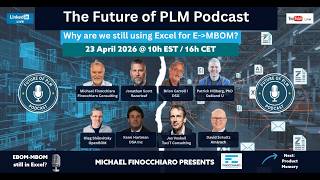
🔮 Ep. 12
EBOM vs MBOM: Bridging Engineering and Manufacturing Bills of Materials
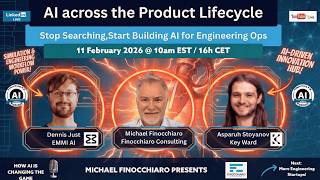
🤖 Ep. 20
Stop Running CAE Like It's 1995 — with Key Ward and EMMI AI
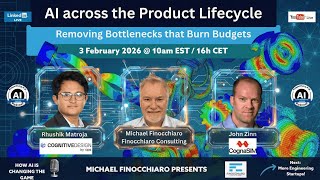
🤖 Ep. 18