Key Takeaways
- Evaluating PLM for process manufacturing using discrete-manufacturing criteria will produce the wrong selection
- Recipe management and formula versioning are not features added to a discrete PLM; they require a fundamentally different data model
- Batch/lot traceability in process manufacturing has regulatory dimensions (FDA 21 CFR Part 11, EU GMP Annex 11) that discrete serialization does not
- Several PLM vendors offer industry-specific configurations or separate products for process industries—evaluate these explicitly
- Understanding which paradigm your products fall into is the first question to answer before any PLM evaluation begins
Short Answer
Discrete manufacturing builds products by assembling discrete components (a car, an aircraft, a medical device) and requires PLM that manages assembly structures, engineering BOMs, part configurations, and serialized traceability. Process manufacturing transforms ingredients into bulk products (a drug, a food product, a specialty chemical) and requires PLM that manages recipes, formulas, batch/lot traceability, and regulatory submissions. The two domains have different data models, different regulatory drivers, and different PLM platforms that serve them well.
- Discrete manufacturing assembles discrete parts into finished products; process manufacturing transforms raw materials into bulk products through chemical or biological reactions
- Discrete PLM centers on the engineering BOM (eBOM), assembly management, part configurations, and serialized traceability
- Process PLM centers on recipe/formula management, batch/lot tracking, regulatory submission management, and ingredient provenance
- Most mainstream PLM platforms (Teamcenter, Windchill, 3DEXPERIENCE) are built for discrete manufacturing; process industries often require specialized extensions or different platforms
- Hybrid products (pharmaceutical devices, functional foods with complex packaging) may need both PLM paradigms simultaneously
Discrete Manufacturing PLM vs Process Manufacturing PLM: What's Different and Why It Matters
Most PLM conversations—and most PLM vendors—are implicitly talking about discrete manufacturing. When Teamcenter, Windchill, or 3DEXPERIENCE demos show a turbine blade assembly or an automotive door panel, they are demonstrating the core discrete manufacturing paradigm: a product defined by a bill of materials, assembled from discrete parts, traceable by serial number.
But a pharmaceutical company formulating a biologic drug, a food company managing a sauce recipe across 14 contract manufacturers, or a specialty chemical company scaling up a catalyst production process has almost nothing in common with that paradigm—at the data model level, at the regulatory level, and at the process level. If you apply discrete-manufacturing PLM evaluation criteria to a process manufacturing selection, you will choose the wrong system.
This article explains the fundamental differences between discrete and process manufacturing PLM, the capabilities each requires, and how to know which paradigm applies to your products.
The Core Distinction
Discrete manufacturing builds products by assembling discrete, countable components. A jet engine is assembled from compressor blades, combustors, turbine discs, and hundreds of sub-components. Each component is individually identifiable, traceable by serial number, and theoretically disassembled and re-examined. The jet engine's identity—what it is made of, at what revision—is captured in the engineering BOM.
Process manufacturing transforms raw materials into bulk products through chemical or biological reactions, blending, or other continuous processes. The output cannot be disassembled into its inputs: once you manufacture a tablet of ibuprofen, you cannot extract the API back out and trace it to a specific API lot. A polymer catalyst's identity—what it is made of, in what proportions, under what conditions—is captured in the formula or recipe.
The distinction sounds academic, but it drives every aspect of PLM design: data models, traceability mechanisms, regulatory frameworks, change management workflows, and quality governance. A PLM system designed for one paradigm does the other poorly.
The Feature Comparison
| PLM Capability | Discrete Manufacturing | Process Manufacturing |
|---|---|---|
| Central data structure | Engineering BOM (eBOM) | Recipe / Formula |
| Part identity | Part number + revision | Ingredient specification + grade |
| Traceability unit | Serial number | Batch / Lot number |
| Change management | Engineering Change Order (ECO) | Formula Change Notice / Regulatory variation |
| Configuration management | Product configurations, variants | Batch records, specification versions |
| Quality control | Inspection by part/assembly | Batch sampling, stability testing |
| Regulatory framework | AS9100 (aerospace), IATF 16949 (auto) | FDA 21 CFR Part 11, EU GMP Annex 11 |
| Production model | Discrete assembly steps | Continuous or batch process |
| BOM structure | Hierarchical assembly tree | Flat or two-level ingredient list with quantities |
| Substitute/alternate | Alternate parts with fit/form/function criteria | Approved equivalent suppliers, grade substitutions |
| Scale-up | Not applicable | Critical: bench → pilot → full scale |
Discrete Manufacturing PLM: Core Requirements
Discrete manufacturing PLM is built around the engineering bill of materials and the change process that governs it. The core capabilities a discrete PLM must deliver:
Assembly Management: The ability to represent hierarchical assemblies—part contains sub-assembly contains parts—accurately and at the correct revision. This is the foundation of all downstream discrete PLM capability.
Engineering Change Management: A formal workflow for proposing, reviewing, impacting, approving, and releasing design changes. The Engineering Change Order (ECO) or Engineering Change Notice (ECN) is the governance mechanism for every modification to the BOM or its constituent parts.
Configuration Management: The ability to manage product variants and configurations—which combination of options and features constitute a valid, orderable product configuration. For complex products (aircraft, heavy equipment), configuration management is one of the most technically demanding PLM capabilities.
Serialized Traceability: The ability to link a specific serialized finished product to the specific part lots used to build it. When a field failure occurs, the question "which units are affected?" requires serial-number-level traceability from the finished product back through the supply chain.
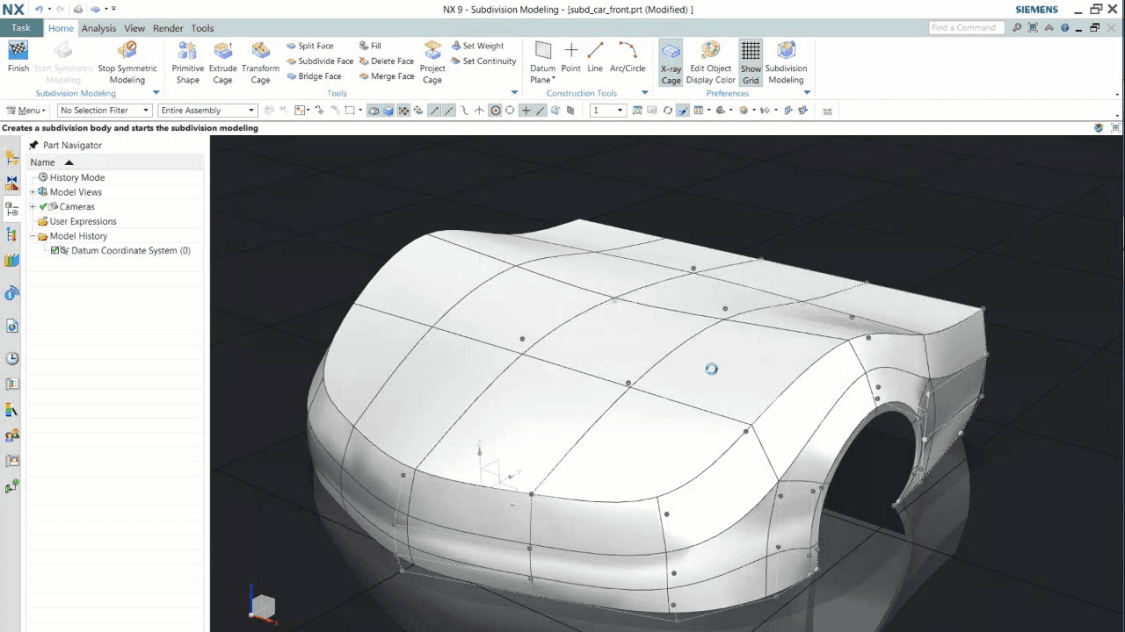
CAD Integration: Direct integration with mechanical CAD systems (Creo, CATIA, NX, SolidWorks) so that engineering changes made in the CAD environment are governed by PLM workflows and do not propagate without formal approval.
Process Manufacturing PLM: Core Requirements
Process manufacturing PLM is built around the formula or recipe and the regulatory governance that controls changes to it. The core capabilities:
Recipe/Formula Management: The ability to define, version, and govern the complete formulation of a product: ingredients with quantities and specifications, process parameters, and quality control steps. Recipes must be versioned independently and linked to specific approved ingredient sources.
Batch/Lot Traceability: The ability to link a specific batch of finished product to the specific ingredient lots consumed in its production. Regulatory recalls require complete batch genealogy: given this batch of drug substance, identify every patient who received a product containing it.
Regulatory Submission Management: For pharmaceuticals specifically, PLM must support the creation and management of regulatory dossiers (CTD format for FDA/EMA submissions), track post-approval changes, and manage the variation process when formulations change after approval.
Scale-Up Management: Process PLM must support the transition of a formulation from laboratory scale through pilot-scale to full commercial production, tracking how process parameters change at each scale and the stability data associated with each scale.
Quality Specifications: Ingredient and product specifications (particle size distribution, moisture content, assay range) must be managed in PLM alongside the formula, with specification version control linked to formula versions.
Which PLM Platforms Serve Which Domain
Dominant discrete PLM platforms:
- Siemens Teamcenter — dominant in aerospace, automotive, industrial equipment
- PTC Windchill — strong in aerospace, industrial equipment, high-tech
- Dassault 3DEXPERIENCE — dominant in automotive, aerospace, consumer goods
- Aras Innovator — strong in aerospace, automotive, and defense
All four are fundamentally discrete-manufacturing platforms. Their process manufacturing support is limited to industry-specific add-ons and configurations.
Process manufacturing PLM and related platforms:
- Siemens Opcenter (formerly Camstar) — pharmaceutical manufacturing execution with PLM integration
- SAP PLM with Recipe Management — pharma, food, and chemical-specific modules within SAP's ecosystem
- Dassault ENOVIA with Formulation Management — process industry extensions to 3DEXPERIENCE
- Veeva Vault — specialized document and quality management for life sciences regulatory submissions
Hybrid Products: When You Need Both
Some products straddle both paradigms. A pharmaceutical inhaler is simultaneously a drug (governed by FDA drug regulations, managed via formula/recipe) and a mechanical device (governed by FDA device regulations, managed via engineering BOM and design history file). A functional food product with complex packaging may have a simple recipe but elaborate discrete packaging assembly requiring full traceability.
These hybrid products often require two separate PLM environments—one for each paradigm—integrated at the regulatory boundary. This is operationally complex but technically achievable. The alternative is forcing both paradigms into a single system that handles neither well.
Making the Selection Decision
Choose a discrete-manufacturing PLM platform when:
- Your products are assembled from countable, distinct parts
- Serialized traceability is required (aerospace, defense, medical devices, automotive)
- Engineering change management is your primary governance challenge
- CAD integration is essential to your workflow
- You operate under AS9100, IATF 16949, or equivalent discrete quality standards
Choose a process-manufacturing PLM platform when:
- Your products are produced via blending, reacting, or biological transformation
- Batch/lot traceability is required for recall management
- Regulatory submissions (FDA, EMA) are part of your product governance
- Recipe/formula versioning and approval is a core workflow
- You operate under FDA 21 CFR Part 11, EU GMP Annex 11, or equivalent process regulations
Related Reading
- PLM vs ERP: Understanding the Difference — How PLM and ERP divide responsibilities differently in discrete vs process industries
- What is PLM? — The foundational definition before evaluating domain-specific requirements
- What is Manufacturing Process Planning? — How process planning differs between discrete and continuous production
- PLM Enterprise Rollout — Implementation considerations specific to industry type
Conclusion
The distinction between discrete and process manufacturing PLM is not a nuance—it is a fundamental architectural difference that determines which platforms are appropriate, which regulatory frameworks apply, and which capabilities are non-negotiable. Evaluating PLM without first answering "are we discrete or process (or both)?" is a reliable path to a failed selection.
Know your manufacturing paradigm before you evaluate your software.
Want to listen instead of read? 56 DemystifyingPLM articles are available as audio.
Browse audio →Looking up PLM terminology? Browse the canonical reference.
PLM Glossary →Cite this article
Finocchiaro, Michael. “Discrete Manufacturing PLM vs Process Manufacturing PLM: What's Different and Why It Matters.” DemystifyingPLM, November 22, 2022, https://www.demystifyingplm.com/plm-discrete-vs-process
Michael Finocchiaro (opens in a new tab)
PLM industry analyst · 35+ years at IBM, HP, PTC, Dassault Systèmes
Firsthand knowledge of the evolution from early 3D modeling kernels to today's cloud-native platforms and agentic AI — the history, strategy, and future of PLM.