Key Takeaways
- Teamcenter's lineage: IMAN (assembly-centric PDM) merged with Metaphase (business-platform PLM) to create a modular, configurable enterprise platform
- JT format (UGS's lightweight 3D visualization) enables supplier and manufacturing collaboration without full CAD licenses
- Core strengths: handling large assemblies, manufacturing integration via Tecnomatix, modular architecture
- Positioning: Most flexible of the Big Three for different deployment models and industry customizations
- Integration to MES and IoT is native rather than hand-crafted (advantage over Windchill in discrete manufacturing)
Short Answer
Siemens Teamcenter is one of the three dominant enterprise PLM systems (alongside PTC Windchill and Dassault 3DEXPERIENCE). Descended from IMAN (EDS Unigraphics's PDM) and Metaphase (SDRC's PLM), Teamcenter is the most widely-deployed PLM platform globally. It manages product definition, change processes, configuration control, and manufacturing planning across engineering, manufacturing, procurement, quality, and service.
- Teamcenter is the most widely-deployed PLM system in manufacturing worldwide
- Modular architecture: can be tight PDM (just CAD management) or full enterprise PLM
- Integrated with NX (CAD), Simcenter (simulation), Tecnomatix (manufacturing), Opcenter (MES)
- Strongest in automotive, aerospace, heavy equipment, and Industry 4.0
- Offers on-premises, private cloud, and SaaS (Xcelerator) deployment options
What is Siemens Teamcenter? Enterprise PLM Explained
What is Teamcenter?
Siemens Teamcenter is the most widely-deployed PLM system in the world. It manages product data, engineering BOMs, change orders, manufacturing process planning, and supplier collaboration for some of the world's largest and most complex manufacturers—particularly in automotive, aerospace, heavy equipment, and industrial machinery.
History and Architecture
Teamcenter's lineage is complex because it is the result of three major acquisitions stitched together:
-
IMAN (1990s) — Built by EDS Unigraphics, IMAN was specifically designed for large assembly management. Automotive and aerospace manufacturers running IMAN could manage thousands of parts organized hierarchically across multiple manufacturing sites with distributed caching.
-
Metaphase (2001) — SDRC's PLM platform that took a different approach: a flexible business data model rather than assembly-centric. When UGS merged with SDRC in 2001, the two systems coexisted as Teamcenter Engineering (from IMAN) and Teamcenter Enterprise (from Metaphase).
-
Siemens Acquisition (2007) — When Siemens acquired UGS, they committed to unifying the two into Teamcenter Unified, a single modular platform that could be configured anywhere from "tight PDM for a CAD workgroup" to "full enterprise PLM for a global manufacturer."
The result: Teamcenter is the most flexible of the Big Three in terms of deployment topology and organizational scope.
Core Capabilities
Product Data Management (PDM)
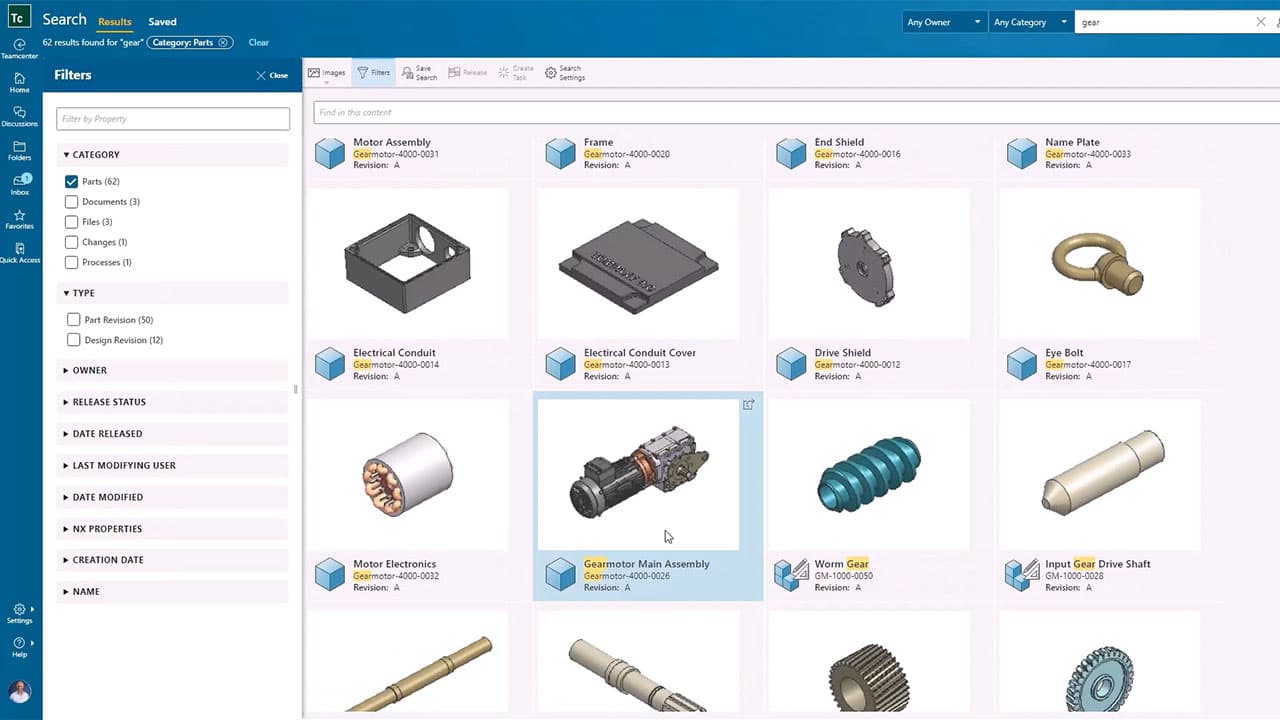
Teamcenter manages CAD files, engineering documents, BOMs, and assembly structures with version control and access rights. It supports multiple CAD systems through native connectors for NX, CATIA, Creo, SOLIDWORKS, and others.
Bill of Materials (BOM) Management
Teamcenter manages the engineering BOM: the definitive list of parts and sub-assemblies. It handles multi-level hierarchies, variants, configurations, and supplier specifications.
Change Management
Three-stage change flow (ECR/ECN/ECO) is built into Teamcenter. Changes are routed to reviewers, approved, and audited. The system enforces that manufacturing cannot build against obsolete parts after a change takes effect.
Manufacturing Process Planning (via Tecnomatix)
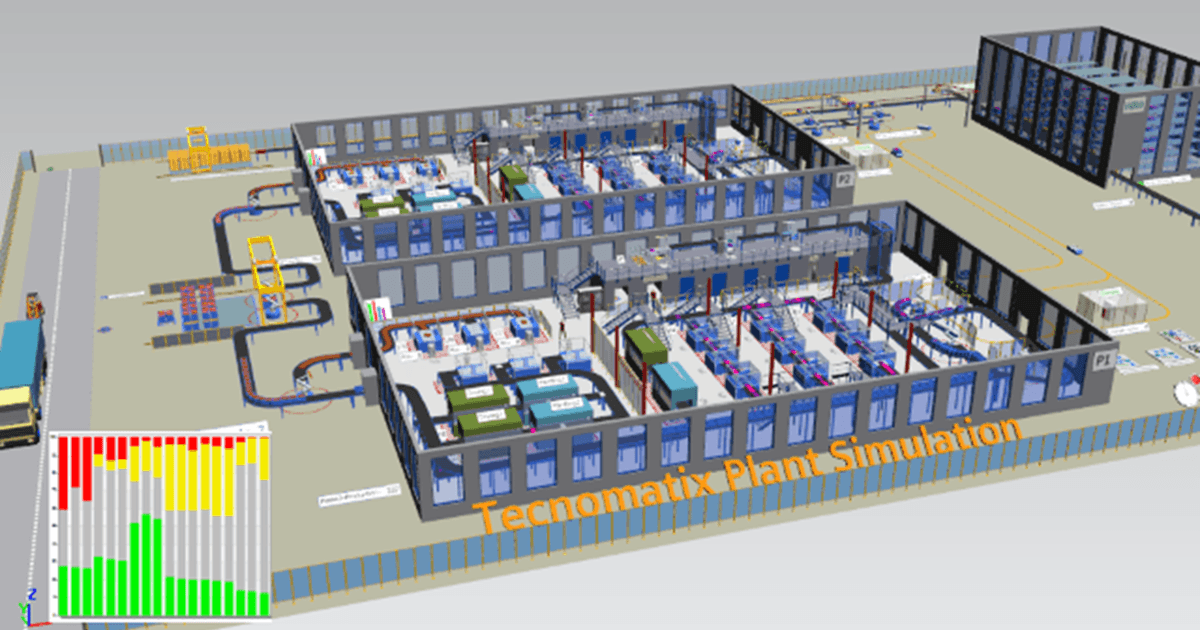
This is where Teamcenter differentiates from Windchill. Siemens integrated Tecnomatix (digital manufacturing) directly into Teamcenter. This allows manufacturing engineers to create process plans, work instructions, and simulation directly in the same environment where the engineering BOM lives. This is the closest any of the Big Three comes to bridging the engineering BOM (EBOM) to manufacturing BOM (MBOM) in a single system.
Configuration Management
Teamcenter tracks which version of which part was shipped to which customer with which configuration. This is the difference between being able to service a product years later and not.
JT Visualization
The JT format (Jupiter Tessellation) is a lightweight 3D format that allows suppliers, manufacturing engineers, and quality engineers to review complex assemblies without expensive CAD licenses. An engineer publishes a JT version of a CAD assembly, and non-CAD users can review it, mark it up, and provide feedback.
Supplier Collaboration
Teamcenter has supplier portals and collaboration spaces where external parties can upload documents, certifications, and updates. This closes the loop between engineering specification and supplier delivery.
Market Position
Teamcenter dominates in:
- Automotive manufacturing and suppliers
- Aerospace contractors
- Heavy equipment and industrial machinery
- Electronics and semiconductor manufacturers
Strongest when:
- Large assemblies with hundreds or thousands of parts
- Multi-site global operations
- Manufacturing process planning is critical (need tight EBOM/MBOM connection)
- Simulation and digital manufacturing are integrated workflows
- You are buying the full Siemens stack (NX, Simcenter, Tecnomatix, Opcenter)
Challenges:
- Implementation is heavy and can take 12-24 months
- Requires significant organizational change (breaking down silos between engineering and manufacturing)
- Cost of ownership is high for large enterprises
- Customization depth is comparable to Windchill
Deployment Options
- On-Premises: Traditional deployment, owned by your IT team, highest customization flexibility
- Private Cloud: Siemens-hosted or customer-hosted, similar functionality to on-premises
- Xcelerator-as-a-Service (SaaS): Multi-tenant cloud, reduced customization, faster time-to-value
Teamcenter vs. Windchill vs. 3DEXPERIENCE
| Dimension | Teamcenter | Windchill | 3DEXPERIENCE |
|---|---|---|---|
| Lineage | IMAN (assembly-centric) + Metaphase (business model) | Pro/INTRALINK + Windchill (web-first) | MatrixOne (business platform) on CATIA CAD |
| Strengths | Large assemblies, manufacturing planning (Tecnomatix), modular | Change governance, global sites, multi-CAD | Integrated design/PLM/simulation/manufacturing, seamless data model |
| Strongest Markets | Automotive, aerospace, heavy equipment | Industrial equipment, medical devices, electronics | Aerospace, transportation, life sciences |
| Manufacturing Integration | Native (Tecnomatix) | Requires integration | DELMIA (tightly coupled) |
| Customization | Heavy and deep | Heavy and deep | Heavy (more rigid, less customizable) |
Next Steps
- For a detailed history, see From IMAN to Teamcenter: How Siemens Built the Industry's Most Comprehensive PLM Platform
- To understand Teamcenter in the Big Three context, see What is PLM?
- To compare all enterprise PLM options, see Vendor PLM Histories
Want to listen instead of read? 56 DemystifyingPLM articles are available as audio.
Browse audio →Looking up PLM terminology? Browse the canonical reference.
PLM Glossary →Cite this article
Finocchiaro, Michael. “What is Siemens Teamcenter? Enterprise PLM Explained.” DemystifyingPLM, February 14, 2023, https://www.demystifyingplm.com/what-is-teamcenter
PLM industry analyst · 35+ years at IBM, HP, PTC, Dassault Systèmes
Firsthand knowledge of the evolution from early 3D modeling kernels to today's cloud-native platforms and agentic AI — the history, strategy, and future of PLM.