Key Takeaways
- CAD, CAE, CAM, and ERP are four separate tools with four separate jobs, but PLM is the system that ties them together and ensures they're all working with the same design truth.
- CAD owns the design intent (geometry, dimensions, tolerances). CAE owns performance validation (will it work?). CAM owns manufacturing execution (can we make it?). ERP owns financial cost and BOM. PLM governs the entire flow.
- The product lifecycle is: Concept → CAD Design → CAE Validation → CAM Manufacturing Planning → Manufacturing → ERP Cost Tracking. PLM is the system of record that sits above all of them.
- The most common PLM failure is when CAD, CAE, CAM, and ERP are disconnected tools, not integrated systems. Design changes don't propagate to BOM. Manufacturing costs don't feed back to design decisions. Validation results don't gate manufacturing.
- In a well-run PLM system, a change to a CAD design automatically triggers CAE re-validation, CAM re-planning, and ERP re-costing. The design is locked until all gates pass. That's how PLM prevents expensive rework in the field.
Short Answer
CAD creates the design (geometry and intent). CAE validates it (structural, thermal, fluid analysis). CAM turns it into manufacturing instructions (toolpaths, G-code). ERP tracks the cost (BOM, labor, material). PLM is the orchestration system that ties all four together, ensuring that design changes propagate through validation and manufacturing, that cost feeds back to design decisions, and that the design that ships is the design you intended. Without PLM integration, these tools are disconnected islands; with it, they are a coherent lifecycle.
- CAD, CAE, CAM, ERP are tools. PLM is governance.
- PLM ensures design changes propagate through all downstream systems.
- PLM gates design release: it must pass CAE validation and CAM manufacturability before moving to production.
- PLM tracks engineering change: if a design changes, CAE and CAM are re-run and the change is approved before release.
- PLM integrates cost feedback: CAM's cycle-time estimate feeds into ERP's cost model; if cost is unacceptable, design is revisited.
Why it matters: In disconnected organizations (CAD team, CAE team, CAM team, ERP team all working in silos), design changes are manual, error-prone, and slow. A CAD engineer changes the geometry; the CAE engineer doesn't know until it's too late; CAM discovers an unmachinablе design; manufacturing wastes time and material trying to make an invalid design. The expensive failures happen in the field after the product ships. In organizations with PLM integration, the same design change triggers automated CAE re-validation, CAM re-planning, and ERP re-costing in minutes. If any gate fails, the design is locked and returned to the CAD engineer before manufacturing ever starts. The cost difference between these two modes is enormous.
The One-Sentence Answer
CAD designs, CAE validates, CAM manufactures, ERP tracks cost — but PLM governs them all and ensures they're talking to each other.
The Lifecycle: How They Connect
Here's how a product moves through the lifecycle:
Phase 1: Concept and CAD Design
The product starts as a concept: requirements, sketches, conversations. The CAD team takes that and creates a 3D model in CAD: the geometry, the dimensions, the tolerances, the design intent. CAD is the source of truth for the product's shape.
Output from CAD: 3D models, 2D drawings, geometric specifications.
Phase 2: CAE Validation
Before committing to manufacturing, the design has to be validated. The CAE team takes the CAD geometry and simulates it: structural analysis (FEA), thermal analysis, fluid analysis (CFD), vibration analysis, fatigue life prediction. CAE answers the question: will this design work in the real world?
If CAE says yes, the design moves forward. If CAE says no, the design goes back to CAD for revision.
Output from CAE: simulation results, stress maps, temperature distributions, safety factors, approval or rejection.
Phase 3: CAM Manufacturing Planning
Once the design is validated by CAE, it goes to CAM. The CAM team takes the CAD geometry and generates manufacturing instructions: toolpaths, G-code, NC programs, setup plans. CAM answers the question: can we manufacture this with our available equipment, within tolerance, within budget?
If CAM says yes, the design is released to manufacturing. If CAM says no, the design goes back to CAD for revision (make it more manufacturablе, relax the tolerance, change the feature).
Output from CAM: toolpaths, G-code, machining time estimates, cost per part.
Phase 4: ERP Cost and Supply Chain
While CAD, CAE, and CAM are planning the design and manufacturing, ERP is building the bill of materials (BOM) and cost model. ERP reads the design from CAD, the manufacturing plan from CAM, and the cost constraints from finance. ERP answers the question: can we afford to make this, and how long will it take to get materials?
If the cost is acceptable and materials are available, the design is released to production. If cost is unacceptable, the design gets escalated for cost optimization (cheaper material, simpler manufacturing, design simplification).
Output from ERP: BOM, cost model, supply chain plan, production schedule.
Phase 5: Manufacturing
The released design — approved by CAE, approved by CAM, approved by ERP — is sent to the shop floor. CNC machines execute the G-code generated by CAM. Raw material is transformed into a finished part. The design that was validated in CAE and planned in CAM is now reality.
Output from manufacturing: finished parts, cycle time, actual cost.
The Role of PLM: Governance and Integration
All four phases (CAD design, CAE validation, CAM planning, ERP costing) have to work together. That's where PLM comes in.
PLM is the system of record that sits above CAD, CAE, CAM, and ERP and ensures they're all working with the same design truth. PLM tracks:
- Design versions — which version of the design is currently authorized for production? If someone changes the CAD file, what's the new version?
- Change tracking — when a design changes, what downstream systems are affected? Does CAE need to re-run? Does CAM need to re-plan? Does ERP need to re-cost?
- Approval gates — a design is not approved for manufacturing until CAE validation is complete and CAM confirms manufacturability. Those gates are recorded in PLM.
- Traceability — if a part fails in the field, PLM can trace it back to which version of the design was manufactured, what CAE analysis validated it, and what CAM parameters produced it.
PLM integrates the tools, so they're not disconnected islands:
- CAD change triggers CAE re-validation — if a designer changes the geometry, CAE is re-run to validate the new design
- CAE result gates CAM planning — if CAE validation fails, CAM doesn't even start planning; the design is returned to CAD
- CAM manufacturability gates release — if CAM discovers the design is unmachinablе, it blocks release and returns the design to CAD
- ERP cost feeds back to design — if CAM's cost estimate is unacceptable, ERP flags it and the design gets escalated for cost optimization
Why Integration Matters
In organizations that run CAD, CAE, CAM, and ERP as disconnected tools:
- A design change in CAD doesn't automatically trigger CAE re-validation. The CAE engineer might not realize the design changed until it's too late.
- CAM discovers an unmachinablе design, but by that time manufacturing has already committed material and labor.
- ERP builds a cost model based on assumptions that CAM didn't confirm. The design ships at a higher cost than predicted.
- A field failure happens, and there's no traceability back to which design version, which CAE analysis, and which manufacturing parameters produced the failed part.
The cost of these disconnections is enormous: rework, expedited manufacturing, scrap, overtime, lost reputation.
In organizations that run PLM well:
- A design change in CAD automatically triggers CAE re-validation and CAM re-planning. If any gate fails, the design is locked and returned to CAD.
- Manufacturing never starts until CAE has approved and CAM has confirmed manufacturability.
- ERP costs are realistic because they're based on CAM's actual cycle-time estimates.
- If a field failure happens, PLM can trace it back to the exact design version, the exact CAE analysis, and the exact manufacturing parameters.
The cost of doing it right is the cost of PLM software and training. The benefit is the absence of expensive failures.
When Each Tool Activates
- CAD: from concept through design finalization (weeks to months, depending on complexity)
- CAE: after preliminary CAD design, iterated until validation passes (days to weeks)
- CAM: after CAD is finalized and CAE has approved (days, typically)
- ERP: throughout, but most intensive after CAM planning is complete (days to weeks for procurement and scheduling)
- PLM: always on, governing all of them
The Handoff Problem (and Why PLM Solves It)
The traditional model (CAD → CAE → CAM → ERP → Manufacturing) has a critical weakness: each handoff is a potential failure point.
- CAD delivers design to CAE, but CAE discovers the geometry isn't valid for analysis. Engineering delay.
- CAE approves the design, CAM discovers it's unmachinablе. Design goes back for revision. Rework.
- CAM approves manufacturing, ERP discovers the cost is unacceptable. Escalation and re-planning.
Each of these failures is expensive because it happens far along in the development cycle. PLM prevents them by making the gates parallel and automated: CAE validation and CAM manufacturability are discovered early, together, with PLM orchestrating the handoffs.
Conclusion
CAD, CAE, CAM, and ERP are four specialized tools that own distinct phases of the product lifecycle. PLM is the system that ties them together, ensures design changes propagate through all of them, gates release with approval criteria, and provides the traceability that allows forensic investigation when something goes wrong.
Understanding how each tool fits into the lifecycle — and how PLM integrates them — is the foundation of modern product development.
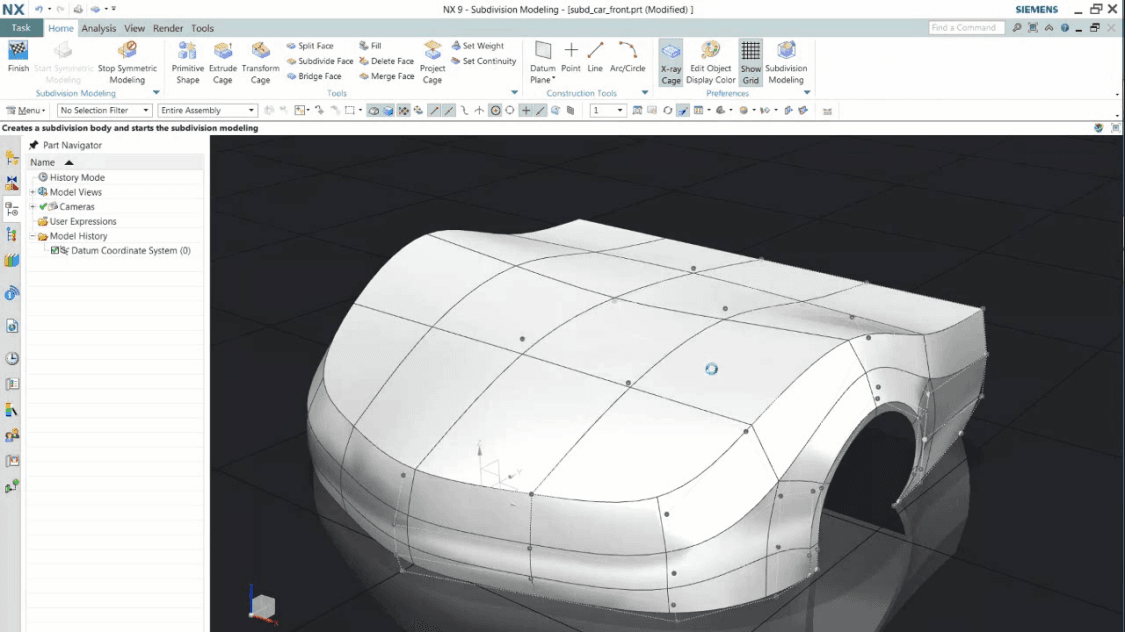
One dimension this article intentionally brackets: not all CAD is the same. NURBS surface modelers, parametric feature-based MCAD, and implicit/SDF systems have fundamentally different mathematical cores, and the choice affects how geometry flows through CAE, CAM, and PLM. For a deep dive on those differences, see CAD Modeling Paradigms: NURBS, Parametric, and Implicit/SDF.
The takeaway: You can run CAD, CAE, CAM, and ERP separately. But the moment design changes, or the moment cost becomes important, or the moment a field failure requires investigation, you'll need PLM integration to make sense of the lifecycle.
Want to listen instead of read? 56 DemystifyingPLM articles are available as audio.
Browse audio →Looking up PLM terminology? Browse the canonical reference.
PLM Glossary →Cite this article
Finocchiaro, Michael. “CAD, CAM, CAE in PLM: How They Work Together Across the Lifecycle.” DemystifyingPLM, September 15, 2022, https://www.demystifyingplm.com/cad-cam-cae-in-plm
PLM industry analyst · 35+ years at IBM, HP, PTC, Dassault Systèmes
Firsthand knowledge of the evolution from early 3D modeling kernels to today's cloud-native platforms and agentic AI — the history, strategy, and future of PLM.