Key Takeaways
- Without governance, simulation produces confident wrong answers—dangerous in safety-critical products
- Aerospace and defense regulators increasingly expect simulation evidence to follow V&V protocols
- Simulation reuse across programs requires governance; ungoverned models are typically not reusable
- AI-driven simulation increases the governance stakes—more speed without governance means more risk
Short Answer
Simulation Governance is the discipline of managing simulation models with the same rigor applied to physical test data—defining who can create models, what verification and validation must be performed before models are used, how model credibility is assessed and documented, and how simulation evidence is maintained in an auditable record. Without governance, simulation is opinion; with it, simulation becomes engineering evidence.
- Simulation Governance treats model credibility as a measurable, auditable property
- Verification confirms the model is implemented correctly; validation confirms it represents reality
- Governed simulation outputs can substitute for physical tests in regulated industries
- MBSE (Model-Based Systems Engineering) is the systems-level discipline that frames what needs to be simulated
- Digital twins require simulation governance to produce trustworthy predictive outputs
What Is Simulation Governance?
Simulation Governance is the discipline of treating simulation models with the same rigor applied to physical test data.
It defines who can create models, what verification and validation must be completed before results are used, how model credibility is assessed and documented, and how simulation evidence is maintained in an auditable record.
Without governance, simulation is opinion. With it, simulation becomes engineering evidence—admissible in design reviews, regulatory submissions, and customer commitments.
Why Simulation Without Governance Fails
Ad-hoc simulation is widespread. It is also dangerous.
In most engineering organizations, simulations are run by individual engineers, stored on personal drives or shared folders, and presented in meetings without any formal assessment of whether the model is fit for the decision it is informing.
| Attribute | Ad-Hoc Simulation | Governed Simulation |
|---|---|---|
| Traceability | None—model version unknown | Full—version, inputs, V&V status |
| Reuse | Rare—model context lost | Systematic—archived with metadata |
| Regulatory acceptance | Not admissible | Can substitute for physical test |
| AI-ready? | No—results not machine-readable | Yes—outputs link to product thread |
The result is simulation that produces confident wrong answers. The confidence comes from the tool. The wrongness comes from an unvalidated model applied outside its intended scope.
In safety-critical industries, a wrong simulation result that drives a design decision can cause product failures, regulatory non-compliance, or incidents. Governance makes model credibility an engineering property—measurable, documented, and auditable—not a social one.
Verification and Validation: The Core Framework
Simulation governance rests on V&V—two distinct activities that are frequently confused.
Verification asks: "Did we build the model correctly?"
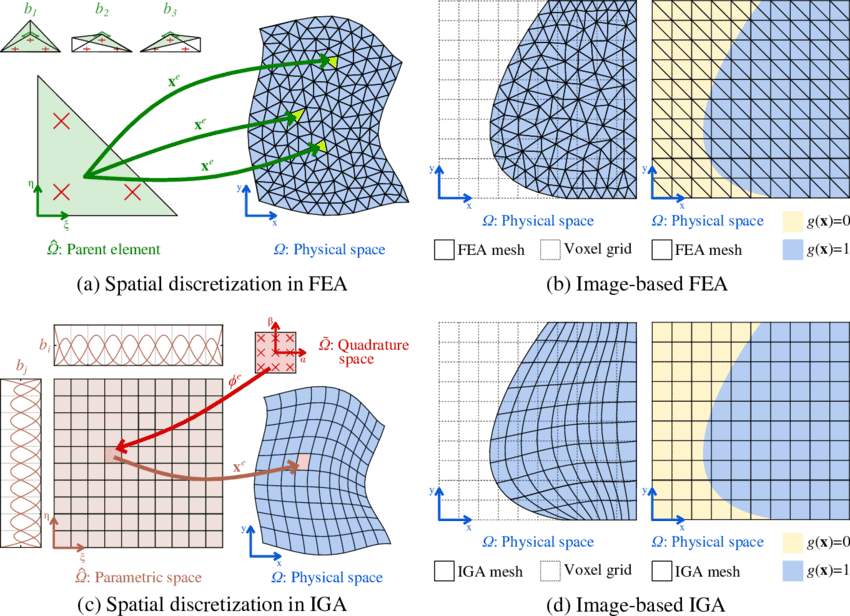
It confirms that the numerical implementation of the physics equations is accurate, free of coding errors, and solves the intended mathematical problem. Verification tests include mesh convergence studies, code-to-code comparisons, and analytical solution checks. A verified model computes accurately.
Validation asks: "Did we build the correct model?"
It confirms that the model's predictions match real-world physical behavior within acceptable tolerances for the intended application. Validation requires physical test data—measured quantities that can be compared to simulation predictions. A validated model represents reality accurately enough for its intended use.
Both are required. Verification and validation are complementary gates: one confirms the math, the other confirms the physics. Neither alone is sufficient.
Simulation Credibility
Credibility is the operational concept that connects V&V to decisions.
A simulation model is not credible or not credible in the abstract. It is credible for a specific intended use, at a specific level of confidence, within defined operating conditions.
A finite element model may be highly credible for predicting static deflection under nominal loads, and low credibility for predicting fatigue life under variable loading. The same tool. The same analyst. Two very different credibility levels depending on what the result is being used to decide.
Simulation credibility assessment frameworks—structured processes for rating model fidelity against intended use—provide the vocabulary for making credibility explicit. They typically assess:
- Model form uncertainty: how well the physical model represents the real phenomenon
- Numerical solution error: discretization and convergence error in the computational solution
- Input uncertainty: sensitivity of results to input parameter uncertainty
- Validation evidence: the quantity, quality, and relevance of test data used for validation
Organizations implementing credibility frameworks can specify confidence requirements before a simulation is run—not after a result is already in use.
MBSE: The Systems-Level Frame
Model-Based Systems Engineering (MBSE) provides the systems-level context that defines what must be simulated and why.
MBSE connects requirements to system architecture to component specifications. Each requirement that cannot be verified by physical test alone must be addressed by simulation. MBSE makes explicit which requirements have simulation as their primary verification method—and therefore which simulations require governance.
Without this framing, simulation governance is applied inconsistently. Engineers govern simulations they happen to think are important. MBSE identifies which simulations are critical based on the requirements structure.
The connection between MBSE and Digital Thread is direct: MBSE models are thread artifacts. Simulation results linked to MBSE requirements and design elements are nodes in the thread, not isolated analysis files.
Digital Twins and Simulation Governance
Digital twins without simulation governance are high-confidence prediction machines with unknown accuracy.
A digital twin runs a physics-based model continuously, with real-time sensor inputs, to predict future asset behavior. If that model has not been validated against the actual asset's physical behavior—across its operational envelope—the twin's predictions are extrapolations from an unverified starting point.
This matters most in predictive maintenance. A twin predicting component failure based on an unvalidated model may miss failures (false negatives that cause unplanned downtime) or generate false alarms (false positives that waste maintenance resources). Either outcome erodes trust in the twin and in the engineering organization that deployed it.
Governance provides the V&V framework that certifies a model is fit for use in a digital twin. It also defines the conditions under which the twin's outputs should trigger maintenance action versus further investigation.
How Aerospace Companies Implement Simulation Governance
Aerospace is the most mature industry for simulation governance, driven by regulatory expectations and the consequences of simulation-informed design errors in safety-critical structures and systems.
Mature implementations typically include:
Simulation archives. Every model version is stored with its V&V records, input files, associated test data, usage history, and credibility assessment. Models are version-controlled with the same discipline as CAD data.
Credibility assessment workflows. Before a simulation result is used in a design review or regulatory submission, a formal credibility assessment is completed and approved. The assessment specifies the intended use, the applicable V&V evidence, and the confidence level.
Regulatory simulation evidence packages. Certification authorities increasingly expect simulation evidence to follow V&V protocols. A simulation evidence package accompanies physical test data in certification submissions, documenting methodology, validation, and uncertainty bounds.
Change control for models. When a model is modified—geometry, material properties, boundary conditions, solver settings—a change review process determines whether existing validation remains applicable or re-validation is required.
PLM Integration for Simulation Governance
Simulation governance cannot be effective when simulation data is isolated from the product record.
Connecting simulation results to PLM systems through the Digital Thread makes governance traceable and actionable. A simulation result linked to the requirement it addresses, the design version it analyzed, and the test data it was validated against is a governed artifact—not an orphaned spreadsheet.
This connection enables two capabilities that ad-hoc simulation cannot support:
Impact assessment for design changes. When a design changes, the PLM system can identify which governed simulations used that design state—flagging which results are now potentially invalid and which analyses must be rerun.
Simulation reuse. A governed simulation with a well-documented credibility assessment can be reused on derivative programs with confidence. Ungoverned simulations are rarely reused because their applicability to new contexts cannot be assessed.
Summary
Simulation Governance transforms simulation from individual analysis into certified engineering evidence.
It rests on V&V (verifying correct implementation and validating against physical reality), credibility assessment (making model fitness measurable), and audit (keeping an authoritative record of what was simulated, with what model, for which decision).
For digital twin programs, simulation governance is not optional—it determines whether the twin's predictions are trustworthy. For aerospace and regulated industries, it is increasingly expected as a condition of regulatory acceptance.
The investment in governance infrastructure pays for itself the first time a simulation result is challenged and can be defended with a complete V&V record, rather than a meeting transcript and an engineer's recollection.
Related reading:
Want to listen instead of read? 56 DemystifyingPLM articles are available as audio.
Browse audio →Looking up PLM terminology? Browse the canonical reference.
PLM Glossary →Cite this article
Finocchiaro, Michael. “What is Simulation Governance?.” DemystifyingPLM, May 20, 2024, https://www.demystifyingplm.com/what-is-simulation-governance
PLM industry analyst · 35+ years at IBM, HP, PTC, Dassault Systèmes
Firsthand knowledge of the evolution from early 3D modeling kernels to today's cloud-native platforms and agentic AI — the history, strategy, and future of PLM.