Key Takeaways
- The digital thread is an architecture: connected, governed product data across design, manufacturing, service, and end of life.
- The digital twin is an instance: a live, synchronized model of one specific unit, asset, or process — fed by sensor data and operational feedback.
- The relationship is one-to-many — one thread can support many twins; a twin without a thread underneath it is a demo, not a system of record.
- Vendor marketing conflates the two because both sound futuristic. The architecture is hard and unsexy; the instance demos well in a keynote.
- Most twin programs that fail in production fail because the thread underneath them was never built — the twin is fed by a stale BOM, an unconnected service record, or a manually-updated config table.
Short Answer
The digital thread is an architecture — the connected, governed data backbone that links every stage of a product's lifecycle from design through manufacturing and service. The digital twin is an instance — a live, synchronized virtual model of one specific physical product, asset, or process, fed by sensor data and operational feedback. The thread is the pipe; the twin is what runs on it. One thread can support many twins. A twin without a thread is a demo, not a system of record.
- Digital Thread = architecture; digital twin = instance.
- One thread can underpin many twins (one per unit, asset, or process).
- A twin's trustworthiness is bounded by the thread's data quality.
- Most failed twin programs failed because the thread underneath was never built.
- Vendors conflate the two because the twin demos well; the thread doesn't.
Why it matters: The two terms get treated as synonyms in vendor pitches and RFPs, and that confusion drives bad buying decisions. Buying a digital twin product without first building the digital thread underneath produces a beautiful 3D model fed by stale data — a confidence-eroding demo, not a system of record. Conversely, building the thread without ever instantiating a twin leaves the architecture invisible to the executives who funded it. Knowing which one you're buying, and what the other one requires, is the prerequisite for a program that ships.
The One-Sentence Answer
The Digital Thread is an architecture for connected product data across the lifecycle. A Digital Twin is one live instance running on top of that architecture. They are not synonyms — one is the pipe and the other is what flows through it.
What the Digital Thread Is
The Digital Thread is an architecture, not a product. It is the connected, governed data backbone that links every stage of a product's lifecycle — engineering, manufacturing, service, end of life — so that data created at any stage is queryable, traceable, and consistent at every other stage. The full canonical treatment lives in Demystifying Digital Thread and Digital Twin; the operative point for this comparison is that the thread is infrastructure, and like all infrastructure it produces value primarily when it is invisible. A working thread answers cross-functional questions — which units shipped with which part revisions, what changed and when, what configurations are valid — without anyone noticing that an integration project is what made the question answerable.
What the Digital Twin Is
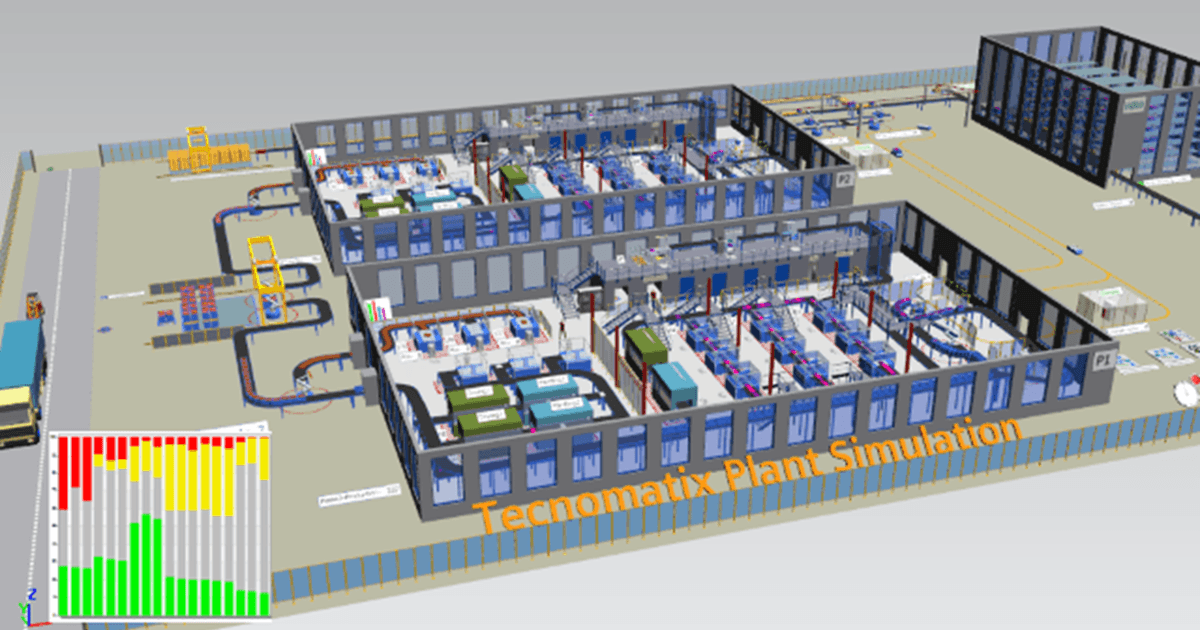
A Digital Twin is an instance, not an architecture. It is a live, synchronized virtual model of one specific physical product, asset, or process — synchronized through sensor data, IoT feeds, or operational feedback. A twin has a 1:1 relationship with a real-world counterpart: this turbine, this car, this building, this production line. It exists to answer questions about the actual operating state of that specific unit: how it is performing, when it will need maintenance, what failure modes its sensor signature suggests. A twin demos well because it is visually concrete — a rotating model that updates in real time is a compelling artifact in a keynote — and it is the term that vendor marketing tends to lead with.
The Actual Difference
The technical answer is that one is an architecture and the other is an instance, and the relationship is one-to-many: one Digital Thread can support many digital twins, one per unit. The honest answer is that the two are conflated in the market because the architecture is hard to sell and the instance is easy to demo. A digital-twin proof of concept can be built in weeks against a snapshot of BOM data and a sensor feed; a Digital Thread takes years and crosses three or four enterprise systems and as many organizational fiefdoms. Vendors lead with the twin because it is the artifact buyers can see; buyers buy the twin assuming the thread comes with it; the program ships a beautiful demo and a fragile production system.
The structural test is straightforward. Ask: if engineering releases an ECO tomorrow that changes a part on this product, does the twin reflect the change automatically, or does someone update it by hand? If the answer is "automatically," there is a thread underneath; the twin is a downstream application of governed data. If the answer is "by hand," there is no thread; the twin is a static model masquerading as a live one, and its half-life as a trustworthy artifact is shorter than the next release cycle.
Side-by-Side
| Dimension | Digital Thread | Digital Twin |
|---|---|---|
| Type of thing | Architecture (connected data backbone) | Instance (one live model of one unit) |
| Cardinality | One per organization or program | One per physical unit, asset, or process |
| Primary value | Cross-functional queryability of lifecycle data | Real-time visibility into a specific unit's state |
| Demo characteristic | Hard to demo (infrastructure) | Easy to demo (visual, concrete) |
| Sales characteristic | Hard to sell | Easy to sell |
| Time to first value | Years for full coverage | Weeks for a proof of concept |
| Failure mode | Built but invisible to executives who funded it | Built without a thread underneath; drifts into uselessness |
| Dependency | Independent — can exist without any twins | Dependent — its trustworthiness is bounded by the thread |
| Owner | Cross-functional (PLM-led, ERP/MES-integrated) | Often a specific application team or product line |
| Anchor system | PLM (the canonical product record) | The PLM/MES/IoT integration runtime |
Digital Thread Governance: Who Owns What
Building a Digital Thread is not primarily a technology problem — it is an organizational alignment problem. The thread itself is just infrastructure; what matters is declaring which team owns the data in each domain and what the handoff rules are.
In a mature organization, the ownership structure looks like this:
- PLM owns: the engineering BOM, the as-designed state, the change history, and the bill-of-materials governance. When engineering releases a revision, that change is the system of record.
- Manufacturing (MES or MOM) owns: the as-built configuration, the per-unit reconciliation against the engineering BOM, the production events, and the quality records. When a unit ships from the line, the as-built record captured by MES is the system of record for what that unit contains. For the boundary between MES and PLM — which system owns what, and where they overlap — see MES vs PLM.
- ERP owns: the work orders, purchase orders, procurement records, and financial transactions. When manufacturing needs a part, the work order that launched production is owned by ERP, but the part definition came from PLM.
- Service owns: the field-failure records, the service bulletins, the warranty claims, and the operational telemetry. When a unit fails in the field, the service record is the system of record for that failure, but the root cause analysis requires tracing back to the as-shipped configuration (MES) and the part that failed (PLM).
The Digital Thread is the integration contract that says: "PLM publishes its BOM changes; MES subscribes to those changes and updates production work instructions; ERP receives the updated part list for procurement; service receives the change notice so they know to expect different units in the field." Without explicit ownership and subscription patterns, every system becomes its own sovereign authority, and the thread never exists.
The team that usually has to drive this alignment is PLM, because PLM is the only function that touches all three other domains. But ownership cannot be imposed top-down; it has to be negotiated with the teams that live in those domains. The organizations that succeed at building threads are the ones where manufacturing and service have explicit incentive to consume the thread — because they need the data to do their jobs better — rather than being forced to participate because corporate mandated it.
The Business Case: Thread-First vs Twin-First
The decision to prioritize building the thread versus building a twin first is not a technology choice — it is a business bet about where the ROI lives.
The Twin-First path is seductive because it produces visible ROI fast. A Digital Twin can be demonstrated within 12-18 weeks on a single product or asset. The 3D model updates in real time, the simulation predicts maintenance windows, and the executives who funded it can see their money at work. The problem emerges 6-12 months later when the twin starts to diverge from reality: engineering released a part change, the twin was not updated, the model is now lying, and nobody trusts it. At that point, the organization either invests in the thread retroactively — at much higher cost, because systems were never designed to interoperate — or they accept that the twin is a pretty prototype, not a system of record.
The Thread-First path is unglamorous because the thread is infrastructure. For the first 18-24 months, the investment looks expensive and produces no visible artifacts. The PLM team is negotiating data-ownership rules with manufacturing. The manufacturing team is building MES-to-PLM feedback loops. The service team is hooking telemetry into the architecture. Executives see cost, not return. The ROI appears at month 24 when the thread is real: cross-functional questions that used to take days to answer are now queries; field issues can be root-caused instantly because the configuration is traceable; and then, suddenly, instantiating twins on top of that thread becomes trivial — the same data feeds all of them. From that point on, the ROI multiplies every time a new twin is added, and the organization has a durable system that gets better as the twin count grows.
The trap is that these two paths have very different cost structures. Twin-first is high upfront, high ongoing maintenance, low net ROI after 3 years because each twin has to be hand-wired to its data sources. Thread-first is high upfront, high ongoing maintenance for years, then low marginal cost per additional twin because they all feed from the same infrastructure. The organizations that win are the ones that have the patience and executive sponsorship to get through the unglamorous 18-24 month phase and emerge on the other side of the thread.
From Snapshot to Living System: Building Real-Time Feedback Loops
A snapshot BOM — exported from PLM at go-live and loaded into ERP once — is not a thread. A thread requires that the BOM, the configuration, the change history, and the operational data are all continuously synchronized. That synchronization is where most thread programs break.
The synchronization challenge has three parts:
-
Change propagation: When engineering releases a revision in PLM, that change needs to flow to MES (so new production work instructions reflect the new BOM), to ERP (so procurement knows to order the new parts), and to service (so field teams know that units going into the field will have the new part). If any of those subscriptions is missing or broken, the thread has a gap. Most organizations have excellent change propagation within their PLM system but weak propagation across system boundaries — the change makes it to ERP's work order but not to MES's instructions, or it makes it to MES but not to service's documentation.
-
As-built feedback: When a unit ships from manufacturing, the as-built configuration — what parts actually went into this unit, what changes were incorporated, what substitutions were made — needs to flow back to PLM so that service and field teams can understand what they are supporting. Most manufacturing systems capture as-built data in local systems but do not feed it back through the thread. The result is that field service has no idea which configuration shipped on which units.
-
Operational feedback: When a unit fails in the field or reports unexpected behavior through sensors or telemetry, that operational data needs to flow back to the engineering and manufacturing teams so they can understand failure modes and respond to emerging issues. Most organizations have good sensor infrastructure but weak feedback loops from field data back to engineering. The data piles up in a data lake and never reaches the engineers who need to see it.
Building a living thread requires investing in all three. Vendors often pitch the thread as a one-time integration project; the reality is that it is an ongoing governance program that spans engineering, manufacturing, service, and IT operations. The organizations that have strong threads are the ones that have made thread maintenance a continuous responsibility of the engineering organization, not a one-time IT project.
The Trap to Avoid
The expensive failure mode is buying a Digital Twin product on the assumption that the thread will assemble itself underneath. It will not. A twin fed by a snapshot — a BOM exported once at go-live, a configuration table updated by hand, a 3D model that does not change when engineering releases an ECO — will look impressive on the day it ships and become misleading within a release cycle. The drift is invisible until a field issue exposes it: a maintenance recommendation made against a part that was superseded eighteen months ago, a fleet performance prediction made against a configuration that no unit in the field actually has.
The reverse trap is quieter and almost as common. A company invests three years into building a thread — PLM-to-ERP integration, MES-to-PLM feedback loop, governed cross-system change flow — and never builds a single twin on top of it. The architecture works. Engineers query it. Operations relies on it. The executives who funded it cannot see it, and at the next budget cycle the program is described as "expensive infrastructure with unclear ROI" because nobody pointed at a rotating 3D model. The fix is to build at least one demonstrable twin on the thread once the thread is real — not as the goal of the program but as the artifact that makes the goal legible.
Where to Go Next
- The pillar: What is PLM? — the canonical answer for what PLM is and how the thread fits into it.
- The deeper treatment: Demystifying Digital Thread and Digital Twin — origins, vendor approaches, implementation barriers.
- Related comparison: PLM vs PDM and EBOM vs MBOM — the boundary questions you have to answer before the thread architecture even comes into view.
- Glossary: Digital Thread, Digital Twin, ALM, MOM, ERP.
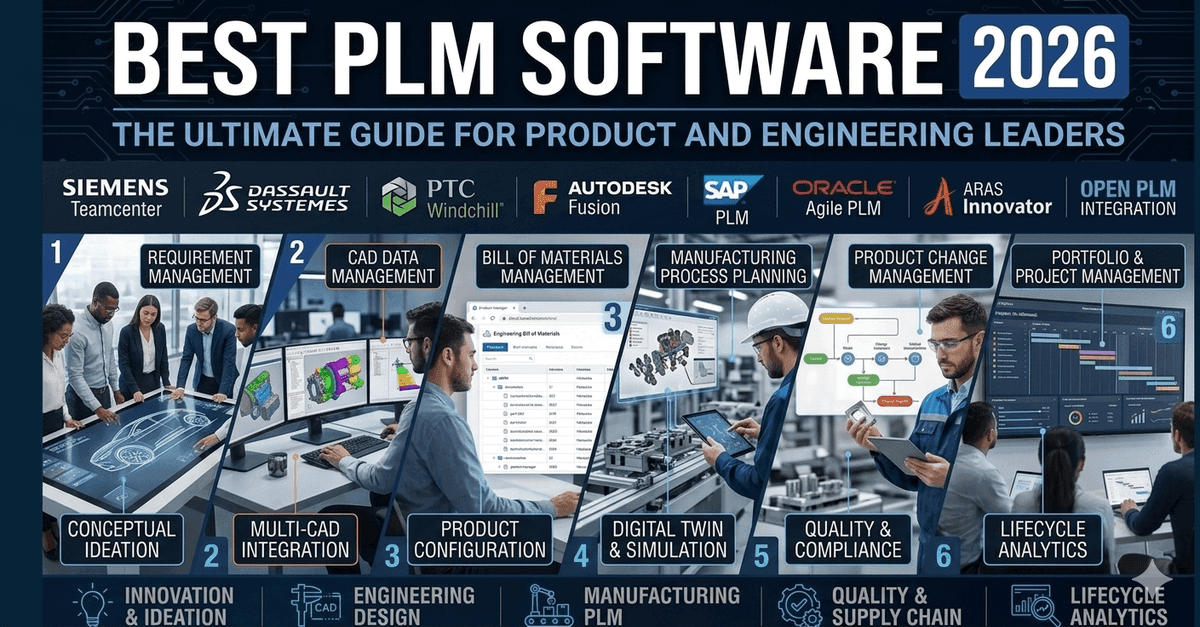
- Vendor selection — Best PLM Software 2026 and Best Simulation Software 2026 — independent vendor guides for the thread and twin workbench
Sources and Further Reading
Industry Standards & Frameworks
- NIST Cybersecurity Framework — Digital infrastructure governance standards
- ISO 26262: Functional Safety for Automotive — Data continuity and traceability requirements
- IEEE 1220: Configuration Management Standards — Data lineage and version control
Digital Twin & IoT Resources
- Siemens Digital Twin — Industrial Digital Twin strategy
- PTC ThingWorx IoT Platform — IoT and Digital Thread integration
- Dassault CATIA Simulation — Virtual product design and testing
Related Articles
- What is PLM? — Definition and core concepts
- Digital Thread vs Digital Twin — Architecture patterns
Citation: Finocchiaro, Michael. "Digital Thread vs Digital Twin." DemystifyingPLM, 2026. https://www.demystifyingplm.com/digital-thread-vs-digital-twin.
Last updated: 2026-05-03
Want to listen instead of read? 56 DemystifyingPLM articles are available as audio.
Browse audio →Looking up PLM terminology? Browse the canonical reference.
PLM Glossary →Cite this article
Finocchiaro, Michael. “Digital Thread vs Digital Twin: One Is an Architecture, the Other Is an Instance.” DemystifyingPLM, September 20, 2022, https://www.demystifyingplm.com/digital-thread-vs-digital-twin
PLM industry analyst · 35+ years at IBM, HP, PTC, Dassault Systèmes
Firsthand knowledge of the evolution from early 3D modeling kernels to today's cloud-native platforms and agentic AI — the history, strategy, and future of PLM.