Key Takeaways
- PLM Enhances Product Development Efficiency
- Data Management Crucial in PLM Processes
- Real-Time Collaboration Improves Teamwork
- Lifecycle Cost Analysis Optimizes Resource Use
- Integration with CAD Systems Streamlines Workflow
Short Answer
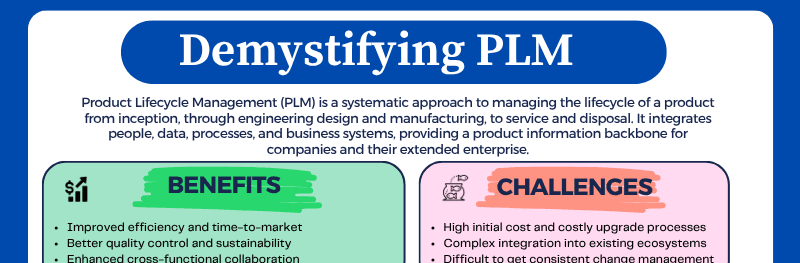
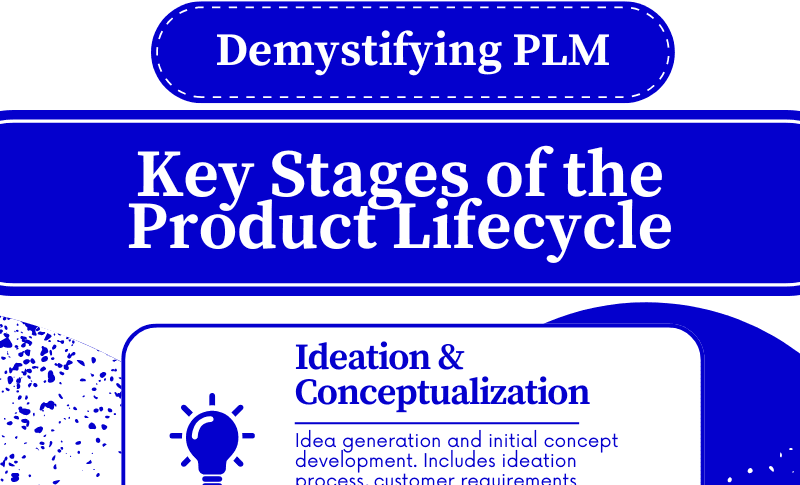
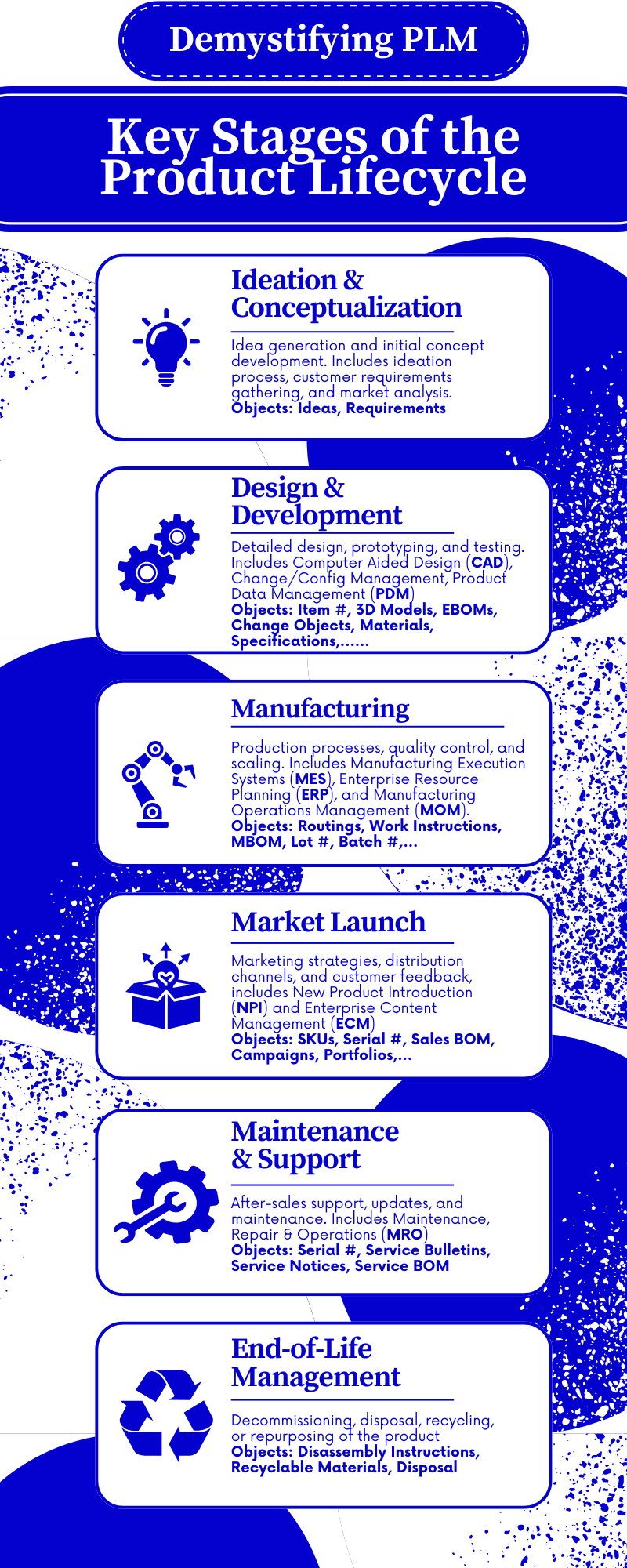
The key stages in PLM (Product Lifecycle Management) infographic illustrate the essential phases of product development and management, from concept to end-of-life. Each stage involves critical activities that ensure product quality, compliance, and efficiency.
- Conceptualization: Defining product requirements and strategy
- Design and Development: Creating detailed product specifications
- Manufacturing: Ensuring production processes are optimized
- Maintenance and Support: Managing post-release updates and issues
Why it matters: Understanding these stages helps PLM practitioners ensure seamless integration of tools and processes across the entire lifecycle, enhancing overall productivity and reducing costs.
Want to listen instead of read? 56 DemystifyingPLM articles are available as audio.
Browse audio →Looking up PLM terminology? Browse the canonical reference.
PLM Glossary →Cite this article
Finocchiaro, Michael. “Demystifying PLM Infographic 1.” DemystifyingPLM, January 5, 2025, https://www.demystifyingplm.com/demystifying-plm-infographic-1
PLM industry analyst · 35+ years at IBM, HP, PTC, Dassault Systèmes
Firsthand knowledge of the evolution from early 3D modeling kernels to today's cloud-native platforms and agentic AI — the history, strategy, and future of PLM.