Independent Buyer's Guides
to Engineering Software 2026
Vendor-neutral comparisons across the full product lifecycle — from design tools through manufacturing execution. No analyst-quadrant hedging. No vendor funding. Each guide matches platforms to the programs they actually fit.
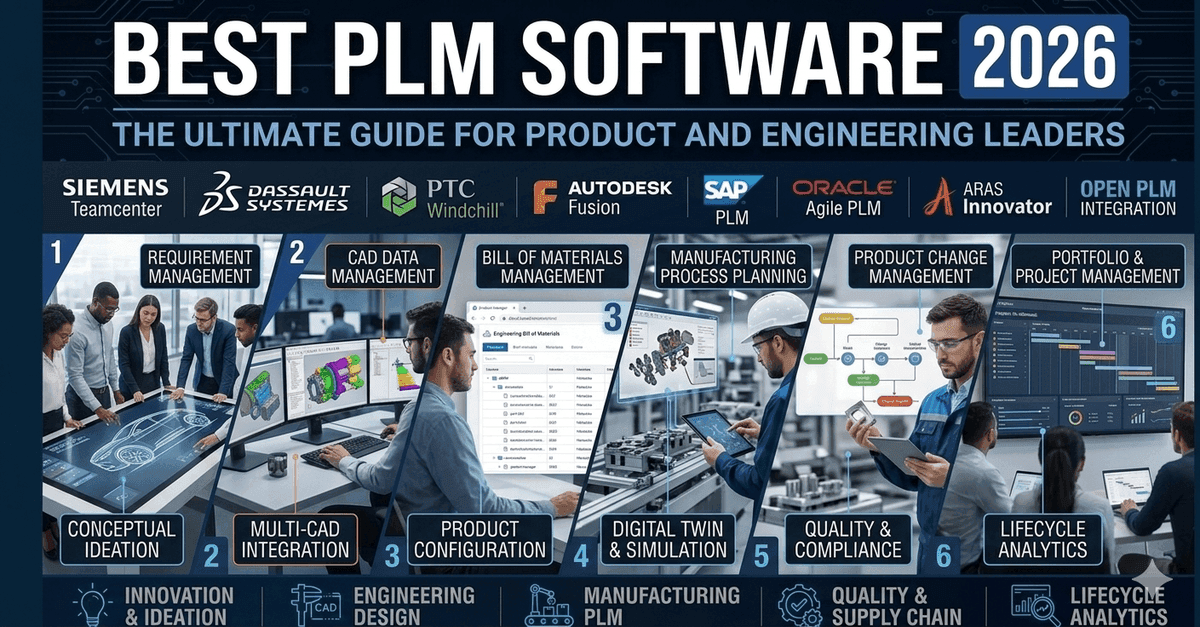
Best PLM Software 2026: The Independent Buyer's Guide
The best PLM software in 2026 depends on your scale and CAD environment. For enterprise automotive or aerospace programs with Siemens NX: Teamcenter. For enterprise industrial or medical with PTC Creo: Windchill. For CATIA-centric aerospace programs: 3DEXPERIENCE. For regulated industries needing maximum configurability: Aras Innovator. For cloud-first midmarket: Arena (PTC). For hardware startups and fast-growing product companies: Propel or Duro.
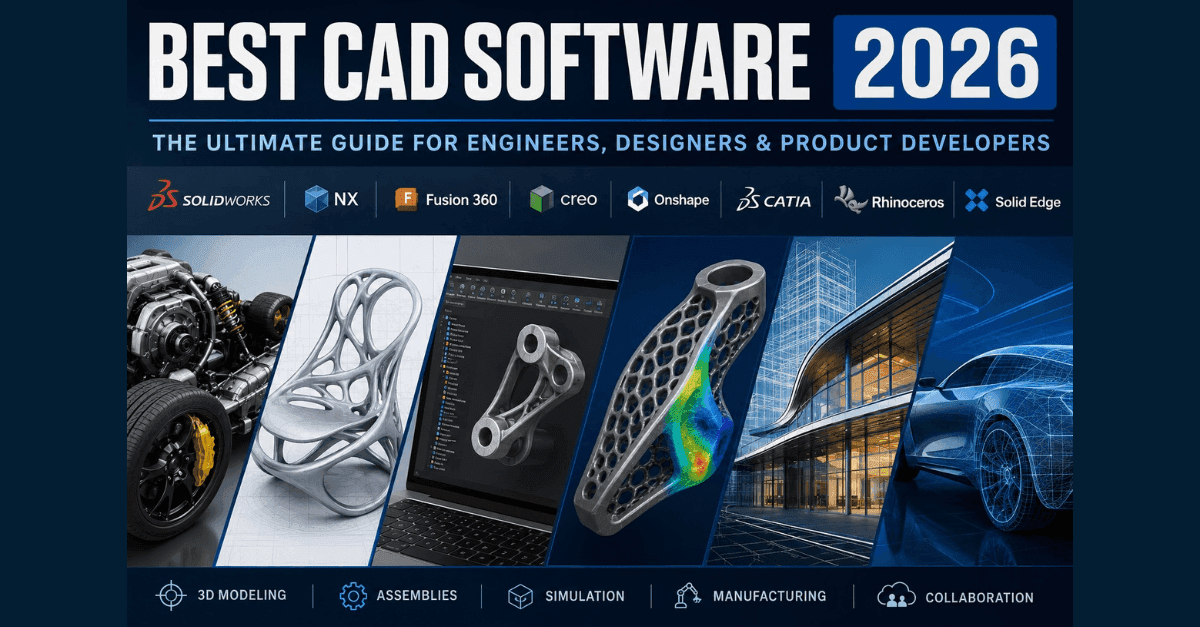
Best CAD Software 2026: The Engineer's Honest Guide
The best CAD software in 2026 depends on your industry and PLM ecosystem. For aerospace and complex surface design: CATIA. For automotive and precision mechanical: Siemens NX. For industrial equipment and mechanism-heavy design: PTC Creo. For mid-market mechanical engineering: SolidWorks or Solid Edge. For cloud-first teams: Onshape. For product development startups: Autodesk Fusion 360. For manufacturing-aware generative design with parametric output: InfinitForm. For AM design and geometry infrastructure: Metafold3D, nTop, or Cognitive Design. No single tool is best across all categories.
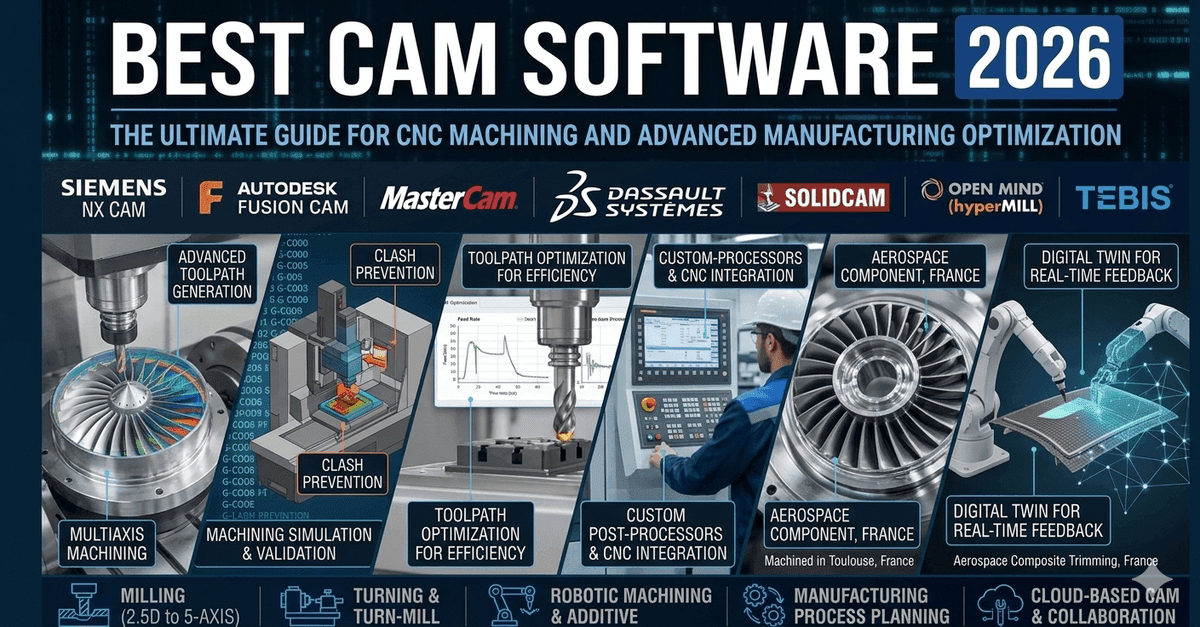
Best CAM Software 2026: The Machinist's Independent Guide
The best CAM software in 2026 depends on your shop profile and where your real programming bottleneck is, evaluated through the SWARF framework (Strategy, Workflow, Automation, Reality gap, Fit). For general machining with the broadest hiring pool: Mastercam. For advanced 5-axis, aerospace, molds, and precision geometry: hyperMILL or NX CAM. For cloud-native CAD/CAM integration and AI startup connectivity: Autodesk Fusion. For enterprise digital thread from design to shop floor: Siemens NX CAM. For AI-accelerated programming on top of existing CAM: CloudNC (ThreadMoat SDP 4.2) or LimitlessCNC (SDP 3.8). For manufacturability, quoting, and programming automation: Toolpath (SDP 3.6). No single platform wins across all shop profiles and machining requirements.
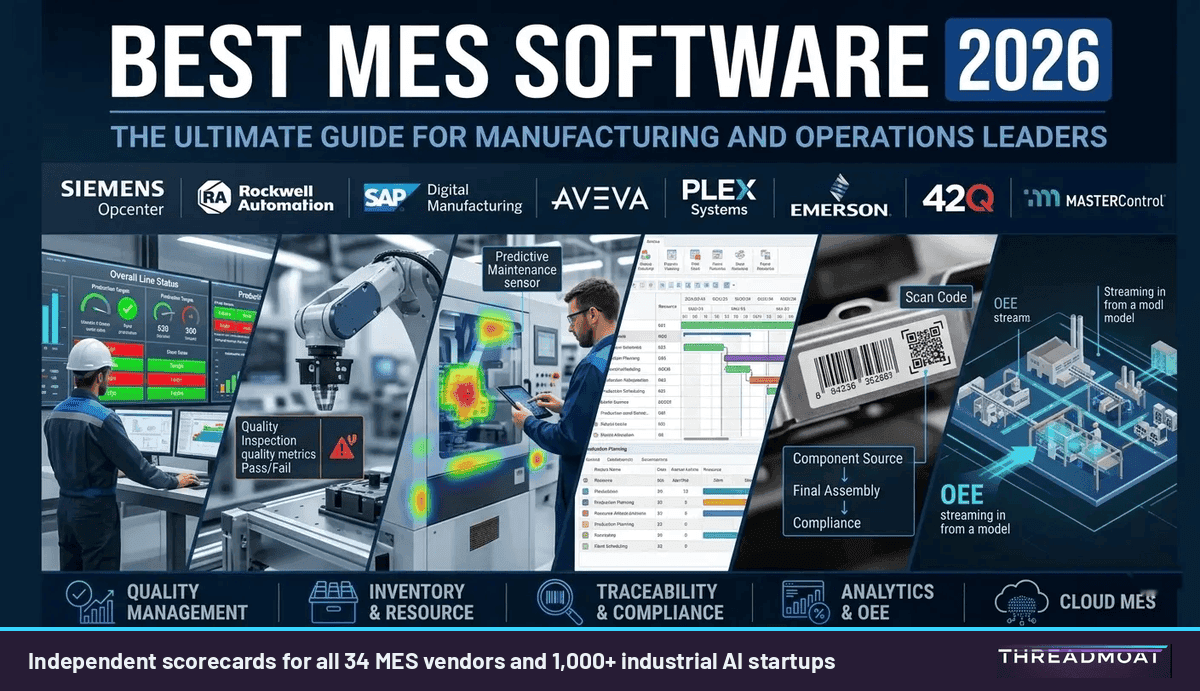
Best MES Software 2026: The Manufacturer's Independent Guide
The best MES software in 2026 is not a single-system answer. It is an architecture answer. For enterprise discrete and regulated manufacturing aligned to ISA-95: Siemens Opcenter. For global multi-site programs needing model-driven standardization: DELMIA Apriso. For modular deployment with strong quality and OEE: AVEVA MES. For a unified Level 1–3 ecosystem (connectivity + SCADA + MES + historian + IIoT): Velotic (formerly Proficy + Kepware + ThingWorx). For composable, low-code frontline execution: Tulip. For a commercial, UNS-native ISA-95 MES with GraphQL APIs and full stack ownership: Rhize. No single platform wins across all production modes and data architectures.
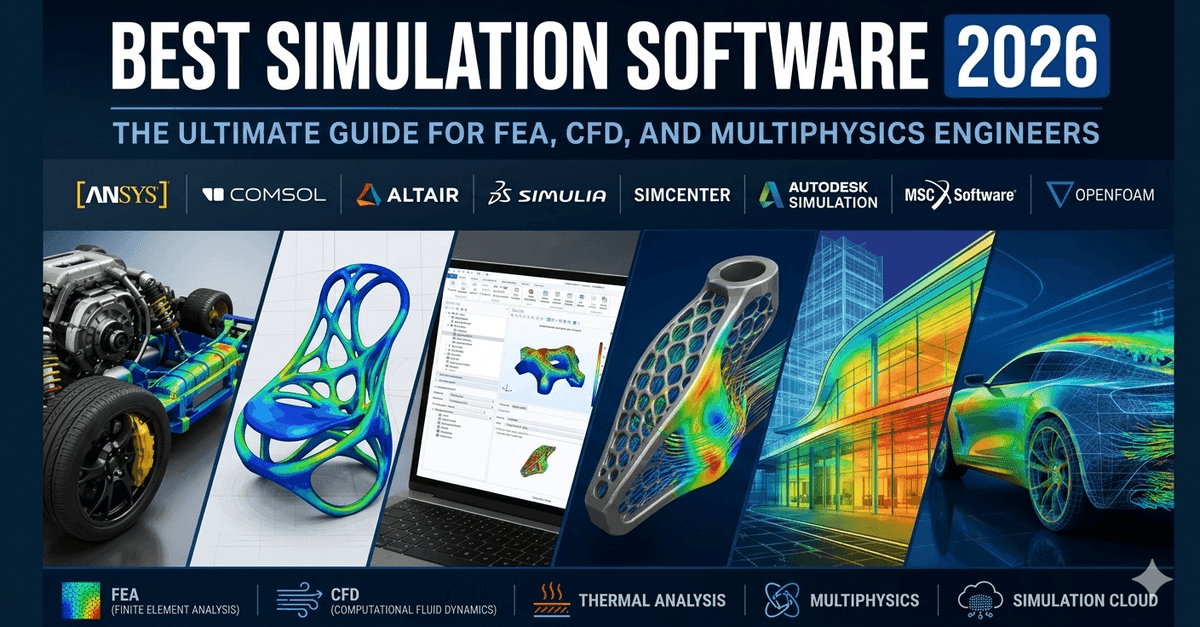
Best Simulation Software 2026: Incumbents, Specialists, and the New Constellation
The best simulation software in 2026 depends on your physics requirements, workflow fit, and how tightly simulation needs to integrate with your CAD/PLM/MES stack. For enterprise multiphysics programs: Ansys or Simcenter. For automotive crash, NVH, and durability: Altair or MSC/Hexagon. For CATIA-centric programs with structural and fluids: SIMULIA/Abaqus. For casting, molding, or vertical process simulation: MAGMASOFT, Moldex3D, or COMSOL. For cloud-native accessibility without solver infrastructure: SimScale or Luminary Cloud. For AI-assisted geometry-to-performance prediction: Neural Concept. No single platform wins across all physics domains, team sizes, and integration requirements.
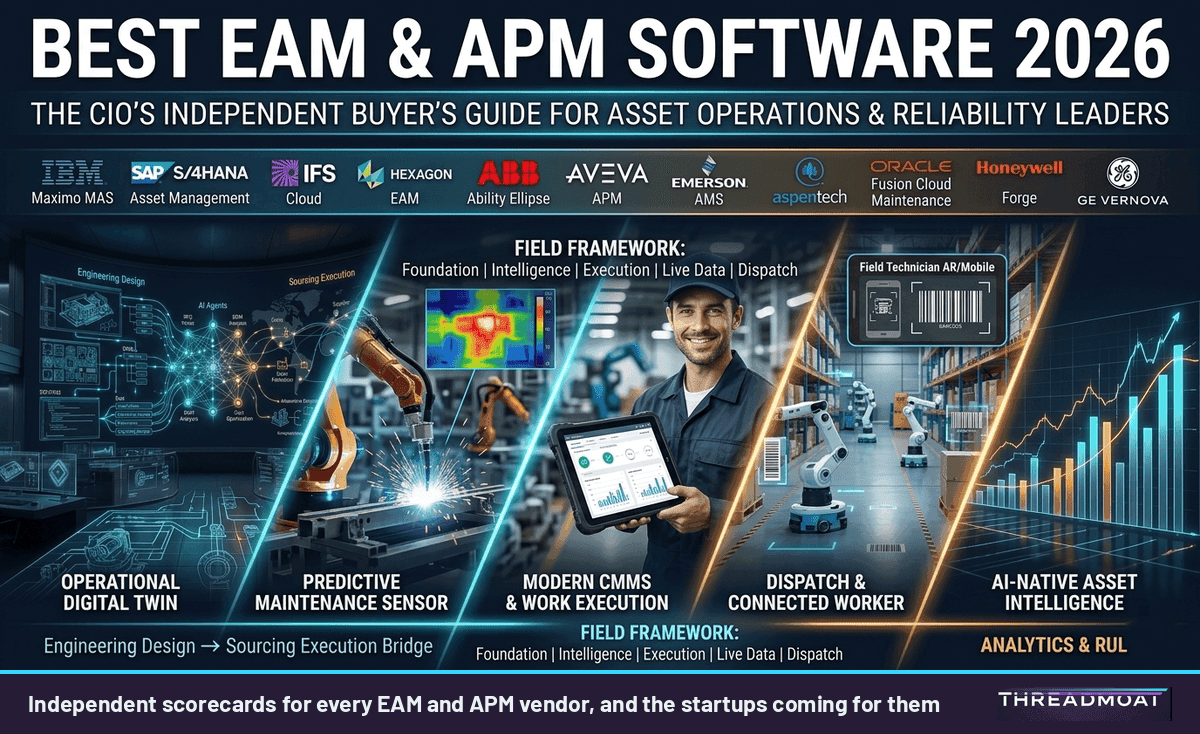
Best Operations & Asset Management Software 2026: The CIO's Independent Buyer's Guide
The best EAM/APM software in 2026 is not a single-platform answer. It is a FIELD architecture answer. For heavy asset industries (mining, utilities, oil and gas) needing Foundation and Execution under one governance model: IBM Maximo MAS or IFS Cloud. For process manufacturing Intelligence: TwinThread (AVEVA) or Tractian. For mid-market industrials who want modern work execution fast: MaintainX (now Autodesk). For aerospace MRO and complex field service: IFS Cloud. For AI-native predictive maintenance on rotating equipment: Tractian. No single platform wins across all FIELD layers and all operating environments.
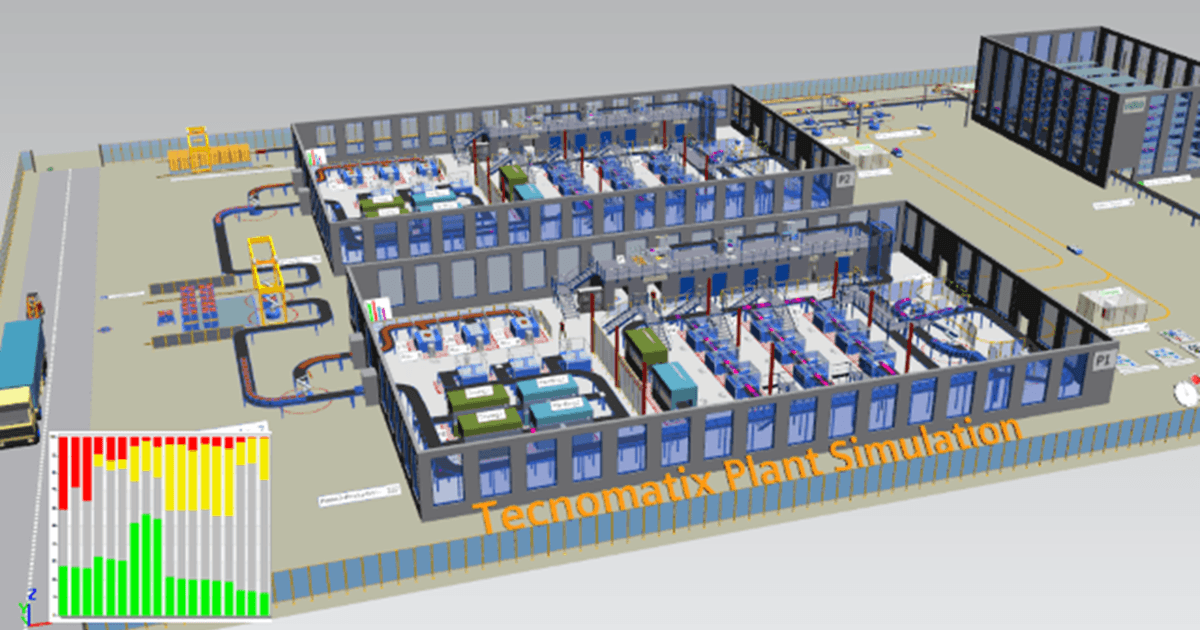
Best BIM Software 2026: The Independent Buyer's Guide for AEC and Owner Organizations
The best BIM software in 2026 depends on which stakeholder role you occupy and which BUILD layers you need to own. For architectural BIM authoring and MEP coordination: Autodesk Revit. For structural engineering and steel fabrication: Trimble Tekla Structures. For infrastructure and heavy construction: Bentley OpenBuildings / MicroStation. For architectural authoring with an open-standard philosophy: Graphisoft Archicad. For cloud-native construction project management: Procore or Autodesk Construction Cloud. For AI-assisted early-stage design: Autodesk Forma. For digital twin continuity into facility operations: Dalux. No single platform owns all five BUILD layers for all four project stakeholders.

Best SCM Software 2026: The Supply Chain Independent Buyer's Guide
The best SCM software in 2026 is a horizon ownership question before it is a platform question. Define H (which planning horizon — demand sensing, S&OP, or strategic network design — needs to be transformed first) before any vendor shortlist begins. For concurrent mid-horizon planning with scenario speed: Kinaxis RapidResponse. For integrated business planning connecting commercial and supply plans: o9 Solutions. For AI-driven retail and CPG execution: Blue Yonder. For SAP S/4HANA-centric programs: SAP IBP. For Oracle ERP-native programs: Oracle SCM Cloud. For supply-finance integration across S&OP and budgeting: Anaplan. No single platform wins across all three planning horizons and all operating environments.
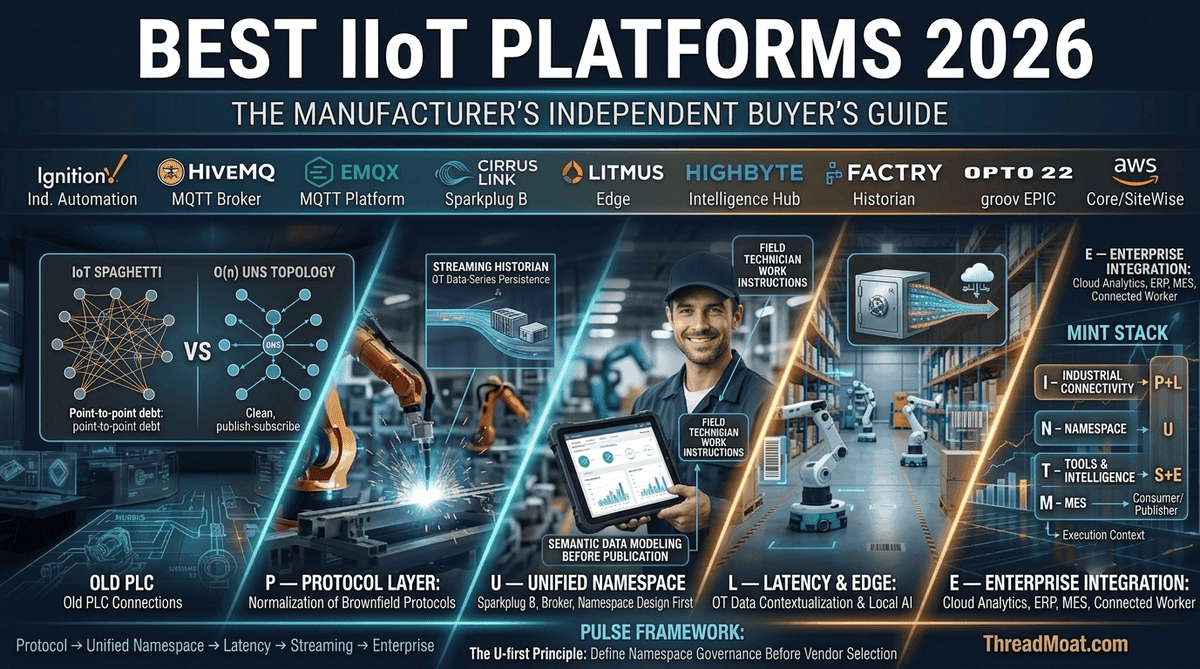
Best IIoT Platforms 2026: The Manufacturer's Independent Buyer's Guide
The best IIoT platform in 2026 is an architecture decision before it is a product decision. Design the Unified Namespace (U layer) first — before any edge, historian, or enterprise integration decision. For the de facto UNS reference implementation in manufacturing: Inductive Automation Ignition with Cirrus Link Sparkplug B modules. For enterprise-scale MQTT brokering: HiveMQ. For protocol normalization and industrial connectivity: Kepware (Velotic). For edge AI and OT data contextualization: Litmus Edge or HighByte Intelligence Hub. For time-series persistence: AVEVA PI System (process industries) or InfluxDB (cloud-native and mid-market). For enterprise IIoT application development on top of OT data: PTC ThingWorx. No single platform owns all five PULSE layers — the organizations that understand this before buying avoid the IoT spaghetti that characterizes most IIoT implementations.
Best Ideation / Knowledge Management Software 2026
Independent buyer's guide in preparation.
Best Additive Manufacturing Software 2026
Independent buyer's guide in preparation.
About This Series
Each guide in this series is written independently — no vendor relationships, no affiliate links, no sponsored placements. The goal is honest platform comparison matched to buyer context: industry, scale, workflow, and integration requirements. The same approach as everything else published here.