
Show all chapters ▸Hide chapters ▾
- 1Best CAD Software 2026: The Engineer's Honest Guide
- 2Best PLM Software 2026: Q1 Edition (Archived)
- 3Best CAM Software 2026: The Machinist's Independent Guide
- 4Best MES Software 2026: Q1 Edition (Archived)
- 5Best Simulation Software 2026: Incumbents, Specialists, and the New Constellation
- 6Best MES Software 2026: The Manufacturer's Independent Guide
- 7Best PLM Software 2026: The Independent Buyer's Guide
- 8Best Operations & Asset Management Software 2026: The CIO's Independent Buyer's Guide
- 9Best BIM Software 2026: The Independent Buyer's Guide for AEC and Owner Organizations
- 10Best IIoT Platforms 2026: The Manufacturer's Independent Buyer's Guide
- 11Best SCM Software 2026: The Supply Chain Independent Buyer's Guide
Key Takeaways
- Define which of the three planning horizons (demand sensing, S&OP, or strategic network design) your organization needs to own before shortlisting any vendor — this is the H-first principle
- No single platform best-in-class across all three horizons; the organizations that try to force one platform to own all three typically get the mid-horizon S&OP right and fail at both ends
- The N-layer (multi-tier supplier mapping, risk, ESG exposure) belongs to specialist platforms — Altana, Resilinc — that enterprise SCM platforms cannot replicate with existing data models
- Supply chain integration with PLM (BOM/ECO data) and MES (production actuals) is the most undervalued integration in digital transformation programs — the organizations doing it well have meaningful advantages in inventory accuracy and production planning
- AI in SCM is real in 2026 for demand sensing and exception management; probabilistic forecasting is commercially competitive and the ROI case for replacing statistical forecasting with ML is solid for most retailers and CPGs
Short Answer
The best SCM software in 2026 is a horizon ownership question before it is a platform question. Define H (which planning horizon — demand sensing, S&OP, or strategic network design — needs to be transformed first) before any vendor shortlist begins. For concurrent mid-horizon planning with scenario speed: Kinaxis RapidResponse. For integrated business planning connecting commercial and supply plans: o9 Solutions. For AI-driven retail and CPG execution: Blue Yonder. For SAP S/4HANA-centric programs: SAP IBP. For Oracle ERP-native programs: Oracle SCM Cloud. For supply-finance integration across S&OP and budgeting: Anaplan. No single platform wins across all three planning horizons and all operating environments.
- The CHAIN framework (Control tower / Horizon ownership / Analytics & AI / Integration / Network visibility) is the architectural lens for evaluating SCM software — H must be defined before any other layer
- Most SCM implementations fail at H — organizations buy one platform to own all three planning horizons (demand sensing, S&OP, strategic network design), which is the same structural mistake as buying one EAM for all five FIELD layers
- Kinaxis RapidResponse is the specialist for concurrent mid-horizon planning — scenario response speed and supply-demand balancing that no ERP-embedded SCM matches
- o9 Solutions is the fastest-growing enterprise planning platform in the market — strongest for integrated business planning (IBP) connecting commercial, operational, and financial plans
- Blue Yonder leads AI-driven execution in retail, grocery, and CPG demand sensing and 3PL/transportation management
- SAP IBP wins when the organization already runs SAP S/4HANA and the data model alignment outweighs best-of-breed planning depth
- The N-layer (multi-tier supplier network visibility and risk) is structurally separate from planning platforms — Altana, Resilinc, project44, and FourKites own this layer, and no enterprise SCM platform has built competitive N-layer capability
Best SCM Software 2026: The Supply Chain Independent Buyer's Guide
Q2 2026 Edition — updated June 2026 with the complete CHAIN framework, 15-platform vendor scorecard, and planning horizon routing. Visit threadmoat.com for the full supply chain vendor database.
This post presents the key findings from the ThreadMoat Supply Chain Buyer's Guide 2026. For the full report including all CHAIN profiles and H-layer horizon ownership analysis, visit threadmoat.com.
Supply chain management software selection in 2026 is not primarily a technology decision. It is a planning horizon decision. The market has matured to the point where most enterprise platforms can execute against a demand plan, run an S&OP cycle, and publish a supply schedule to ERP. The question that determines whether a supply chain transformation succeeds is not which platform has the best feature checklist — it is which planning horizon your organization needs to own first, and which platform was actually built to own it.
This guide introduces the CHAIN framework — a five-layer architectural lens for evaluating supply chain management software. It covers 15 vendors across enterprise incumbents, specialized mid-market platforms, and AI-native risk and visibility tools. The central insight — the H-first principle — explains why most SCM implementations fail at the planning horizon they needed most, and how to avoid that failure before any vendor shortlist begins.
No vendor funding. No analyst-quadrant hedging. ThreadMoat supply chain competitive data at threadmoat.com.
What This Guide Covers — and What It Does Not
In scope:
- Demand planning and demand sensing
- S&OP and Integrated Business Planning (IBP)
- Supply planning and inventory optimization
- Strategic network design
- Supply chain risk and n-tier visibility
- Transportation and freight visibility (as a C-layer capability)
Out of scope:
- Warehouse Management Systems (WMS): WMS is a distinct software category. Manhattan Associates, Blue Yonder, and Infor CloudSuite WMS are evaluated in separate WMS buyer's guides. Where WMS platforms appear in this guide (Manhattan, Blue Yonder), they appear for their SCM-adjacent planning capabilities, not for WMS execution depth.
- Transportation Management Systems (TMS): TMS is a separate category. Oracle TM Cloud, MercuryGate, and dedicated TMS platforms are separate evaluations. Platforms with TMS coverage (Oracle SCM Cloud, Blue Yonder) are noted where TMS is relevant to a holistic SCM architecture.
- Procurement and Sourcing Platforms: Coupa, SAP Ariba, Ivalua, and Jaggaer are procurement platforms. Coupa appears in this guide only for Supply Chain Design (the former Llamasoft network optimization engine) — not for its spend management core.
This scoping matters because many evaluations fail by treating WMS, TMS, and SCM as interchangeable. They are not. A manufacturer evaluating "supply chain software" who shortlists both project44 (freight visibility) and Kinaxis (concurrent planning) is comparing two structurally different problems. The CHAIN framework is designed to prevent that category confusion.
Part 1: The Supply Chain Architecture Shift
From Spreadsheets to Supply Network Intelligence
Understanding why the SCM software market looks the way it does in 2026 requires following the architectural history. Each generation added a layer that the previous one could not own — and each layer is still relevant in some form today.
Generation 1: Spreadsheet planning (pre-2000). Demand planning happened in Excel. Supply schedules were assembled manually against ERP transaction data. The planning cycle was weekly or monthly. The sophistication ceiling was determined by the analyst's ability to maintain formula integrity across a 40-tab workbook with 200,000 rows of history. Most mid-sized manufacturers are still partially in this generation.
Generation 2: ERP-embedded SCM (2000–2010). SAP APO (Advanced Planner and Optimizer) and Oracle Advanced Supply Chain Planning were the market's first serious planning layers above ERP transactions. The insight was correct: supply chain planning should consume ERP data, run optimization, and write plans back into ERP execution. The implementation reality was brutal. SAP APO required significant master data quality, careful integration design, and years of tuning to produce plans that planners would trust. Most deployments underdelivered.
Generation 3: Best-of-breed APS (2005–2015). i2 Technologies, Manugistics, and Kinaxis (then called Webplan) introduced planning architectures that could operate independently of ERP, holding a memory model of the supply chain and running constrained optimization against it. The best-of-breed argument was compelling: a planning system that was not constrained by the ERP data model could model reality more accurately. Kinaxis's in-memory concurrent architecture came from this era.
Generation 4: Integrated Business Planning / IBP (2015–2022). The market realized that the commercial planning-supply planning-financial planning disconnect was the primary S&OP failure mode. IBP platforms — Anaplan, o9, and eventually SAP IBP — were architected to hold all three planning domains in a single model. The insight was right; the implementation challenge was the data integration program required to make it real.
Generation 5: AI-native platforms and supply network intelligence (2022–present). The current generation introduced two genuinely new capabilities. First, AI-native demand sensing — machine learning models trained on billions of POS observations, real-time signals, and market data that outperform statistical forecasting for short-horizon demand. Second, supply network intelligence — AI-powered mapping of multi-tier supply networks from trade data and logistics signals, enabling visibility into tier-2 and tier-3 supplier risk that was previously invisible. Altana and Resilinc represent this second capability; Blue Yonder and o9 represent the first.
The implication: in 2026, no single platform owns the full arc of that history. Every platform was designed to solve a specific generation's problem. The evaluation question is which generation's problem is most acute for your organization — and which platform was built for that generation's architecture.
The Three Planning Horizons in Detail
The most important architectural insight in supply chain software is that the three planning horizons are structurally different problems requiring different data latency, different user profiles, different algorithm types, and different integration requirements. A platform built to own one horizon is typically weak at the other two — not by accident, but by design.
A 5 in H means the platform was architecturally designed for one or more planning horizons — its data model, latency architecture, and planning algorithms are native to those horizons, not adapted from a different primary use case.
Demand Sensing: Days to Two Weeks
Demand sensing is a real-time data problem disguised as a forecasting problem. Its job is not to produce the monthly demand plan — that is statistical forecasting. Its job is to detect the divergence between that plan and what actual demand signals are showing in the next 1–14 days, and propagate that signal into replenishment, warehouse slotting, and production scheduling before the gap becomes a service failure or an overstock event.
The data that demand sensing consumes is fundamentally different from what monthly statistical forecasting uses: point-of-sale scan data (updated daily or hourly), e-commerce order intake rates, promotional lift actuals, weather and social sentiment signals, inventory depletion rates at distribution centers, and carrier capacity constraints. The latency requirement is measured in hours, not days. The output is a revised short-horizon demand signal that downstream execution systems (WMS, TMS, production scheduling) consume in near-real-time.
The platform that wins demand sensing is the one with the best ML model architectures for short-horizon consumer demand signals, the widest data ingestion surface, and the tightest integration to execution systems. Blue Yonder leads this layer in retail and grocery, where its models have been trained on decades of CPG and FMCG demand patterns. Kinaxis leads demand sensing for manufacturing supply chains, where the sensing output feeds directly into concurrent supply planning rather than separate execution. The distinction matters: Blue Yonder's sensing optimizes replenishment and WMS; Kinaxis's sensing changes the supply plan.
What demand sensing is not: it is not strategic planning, it is not S&OP, and it is not a tool for the CFO or CSCO. Its primary users are demand planners and replenishment analysts running high-frequency operational decisions. Buying a strategic IBP platform (o9, Anaplan) to solve a demand sensing problem is the organizational equivalent of buying a network design tool to fix a stockout.
S&OP / Integrated Business Planning: Weeks to 18 Months
S&OP is a cross-functional alignment problem disguised as a supply chain software problem. The monthly S&OP process asks a deceptively simple question: given what the commercial side expects to sell in the next 3–18 months, and given what the supply chain can realistically produce and deliver, what is the agreed operating plan? The difficulty is that answering this question requires holding commercial forecasts (owned by Sales and Marketing, often in CRM or commercial planning systems), supply constraints (owned by manufacturing, in ERP or MES capacity models), inventory positions (in ERP or WMS), financial targets (in financial planning systems), and procurement lead times (in purchasing systems) in a single, coherent model — simultaneously.
Most S&OP implementations fail not because the software is wrong, but because one of three organizational conditions is missing:
- Shared data governance. The commercial forecast in Salesforce does not reconcile with the supply plan in SAP. Someone has to own the reconciliation — and that ownership decision is organizational, not technical.
- Process cadence commitment. S&OP is a monthly process with weekly sub-cycles. Organizations that run quarterly planning cycles and call it S&OP are not running S&OP.
- Stakeholder participation. If the CSCO runs S&OP but the CFO refuses to align financial targets to the supply-constrained plan, the output is a supply chain plan that no one in Finance treats as real.
The platform dimension then becomes: which SCM software can best accommodate the specific failure mode your S&OP is experiencing?
- Supply-demand balancing speed is the failure: Kinaxis. Its concurrent in-memory planning engine lets supply planners model the impact of a demand surge or supplier failure in minutes, not overnight batch cycles. The commercial side gets a faster, more credible answer from supply.
- Commercial-supply-finance disconnection is the failure: o9 or Anaplan. Both are IBP-architecture platforms that hold commercial, supply, and financial plans in a single model.
- ERP data model complexity is the failure: SAP IBP. If the real problem is that supply plans built outside SAP require weeks of reconciliation with SAP transactional data, IBP's native S/4HANA integration eliminates the reconciliation overhead.
Strategic Network Design: One to Five Years
Strategic network design is an optimization problem that most SCM platforms do not own at all. It asks questions that operational planning cannot answer: given five different demand scenarios for the next three years, where should factories and distribution centers be located to minimize total landed cost? Which supplier base best balances cost, risk, and geopolitical resilience? How does a carbon price, new tariff regime, or nearshoring policy change the optimal network? What is the impact of closing a distribution center in Ohio versus opening one in Texas?
These questions require network optimization solvers — mathematical programming algorithms that can explore thousands of facility, lane, and inventory combinations simultaneously and find the cost-optimal configuration under constraint sets. Statistical forecasting and constraint-based supply planning are not the same computational problem.
Coupa Supply Chain Design (formerly Llamasoft) is the market leader for strategic network optimization. Its solver engine handles the combinatorial complexity of multi-echelon network design at global scale. o9 has built genuine strategic network design capability into its platform — one of the few enterprise IBP platforms that can run strategic and operational planning scenarios side by side. Kinaxis does not own this layer; it connects to network design tools for organizations that need both.
The practical implication: organizations that present strategic network design alongside demand sensing and S&OP as a single RFP requirement are essentially asking for three different platforms in one evaluation. The ones that do this successfully are the ones who recognize that network design is a periodic strategic project (annual or bi-annual), not an operational workflow — and that the platform for the periodic project does not need to be the same platform as the one running the daily demand-supply cycle.
Why Buying One Platform for All Three Horizons Fails
The market regularly produces organizations that have bought a single SCM platform to own demand sensing, S&OP, and strategic network design simultaneously. The failure pattern is consistent:
The platform delivers reasonable S&OP capability — because S&OP is usually the primary use case the vendor optimized for. Demand sensing is implemented using the platform's statistical forecasting modules with ML add-ons; it works adequately for slow-moving items but fails for fast-moving retail SKUs with intraday demand volatility. Strategic network design is either ignored entirely (the RFP requirement that quietly disappeared), or handled through a consulting engagement that produces a PowerPoint rather than a live model.
Three to five years into the program, the organization is back in market — now with a demand sensing specialist evaluation running in parallel with the existing SCM platform, and a network design engagement with a consulting firm. The total cost is materially higher than buying three specialized tools would have been.
The structural reason this happens: demand sensing, S&OP, and network design have different data latency requirements (hours vs. weeks vs. months), different user profiles (demand planners vs. S&OP managers vs. network engineers), different algorithm types (ML forecasting vs. constraint planning vs. combinatorial optimization), and different integration topologies (POS systems vs. ERP/capacity vs. facility cost databases). A single data model that serves all three equally well does not exist. Every platform makes tradeoffs. The honest evaluation process identifies which tradeoff is acceptable for the organization's primary problem.
The N-Tier Visibility Gap
Most enterprise SCM platforms are architecturally tier-1 visibility systems. They model direct suppliers — the companies that ship materials to your factories or warehouses. They do not model what happens upstream of those suppliers: who supplies your tier-1 suppliers' key inputs, where those second-tier factories are located, and what geopolitical, regulatory, or climate risks those second-tier nodes carry.
This is the n-tier visibility gap — and in 2026 it has moved from a niche risk management concern to a regulatory compliance requirement in multiple industries and jurisdictions.
The Uyghur Forced Labor Prevention Act (UFLPA) in the US, the EU Corporate Sustainability Due Diligence Directive (CSDDD), and CSRD Scope 3 emissions reporting requirements all require organizations to demonstrate traceability and due diligence into their supply chains beyond tier-1. The semiconductor shortage of 2021–2023 demonstrated that the most impactful supply chain disruptions typically originate at tier-2 and tier-3 — in the substrate suppliers, chemical suppliers, and specialized component manufacturers that sit behind the visible supply base.
Altana and Resilinc were built specifically for this gap. A 5 in N means the platform maps supplier relationships beyond tier-1 and monitors risk signals across the full n-tier network. No enterprise SCM platform (SAP IBP, Kinaxis, o9, Blue Yonder) has built competitive N-layer capability. The ThreadMoat supply chain database tracks this as a structural market separation — the N-layer belongs to specialist platforms, and attempting to use an enterprise SCM platform's supplier master data as a substitute for n-tier mapping produces a false confidence in supply chain visibility that organizational experience will eventually correct.
The PLM-SCM Integration Gap
The I layer of CHAIN connects to the L layer of VAULT (PLM) and the E layer of MINT (MES). This connection is one of the most strategically important — and most systematically underinvested — interfaces in manufacturing digital transformation.
Engineering change orders (ECOs) from PLM that change component specifications must trigger supply qualification checks in SCM. When a design revision replaces a resistor from supplier A with a functionally equivalent one from supplier B, the supply chain system needs to know: does supplier B have capacity? Is supplier B approved? What is the lead time change? What is the impact on open purchase orders? In most manufacturing organizations, this propagation happens through a manual process — an email from engineering to procurement, a spreadsheet update, a purchasing team that discovers the discrepancy when the wrong part arrives at the factory. The PLM-SCM integration that would automate this flow is technically feasible; it is implemented at scale in very few organizations.
Production actuals from MES must update supply planning with real yield and capacity data. If the supply plan assumes a 95% first-pass yield on a production line and the MES is recording 88%, the supply plan is wrong — and it will stay wrong until the next planning cycle manually reconciles the numbers. In practice, most supply plans run on nominal capacity assumptions that manufacturing floor reality has never validated. The MES-SCM actuals loop that closes this gap — where production actuals feed daily into supply available-to-promise calculations — is the single most impactful integration investment for manufacturers running continuous production. Most SCM implementations treat it as a one-time integration project rather than a live data flow. This is where most SCM ROI disappears in manufacturing organizations.
The implication for evaluation: when evaluating SCM platforms for a manufacturing context, the I-layer score matters as much as the H-layer score. A platform with a 5 in H and a 2 in I will produce a supply plan that is technically sophisticated and operationally unreliable.
The CHAIN Framework
The CHAIN framework maps supply chain software into five architectural layers. Each layer has a natural owner — and the evaluation sequence matters. H must be defined before any other layer.
| Layer | What It Means | Evaluation Sequence |
|---|---|---|
| C — Control Tower | Real-time supply chain visibility, exception management, in-flight inventory and shipment monitoring | Layer 4: evaluate after H, A, and I are defined |
| H — Horizon Ownership | Which planning horizon the organization needs to own first: demand sensing (days–weeks), S&OP (months), or strategic network design (years) | Layer 1: define this before any other evaluation |
| A — Analytics & AI | Probabilistic forecasting, digital supply twin, scenario modeling, demand sensing, predictive risk | Layer 2: evaluate which AI capability your H-layer requires |
| I — Integration | ERP, PLM BOM/ECO, MES production actuals, 3PL/logistics, e-procurement, supplier portals | Layer 3: evaluate integration depth for your specific system of record |
| N — Network Visibility | Multi-tier supplier mapping, n-tier risk, ESG and geopolitical exposure across the full supply network | Layer 5: a structurally separate capability — specialist vendors own this layer |
H — Horizon Ownership: The H-First Insight
Most SCM implementations fail at H. Not because the technology is wrong. Because the organization bought a single platform to own all three planning horizons simultaneously — and no platform does all three with equal depth.
The three supply chain planning horizons are structurally different problems:
Demand sensing (days to two weeks) is a real-time data problem. It ingests point-of-sale data, order intake signals, inventory depletion rates, and market movement to refine the near-term demand plan continuously. The platform that wins demand sensing is the one with the best real-time data ingestion, the most accurate short-horizon ML models, and the tightest integration to execution (warehouse and transportation). Blue Yonder leads this layer in retail and CPG. Kinaxis's demand sensing integrates uniquely into its concurrent supply model.
S&OP (weeks to 18 months) is a cross-functional alignment problem. It requires a planning model that can hold demand, supply, inventory, capacity, and financial data simultaneously and allow commercial, operational, and finance stakeholders to work against the same version of the plan. This is the most contested horizon. Kinaxis is strongest for concurrent supply-demand balancing at speed. o9 is strongest when S&OP needs to connect tightly to commercial planning and financial budgets in an integrated business planning (IBP) model. SAP IBP is strongest when the organization's data is already in SAP S/4HANA and the cost of ETL outweighs planning depth differences.
Strategic network design (one to five years) is an optimization problem. It asks: given projected demand scenarios, where should factories, warehouses, and distribution centers be located? What supplier base best balances cost, risk, and resilience? Which transportation network minimizes total landed cost under carbon constraints? This horizon requires network optimization solvers, not planning engines. Coupa Supply Chain Design (formerly Llamasoft) is the market leader for this layer. o9 has built strategic network design into its platform. Most demand planning and S&OP platforms do not own this layer at all.
The H-first principle: Define which horizon needs to be transformed before shortlisting any vendor. Organizations that start with "we need a better demand forecast" are in a different evaluation than organizations that start with "our S&OP process is broken and commercial and supply don't talk." Both may end up evaluating the same platforms — but the evaluation criteria, the data integration priorities, and the organizational change program are completely different. The platform that wins demand sensing (Blue Yonder) is not the same platform that wins integrated commercial-financial-supply planning (o9). Buying for the wrong horizon produces a successful software implementation that does not solve the organizational problem.
CHAIN Scorecard: 15-Platform Summary
| Platform | C | H | A | I | N | Tier |
|---|---|---|---|---|---|---|
| SAP IBP | 3 | 4 | 3 | 5 | 2 | Enterprise |
| Oracle SCM Cloud | 3 | 3 | 3 | 5 | 2 | Enterprise |
| Kinaxis RapidResponse | 4 | 5 | 4 | 4 | 2 | Enterprise |
| Blue Yonder | 4 | 4 | 5 | 4 | 3 | Enterprise |
| o9 Solutions | 3 | 5 | 5 | 3 | 3 | Enterprise |
| Anaplan | 2 | 4 | 3 | 4 | 1 | Enterprise |
| E2open | 4 | 3 | 3 | 5 | 4 | Tier 2 |
| Manhattan Associates | 3 | 2 | 3 | 4 | 2 | Tier 2 |
| Logility | 2 | 4 | 3 | 3 | 2 | Tier 2 |
| Infor Nexus | 3 | 2 | 2 | 5 | 4 | Tier 2 |
| Coupa SCM Design | 1 | 3 | 4 | 3 | 3 | Tier 2 |
| Altana | 2 | 1 | 4 | 3 | 5 | AI-Native |
| Resilinc | 3 | 1 | 4 | 3 | 5 | AI-Native |
| project44 | 4 | 1 | 3 | 4 | 3 | AI-Native |
| FourKites | 4 | 1 | 3 | 3 | 3 | AI-Native |
Scores 1–5. 1 = not a primary capability. 5 = platform was architecturally designed to own this layer.
The 2026 Supply Chain Software Landscape
| Platform | Tier | CHAIN Strength | Best For |
|---|---|---|---|
| SAP IBP | Enterprise | H★★★★, I★★★★★ | SAP S/4HANA-native programs |
| Oracle SCM Cloud | Enterprise | H★★★★, I★★★★★ | Oracle ERP-native programs |
| Kinaxis RapidResponse | Enterprise | H★★★★★, A★★★★★ | Concurrent mid-horizon planning, scenario speed |
| Blue Yonder | Enterprise | H★★★★★ (sensing), A★★★★★ | Retail, CPG demand sensing, 3PL/TMS |
| o9 Solutions | Enterprise | H★★★★★ (IBP), A★★★★★ | Integrated business planning, commercial-supply integration |
| Anaplan | Enterprise | H★★★★ (IBP+finance), I★★★★ | Supply-finance planning integration |
| E2open | Tier 2 | N★★★★★, I★★★★ | Multi-enterprise supply chain networks, trade compliance |
| Manhattan Associates | Tier 2 | C★★★★★ | Omnichannel order management, WMS |
| Logility | Tier 2 | H★★★★, A★★★★ | Mid-market S&OP, demand planning |
| Infor Nexus | Tier 2 | N★★★★, I★★★★ | Global trade, supplier collaboration |
| Coupa Supply Chain Design | Tier 2 | H★★★★★ (network) | Strategic network optimization |
| Altana | AI-native | N★★★★★ | N-tier supply chain mapping, geopolitical risk |
| Resilinc | AI-native | N★★★★★, C★★★★ | Supply chain risk monitoring, event correlation |
| project44 | AI-native | C★★★★★ | Real-time transportation visibility, predictive ETAs |
| FourKites | AI-native | C★★★★★ | Freight visibility, AI predictive arrival |
Tier 1: Enterprise SCM Platforms
SAP Integrated Business Planning (IBP)
SAP IBP is the right answer for one specific buyer: an organization that already runs SAP S/4HANA at scale and for which the cost and complexity of integrating a best-of-breed planning platform with the SAP data model outweighs any advantage in planning depth.
That is a real and significant buyer category. The most important supply chain data — open purchase orders, inventory positions, production orders, supplier master data, financial actuals — lives in SAP for a large percentage of global manufacturing organizations. SAP IBP runs natively on HANA, consumes S/4HANA data without ETL, and produces plans that write back directly into SAP transactions. The integration that other vendors charge consulting days to build is native.
The honest limitations: SAP IBP is not best-in-class at any individual planning horizon. Its demand sensing is adequate, not leading. Its S&OP modeling is competent, not innovative. Its strategic network design capability is limited compared to dedicated optimization platforms. The trade-off is explicit: in exchange for integration simplicity and data model fidelity, you accept planning depth that lags Kinaxis, o9, and Blue Yonder in their respective specializations.
CHAIN Profile: C=3 | H=4 | A=3 | I=5 | N=2
Strengths:
- Native S/4HANA integration eliminates the ETL complexity that costs best-of-breed vendors 3–6 months of implementation time
- Single SAP support contract and ecosystem — for organizations already committed to SAP's roadmap, IBP aligns without requiring a parallel vendor relationship
- Demand-driven MRP and inventory management modules have matured substantially in recent releases
Challenges:
- Planning depth for concurrent scenario modeling and demand sensing trails Kinaxis and Blue Yonder
- Not a credible option for non-SAP ERP organizations — the integration advantage that defines the value proposition disappears entirely
Best Fit: Organizations running SAP S/4HANA as the primary ERP backbone with supply chain transformation on the roadmap — where data model fidelity outweighs best-of-breed planning depth.
Reference profile: BASF, Henkel, Continental, Merck KGaA, and large manufacturing organizations with SAP at the ERP center of gravity.
Who should evaluate: Organizations already running SAP S/4HANA at scale. The larger the SAP footprint, the stronger the IBP case.
Who should not evaluate: Organizations running non-SAP ERP. Organizations for whom demand sensing or real-time scenario response is the primary transformation goal. Organizations whose S&OP problem is primarily organizational (commercial-supply alignment) rather than data-model.
Oracle SCM Cloud
Oracle SCM Cloud is the mirror of SAP IBP's value proposition: the right answer for Oracle ERP-centric organizations where supply chain data lives in Oracle Fusion and integration complexity is the primary cost driver. Oracle's full-stack coverage — supply planning, demand management, order management, manufacturing, transportation, global trade management — is genuinely comprehensive.
The implementation reality is that Oracle SCM Cloud is among the most complex enterprise software programs in the market. It is full-stack in the way that SAP is full-stack: every layer is covered, every integration is documented, and the implementation program is measured in years rather than months. Organizations that have navigated Oracle Fusion implementations know what they are committing to.
Oracle's AI capabilities in supply chain — demand forecasting, anomaly detection, inventory optimization — have improved materially with the Oracle AI Platform integration, but still trail the dedicated AI-native planning vendors.
CHAIN Profile: C=3 | H=3 | A=3 | I=5 | N=2
Strengths:
- End-to-end Oracle stack coverage from supply planning through transportation and global trade
- Oracle Fusion ERP native integration — the same data model advantage as SAP IBP for Oracle-centric organizations
- Transportation management (Oracle TM Cloud) is competitive and included in the broader Oracle SCM suite
Challenges:
- Implementation complexity is among the highest in enterprise software — programs routinely run 18–36 months
- AI planning depth for demand sensing and concurrent scenario modeling trails Kinaxis and o9
Best Fit: Oracle Fusion ERP-centric organizations building an integrated supply chain capability. Organizations that want a single vendor relationship covering planning, execution, and financial consolidation.
Reference profile: Large Oracle-standard enterprises in retail, CPG, and industrial manufacturing with Oracle Fusion as the ERP backbone.
Who should evaluate: Oracle Fusion ERP-centric organizations. Organizations that want a single vendor relationship covering planning, execution, and financial consolidation.
Who should not evaluate: Organizations on non-Oracle ERP who would face the full integration cost without the data model benefit. Organizations for whom supply chain agility and scenario response speed are the primary requirements.
Kinaxis RapidResponse
Kinaxis is the specialist's specialist. If you need to answer the question "what happens to our supply plan if X fails right now?" in minutes rather than days, Kinaxis is the only platform in the enterprise tier that was built specifically to do that.
The architectural differentiator is the concurrent planning engine. Traditional supply chain planning systems run batch optimization cycles — a demand plan runs overnight, feeds a supply planning run, which informs an inventory optimization cycle. Kinaxis holds the full supply-demand-inventory model in memory simultaneously and runs scenarios against it concurrently. A planner can model 50 different disruption scenarios — simultaneous changes to demand, supply capacity, and transportation constraints — and compare them in a single session. No ERP-embedded SCM matches this at scale.
The H positioning: Kinaxis is the strongest platform at the mid-horizon S&OP layer for organizations where supply-demand balancing speed is the primary value driver. It is strong for demand sensing when sensing feeds directly into concurrent supply planning. It is not a strategic network design platform.
Kinaxis has expanded its portfolio through acquisition: Rubikloud (demand ML) and Maestro (supply chain orchestration) have added AI depth. The platform now covers demand sensing, inventory optimization, and supply chain control tower capabilities alongside the core concurrent planning engine.
The limitations: Kinaxis is expensive — it is a premium enterprise platform with corresponding licensing and implementation costs. Its financial planning integration requires third-party bridging to financial budgeting systems (Anaplan, Workday Adaptive, SAP BPC) for IBP programs that need commercial and financial stakeholders in the same planning model. Kinaxis's strength is supply and demand; it is not the platform for organizations whose primary S&OP failure is commercial-financial disconnection.
CHAIN Profile: C=4 | H=5 | A=4 | I=4 | N=2
ThreadMoat SDP: 4.3 — concurrent planning architecture genuinely differentiated; impossible to replicate in sequential ERP planning.
Strengths:
- Concurrent in-memory planning engine — the defining capability of the platform, unmatched in ERP-embedded SCM
- Rubikloud ML demand sensing layer integrates natively into the supply plan — demand signal changes flow into supply instantly
- Strong global SI ecosystem (Deloitte, KPMG, Accenture) reduces implementation risk relative to newer entrants
Challenges:
- Premium pricing — licensing and implementation investment at the top tier of the SCM market
- Financial planning integration requires third-party connectors to close the commercial-finance gap in IBP programs
Best Fit: Complex global manufacturers and high-tech companies where supply disruption response time is a competitive differentiator — automotive, aerospace, consumer electronics, medical devices.
Reference profile: Vodafone, Toyota, GlaxoSmithKline, Raytheon Technologies, Solutionreach, and global manufacturers with volatile supply networks where planning latency is directly linked to service level performance.
Who should evaluate: Organizations where the S&OP problem is supply-demand balancing speed. Industries with volatile demand, complex supply networks, and short product lifecycles.
Who should not evaluate: Organizations whose primary S&OP failure is disconnection between commercial forecasts and financial budgets. Organizations on tight implementation budgets.
Blue Yonder (formerly JDA)
Blue Yonder is the most complete AI-native supply chain platform in the market for retail, grocery, CPG, and 3PL-intensive supply chains. The acquisition by Panasonic and subsequent AI investments have produced a platform where machine learning is native to the demand sensing and replenishment execution workflows — not an add-on layer running on top of a statistical planning engine.
The H positioning: Blue Yonder's competitive strength is concentrated at two horizons: demand sensing (days to two weeks, particularly for consumer-facing supply chains with POS data integration) and execution (warehouse management, transportation management, order management). For pure retail and CPG demand planning, Blue Yonder's ML models — trained on billions of SKU-location demand observations — are the most accurate in the market. The platform's strength at strategic S&OP (months-level integrated planning) is adequate but not differentiated.
Blue Yonder is also the market leader in 3PL (third-party logistics) software. The Manhattan Associates vs. Blue Yonder comparison in warehouse management is one of the most consequential platform decisions in supply chain execution — both are strong, and the choice often depends on whether the primary requirement is omnichannel retail execution (Manhattan) or AI-driven replenishment connected to WMS (Blue Yonder).
The limitations: Blue Yonder's organizational history — multiple private equity transitions, the JDA rebranding, the Panasonic acquisition — has created technology debt in some modules. The TMS (transportation management) and WMS products are strong; the S&OP and demand planning products are strong for consumer businesses; the platform's enterprise planning depth for complex manufacturing S&OP lags Kinaxis and o9.
CHAIN Profile: C=4 | H=4 | A=5 | I=4 | N=3
Strengths:
- AI-native demand sensing with the deepest retail and CPG data models in the market — trained on billions of SKU-location demand observations
- WMS and TMS integration makes Blue Yonder the most complete sensing-to-execution platform for retail supply chains
- Panasonic industrial AI investment expanding manufacturing-side capabilities
Challenges:
- Technology debt from multiple M&A transitions — some modules carry architectural legacy from the JDA era
- S&OP modeling for complex manufacturing supply chains lags Kinaxis and o9 in planning depth
Best Fit: Retailers, grocers, CPG manufacturers, and 3PLs where demand sensing accuracy and execution system integration are the primary ROI levers.
Reference profile: Walmart, Albertsons, H&M, Unilever, Tyson Foods, and large retailers and CPG manufacturers where short-horizon demand accuracy and replenishment execution are the primary supply chain value levers.
Who should evaluate: Organizations with complex omnichannel order management requirements. Any organization where AI-native replenishment and forecasting is the transformation goal.
Who should not evaluate: Heavy manufacturers with complex supply networks where mid-horizon supply-demand balancing is the primary problem. Organizations that need IBP integration between supply and financial planning.
o9 Solutions
o9 is the fastest-growing enterprise planning platform in the 2026 market — and the most interesting new entrant among the enterprise Tier 1 vendors.
The founding team came from i2 Technologies, which built the supply chain planning market in the 1990s. The architecture is deliberately different from the legacy planning platforms: a knowledge graph data model with a digital supply twin at the core, AI-native demand sensing and scenario modeling, and an IBP (integrated business planning) orientation that puts commercial planning, supply planning, and financial planning in a single model. Where SAP IBP and Kinaxis are supply-centric platforms, o9 is designed to be the planning platform that commercial leaders, supply chain leaders, and CFOs all work in simultaneously.
The H positioning: o9's strongest competitive position is strategic and mid-horizon S&OP/IBP — the layer where commercial forecasts, supply constraints, and financial targets need to be reconciled in a single, governed planning process. For organizations where the S&OP problem is fundamentally about commercial-supply-finance disconnection (not just supply-demand balancing speed), o9's IBP architecture is a more natural fit than Kinaxis.
o9 also has genuine strategic network design capability — one of the few enterprise planning platforms that can run supply chain network optimization scenarios alongside operational planning, without requiring a separate Llamasoft-style tool.
The limitations: o9 is growing fast and the platform is maturing as it scales. Implementation risk is higher than with established SI ecosystems around SAP IBP or Kinaxis — the implementation partner ecosystem is smaller and less standardized. Data integration for a full o9 IBP deployment requires connecting commercial systems (Salesforce, ERP), supply systems (manufacturing, procurement), and financial systems (ERP, Workday) into a single model — which is a significant data governance program before the planning capability delivers value.
CHAIN Profile: C=3 | H=5 | A=5 | I=3 | N=3
ThreadMoat SDP: 4.2 — AI-native architecture built for IBP; fastest-growing enterprise SCM vendor.
Strengths:
- Knowledge graph data model with digital supply twin at the core — architecturally designed for IBP, not adapted from a supply planning base
- Strategic network design capability native to the platform — one of the very few enterprise SCM platforms that runs both operational and strategic planning
- AI-native demand sensing and scenario modeling across commercial, supply, and financial domains
Challenges:
- Implementation partner ecosystem smaller and less standardized than SAP IBP or Kinaxis — higher implementation risk for organizations without strong internal program management
- Full IBP deployment requires a multi-system data integration program before planning value is realized
Best Fit: Organizations where S&OP is failing because commercial, supply, and finance teams are working from different planning models — large manufacturers and distributors pursuing true IBP.
Reference profile: PepsiCo, Nike, Cisco Systems, Bayer, Johnson & Johnson, and large enterprises pursuing IBP transformation where the goal is a single planning model connecting commercial, supply, and financial plans.
Who should evaluate: Organizations where S&OP fails because commercial, supply, and finance are disconnected. Companies willing to invest in the data integration program that a full o9 deployment requires.
Who should not evaluate: Organizations primarily looking for demand sensing improvement without the broader IBP transformation. Organizations that need large SI partner ecosystems to manage implementation risk.
Anaplan
Anaplan is not primarily a supply chain platform — it is a connected planning platform that has a strong SCM use case when the primary organizational problem is connecting supply planning to financial budgeting and workforce planning.
The Anaplan positioning for supply chain is specific: organizations where S&OP fails because the supply chain plan and the financial plan are maintained in different systems, reviewed in different cadences, and owned by different functions with no common data model. Anaplan's strength is connecting those planning processes — demand plans that drive revenue forecasts, supply plans that drive working capital forecasts, production plans that drive labor plans — in a single connected model.
The limitations: Anaplan is not a deep supply chain planning platform. Its demand sensing, supply optimization, and inventory planning depth lag Kinaxis, Blue Yonder, and o9. The platform is strongest when the planning problem is cross-functional financial alignment, not supply chain optimization. Organizations looking primarily for supply chain planning capability (not supply-finance integration) will find better fit elsewhere.
CHAIN Profile: C=2 | H=4 | A=3 | I=4 | N=1
Strengths:
- The strongest supply-finance planning integration in the market — demand plans connect directly to revenue forecasts, supply plans connect to working capital and cash flow models
- Low-code model building allows finance and supply chain teams to build and modify planning models without IT involvement
- Broad enterprise adoption outside supply chain (finance, HR, sales) creates natural IBP bridges across functions
Challenges:
- Not a supply chain optimization platform — inventory optimization, constraint planning, and demand sensing depth lag specialist vendors
- N-layer capability is effectively absent — not relevant for organizations with n-tier risk requirements
Best Fit: Organizations where the CFO and CSCO are the joint sponsors of the S&OP transformation — finance-intensive industries where the supply plan's impact on working capital and cash flow is the primary planning concern.
Reference profile: Global financial services-adjacent organizations, CPG companies with heavy finance-led S&OP, and enterprises already standardized on Anaplan for financial planning.
Who should evaluate: Organizations where supply planning and financial budgeting are the primary disconnection. Finance-intensive industries where working capital optimization is the supply chain outcome.
Who should not evaluate: Organizations looking for deep supply chain planning, demand sensing, or supply-demand balancing capability.
Tier 2: Specialized and Mid-market SCM
E2open
E2open is the supply chain network management specialist — strongest in multi-enterprise supply chain execution, global trade compliance, and the complex logistics of managing hundreds or thousands of tier-1 suppliers across multiple geographies.
The platform's core competency is connecting manufacturers with their supply networks: purchase order collaboration, supplier inventory visibility, import/export compliance, duty management, and logistics execution across multi-tier partners. For global manufacturers managing complex international supply chains with regulatory and trade compliance requirements, E2open's breadth is difficult to replicate.
The tradeoff: E2open is a supply chain network execution and compliance platform, not a demand planning or S&OP platform. Organizations evaluating E2open for its planning capabilities will be disappointed; organizations evaluating it for multi-enterprise visibility and trade compliance will find it genuinely strong.
CHAIN Profile: C=4 | H=3 | A=3 | I=5 | N=4
Strengths:
- Multi-enterprise network execution at global scale — the broadest supply network connectivity in the Tier 2 market
- Global trade compliance and customs management depth that no planning-focused SCM platform matches
- Strong supplier collaboration workflows for complex multi-tier supplier programs
Challenges:
- Planning depth for demand sensing and S&OP lags Tier 1 platforms — E2open is execution and compliance, not planning optimization
- Integration complexity for organizations not already in multi-enterprise network programs can be significant
Best Fit: Global manufacturers managing complex international supply chains with import/export compliance, multi-tier supplier collaboration, and logistics execution as the primary requirements.
Reference profile: Large automotive, electronics, and industrial manufacturers with multi-region supply networks and active trade compliance requirements.
Manhattan Associates
Manhattan is the undisputed leader in omnichannel order management and warehouse management — the execution layer of the supply chain, not the planning layer.
The platform manages the complexity of unified commerce: a customer orders online, the order routes to the nearest in-store inventory, the store fulfills it, and the inventory position updates across all channels in real time. At enterprise retail scale, this is genuinely complex software. Manhattan's WMS (warehouse management system) and OMS (order management system) are the reference platforms for omnichannel retail execution.
Manhattan is not an S&OP platform, a demand sensing platform, or a network design platform. It is a supply chain execution specialist. Organizations evaluating Manhattan should understand clearly that they are buying execution capability, not planning capability.
CHAIN Profile: C=3 | H=2 | A=3 | I=4 | N=2
Strengths:
- Omnichannel order management depth — the reference platform for unified commerce execution at enterprise retail scale
- WMS capability competes directly with Blue Yonder for the top position in retail and 3PL warehouse management
- Active Omni platform (cloud-native) has materially accelerated deployment speed relative to legacy Manhattan scale deployments
Challenges:
- H-layer planning depth is limited — Manhattan is execution-first and does not compete with Tier 1 planning platforms
- N-layer is not a capability — irrelevant for supply risk management requirements
Best Fit: Omnichannel retailers and 3PLs where order management and warehouse execution are the primary supply chain investment — not organizations looking for planning capability.
Reference profile: Major US and European retailers, grocery chains, and 3PLs building omnichannel fulfillment capability.
Logility
Logility is the strongest mid-market S&OP and demand planning platform — the option for manufacturers and distributors that need real supply chain planning capability without the cost and complexity of a Kinaxis or o9 implementation.
The platform has strong analytics and AI for demand planning, inventory optimization, and sales and operations planning. The implementation footprint is significantly smaller than enterprise platforms — a Logility deployment measured in months rather than years is realistic for mid-sized organizations.
The ceiling: Logility is a mid-market platform. Organizations above ~$3B revenue with multi-region supply chain complexity will find the platform's scalability and network modeling depth limiting. At that scale, the evaluation shifts to the enterprise Tier 1 vendors.
CHAIN Profile: C=2 | H=4 | A=3 | I=3 | N=2
Strengths:
- Mid-market pricing and deployment speed — realistic S&OP deployment in 3–6 months for organizations under $2B revenue
- Demand planning and inventory optimization analytics competitive with lower-tier enterprise platforms
- Supply chain analytics and reporting are strong for the mid-market segment
Challenges:
- Scalability ceiling for large enterprises with multi-region supply complexity
- Integration depth and n-tier visibility limited relative to Tier 1 competitors
Best Fit: Mid-market manufacturers and distributors (2B revenue) that need real supply chain planning capability — demand forecasting, S&OP, inventory optimization — without the cost and complexity of enterprise platforms.
Reference profile: Mid-sized CPG, food and beverage, and industrial manufacturers transitioning from spreadsheet-based planning to structured S&OP.
Infor Nexus
Infor Nexus is a multi-enterprise supply chain collaboration network — a platform built around supplier collaboration, global trade, and supply chain event management across complex multi-party supply chains.
The differentiation from E2open is in the collaboration model: Infor Nexus has deeper supplier onboarding and collaborative purchase order management capabilities, particularly for fashion, apparel, and retail supply chains. The platform was built around the Infor ERP ecosystem, though it operates as a network connecting multiple ERP environments.
CHAIN Profile: C=3 | H=2 | A=2 | I=5 | N=4
Strengths:
- Fashion and apparel supply chain collaboration depth — the reference platform for multi-tier supplier management in consumer goods supply chains
- Global trade visibility and supplier financial services integration (supply chain finance, dynamic discounting)
- Strong supplier onboarding network with established connectivity to global apparel and footwear manufacturers
Challenges:
- Planning depth is limited — Infor Nexus is collaboration and visibility, not demand planning or S&OP
- AI and analytics capabilities trail platforms purpose-built for planning optimization
Best Fit: Fashion, apparel, and retail organizations managing complex global supplier networks where purchase order collaboration, factory visibility, and trade compliance are the primary requirements.
Reference profile: Global fashion brands, retailers, and consumer goods companies with multi-tier supplier networks in Asia and other global sourcing regions.
Coupa Supply Chain Design (formerly Llamasoft)
Coupa Supply Chain Design is the strategic network optimization specialist — the tool for the strategic planning horizon (H-layer, years). It answers the questions that operational planning platforms do not: where should factories and distribution centers be located? What supplier base minimizes total landed cost under multiple disruption scenarios? How does a carbon price or tariff scenario change the optimal network?
The Llamasoft network optimization engine is the deepest in the market. Acquired by Coupa, it now integrates with Coupa's spend management and procurement platforms, providing a connection from strategic network decisions to procurement execution.
The limitation is explicit: Coupa Supply Chain Design is a strategic planning tool, not an operational planning platform. Organizations that need demand sensing, S&OP, or daily supply-demand balancing should evaluate Tier 1 platforms. Organizations that need network design and strategic scenario modeling should evaluate this platform.
CHAIN Profile: C=1 | H=3 | A=4 | I=3 | N=3
Strengths:
- Network optimization solver depth — the deepest mathematical programming capability for multi-echelon supply chain network design in the market
- Integration with Coupa spend data provides a connection from strategic network decisions to procurement actuals
- Scenario modeling for tariff, carbon, and geopolitical disruption scenarios at strategic planning horizon
Challenges:
- Explicitly not an operational platform — organizations that confuse strategic network design with operational SCM will be disappointed
- Coupa integration limits some standalone use cases for non-Coupa procurement organizations
Best Fit: Manufacturers and retailers conducting periodic strategic network reviews — where should the distribution network be located under a 3–5 year demand scenario? What is the impact of nearshoring on total landed cost?
Reference profile: Large retailers, CPG manufacturers, and industrial companies conducting major network redesign programs — post-acquisition footprint consolidation, nearshoring analysis, or carbon optimization.
Tier 3: AI-Native Risk and Visibility
Altana
Altana is the most important new entrant in the N-layer — multi-tier supply chain network intelligence.
The platform maps supply chain networks at n-tier depth using AI applied to trade data, customs records, corporate registry filings, logistics data, and publicly available supply chain information. The result is a probabilistic knowledge graph of supply relationships: who makes what, for whom, in which facility, in which country — down to tier 3, 4, and 5 suppliers that most organizations have no direct visibility into.
The strategic value of n-tier mapping has gone from niche to essential. The Uyghur Forced Labor Prevention Act (UFLPA), EU Due Diligence Directive requirements, TSMC/ASML supply concentration risks, and geopolitical fragmentation have moved n-tier supplier risk from a risk management exercise to a regulatory compliance requirement in many industries.
Altana's competitive differentiation is that it builds the network model using AI applied to external data — organizations do not need to manually collect and maintain a supplier network map. The map is built from trade signals and updated continuously. A 5 in N means the platform maps supplier relationships beyond tier-1 and monitors risk signals across the full n-tier network. Altana is the only platform in the landscape with this capability at tier-3+ depth constructed from external data rather than self-reported supplier surveys. ThreadMoat rates Altana the highest-moat platform in the supply chain risk intelligence category.
CHAIN Profile: C=2 | H=1 | A=4 | I=3 | N=5
ThreadMoat SDP: 4.5 — n-tier supply network mapping is a structural market gap; ONDC-style network effect emerging from trade data accumulation.
Strengths:
- AI-constructed n-tier supply network graph — the only platform that builds tier-2 to tier-5 visibility from external trade data without requiring supplier self-reporting
- Regulatory compliance depth for UFLPA, EU CSDDD, and CSRD supply chain transparency requirements
- Network graph compounds over time — the more trade signals ingested, the more accurate the n-tier mapping becomes (a genuine data network effect)
Challenges:
- H-layer planning is not a capability — Altana is N-layer intelligence, not supply chain planning
- Operational workflow integration with enterprise SCM platforms requires custom integration work
Best Fit: Any manufacturer with significant international supply chain exposure and regulatory requirements for supply chain due diligence — electronics, automotive OEMs, pharmaceutical companies, and any organization subject to UFLPA or EU supply chain transparency regulation.
Reference profile: Semiconductor supply chains, electronics manufacturers, automotive OEMs, and pharmaceutical companies with active regulatory exposure to supply chain due diligence requirements.
Who should evaluate: Organizations with UFLPA, EU Due Diligence, or CSRD supply chain transparency compliance requirements. Any manufacturer that has experienced a tier-2 or tier-3 supply disruption without prior visibility.
Resilinc
Resilinc is the supply chain risk monitoring and event correlation specialist — real-time alerting when natural disasters, geopolitical events, labor disputes, or supplier financial distress affect mapped supply chains.
The platform maintains a continuously updated supplier mapping database combined with an event intelligence layer that monitors 2 million+ global events per year and correlates them to individual supply chain nodes. When a typhoon hits a region where a tier-2 supplier operates, Resilinc identifies which customers are exposed and at what estimated impact.
The differentiation from Altana is in the operational response workflow: where Altana provides strategic network intelligence, Resilinc provides real-time operational risk alerting integrated into a disruption response workflow. Organizations that have invested in Resilinc typically see the ROI in the first major supply disruption — the time from event to exposure assessment to supplier alternative evaluation compresses from weeks to hours.
The ceiling: Resilinc's network mapping accuracy depends on the quality of the supplier data customers provide. Altana's AI-constructed network model is broader and requires less customer data; Resilinc's model is more operationally precise for suppliers that have been mapped, but less comprehensive for unmapped tiers.
CHAIN Profile: C=3 | H=1 | A=4 | I=3 | N=5
ThreadMoat SDP: 4.0 — event monitoring plus supply mapping combination defended by data network; ROI proof point appears at first major disruption event.
Strengths:
- Real-time event monitoring correlated to mapped supplier nodes — the operational risk alerting capability that translates disruption news into specific supply exposure assessments
- Disruption response workflow built into the platform — alternative supplier identification, impact assessment, and response tracking in one tool
- Supplier collaboration portal allows direct supplier data enrichment, improving mapping accuracy over time
Challenges:
- Network mapping accuracy dependent on customer-provided supplier data — less comprehensive for tiers beyond what customers have manually mapped
- H-layer planning absent — Resilinc is risk intelligence, not supply chain planning
Best Fit: Global manufacturers that need real-time operational supply chain risk alerting — organizations where a single supply disruption can cause production line shutdowns or significant customer service failures.
Reference profile: Medical device manufacturers, automotive tier-1 suppliers, and high-tech electronics manufacturers with complex global supply networks and active risk management programs.
project44
project44 is the real-time transportation visibility platform — the layer that tracks freight in motion across carriers, modes, and geographies and provides predictive ETAs, carrier performance data, and exception management for shipments in transit.
The platform covers over 1 million carriers across 180 countries and integrates with TMS (transportation management systems), ERP, and supply chain control tower platforms. The AI layer produces predictive ETAs that consistently outperform carrier-provided ETAs — the model learns from billions of shipment observations across lanes, carriers, weather patterns, and port congestion.
For supply chain control tower programs (C-layer), project44 provides the transportation visibility data feed that gives the C-layer its real operational content. A control tower without transportation visibility is showing the plan, not the reality.
CHAIN Profile: C=4 | H=1 | A=3 | I=4 | N=3
ThreadMoat SDP: 3.8 — $420M raised; carrier network effect real; TMS connectivity moat building with scale.
Strengths:
- Carrier network breadth — 1M+ carriers across 180 countries; the most comprehensive visibility network in the market
- Predictive ETA accuracy that outperforms carrier-provided estimates across most lanes and modes
- API-first architecture integrates cleanly into TMS, ERP, and control tower platforms
Challenges:
- H-layer planning is not a capability — project44 is C-layer visibility, not supply chain planning
- The project44 vs. FourKites competitive race is active and the differentiation narrows as both expand into supply chain intelligence
Best Fit: Manufacturers and retailers who need real-time freight visibility as a C-layer data feed — particularly organizations building supply chain control tower programs that need live transportation status as a data source.
Reference profile: Large manufacturers and retailers with high shipment volume and active TMS programs — organizations where transportation exceptions directly impact customer service commitments.
FourKites
FourKites is the closest competitor to project44 in the freight visibility market — a real-time supply chain visibility platform with AI-based predictive arrival, shipment tracking across truckload, LTL, ocean, rail, and parcel, and inventory positioning capabilities that extend beyond pure visibility into supply chain planning.
The FourKites differentiation is in the inventory positioning layer — the platform has moved from pure visibility (where is my shipment?) toward supply chain intelligence (given in-transit inventory, how should we position stock to meet demand?). This makes FourKites more of a C-layer and upper-H-layer platform than a pure visibility tool.
The market context: The project44 vs. FourKites competition is the most active platform race in the C-layer. Both are well-funded, both have strong carrier networks, and both are expanding from pure visibility toward supply chain intelligence. The choice between them is often driven by existing carrier and TMS integrations rather than platform capability differences.
CHAIN Profile: C=4 | H=1 | A=3 | I=3 | N=3
Strengths:
- Inventory positioning intelligence layer moves FourKites beyond pure visibility toward supply planning adjacency
- Carrier network breadth competitive with project44 across most modes and geographies
- Supply chain analytics and exception management built on top of the visibility layer
Challenges:
- H-layer planning remains limited despite the supply intelligence expansion
- The project44 vs. FourKites differentiation is narrowing — many organizations choose based on existing TMS integrations rather than capability differences
Best Fit: Organizations building supply chain control tower programs that want transportation visibility combined with in-transit inventory intelligence — retailers and manufacturers where in-transit inventory positioning matters for demand fulfillment.
Reference profile: Large manufacturers, retailers, and 3PLs with active freight management programs and interest in extending transportation visibility into inventory positioning intelligence.
SCM + PLM/MES Integration: The Loop Most Programs Leave Open
The I layer of CHAIN connects to the L layer of VAULT (PLM) and the E layer of MINT (MES). These connections represent the most undervalued integration investment in manufacturing digital transformation programs — and the most common source of SCM ROI disappearance.
PLM to SCM: The ECO-Sourcing Gap
When engineering issues an ECO that replaces a resistor, changes a plastic resin specification, or shifts a critical assembly to a new approved supplier, the supply chain planning system needs to know immediately. Which open purchase orders need to be modified? Is the new component or supplier already qualified? What are the lead time implications? Does the change affect safety stock calculations for the affected sub-assemblies?
In most organizations, this chain of events happens through email, spreadsheet, and tribal knowledge. An ECO releases in Windchill or Teamcenter, an engineering change notice goes to the procurement team, someone updates the supplier master in ERP, and eventually the supply plan reflects the change — sometimes weeks after the design was released. During that window, the supply plan is building the wrong thing.
The PLM-SCM integration that closes this gap — where ECO release in PLM automatically triggers supply qualification review in SCM, purchase order amendment workflows, and lead time recalculation — is technically feasible in every major enterprise SCM platform. It is implemented and live at very few organizations. The gap between "technically feasible" and "operationally live" is where the ROI from the digital thread disappears.
MES to SCM: The Actuals-to-Plan Loop
Production actuals from MES should flow into supply planning to update available-to-promise calculations in near-real-time. When a production line runs at 87% first-pass yield instead of the 95% the supply plan assumed, the available supply is lower than the plan shows — and unless the MES-to-SCM integration is live, the supply plan will continue to promise quantities it cannot deliver.
The actuals loop matters most in three scenarios: high-volume discrete manufacturing where yield variation directly drives ATP calculations; batch process manufacturing where batch size and cycle time variation affect order scheduling; and assembly operations with long lead-time components where a single production delay cascades into finished goods shortages across multiple customer orders.
Most SCM implementations treat the MES-SCM actuals feed as a periodic batch — daily or weekly reconciliation of production actuals against ERP. The gap between what MES knows (actual yield, actual cycle time, actual material consumption) and what the supply plan assumes is rarely less than 24 hours and often a week or more. For high-velocity supply chains, that latency is enough to generate systematic ATP overcommitment.
The Organizations That Get This Right
The organizations that close the PLM-SCM-MES loop — with ECOs propagating to sourcing in hours, not weeks, and production actuals updating ATP in minutes, not days — have a structural advantage that is difficult to quantify in a software evaluation but easy to observe in operational performance: lower expediting costs, fewer customer service failures from inventory inaccuracies, faster new-product introduction ramp, and supply plans that operations teams actually trust.
The evaluation implication: when assessing any enterprise SCM platform, the I-layer integration profile for PLM and MES connections matters as much as the H-layer planning depth. A platform with a 5 in H and a 2 in I will produce a supply plan that is technically sophisticated and operationally unreliable in any manufacturing context.
CHAIN Evaluation Checklist
The H-first sequence matters. Complete these steps before shortlisting any vendor.
-
Define H first — which planning horizon needs transformation? Demand sensing (days to two weeks), S&OP (weeks to 18 months), or strategic network design (years)? If the answer is S&OP, which S&OP failure mode — supply-demand balancing speed (Kinaxis), commercial-supply-finance integration (o9), or ERP data model alignment (SAP IBP)?
-
Map A requirements to your H definition. Demand sensing requires real-time ML on POS and order signals. S&OP requires scenario modeling and concurrent planning. Network design requires network optimization solvers. The AI capability you need is determined by the horizon you are transforming.
-
Identify your I-layer constraints. What is your ERP backbone — SAP, Oracle, or neither? What is the PLM-to-SCM ECO flow, and is it manual or automated? What is the MES-to-SCM actuals latency? Does that cost change the H-first answer? SAP organizations should stress-test whether IBP's integration advantage justifies accepting planning depth limitations.
-
Define C-layer requirements separately from H-layer planning. Control tower and transportation visibility (project44, FourKites) are structurally different from supply chain planning. Define whether you need C-layer visibility, H-layer planning, or both — and recognize that most enterprise SCM platforms do not own the C-layer with the same depth as specialist visibility platforms.
-
Evaluate N separately — treat it as a different buying decision. No enterprise SCM platform has built competitive n-tier supply network intelligence. Altana and Resilinc own this layer. If multi-tier supplier risk is a regulatory requirement or a strategic priority, evaluate N-layer specialists independently from the H-layer planning platform selection.
Startups to Watch: Supply Chain Intelligence
ThreadMoat tracks 84 companies in the Supply Chain Intelligence category. The following startups represent the highest-moat positions in their respective supply chain layers:
| Startup | What They Do | Why They Matter |
|---|---|---|
| Altana | AI-powered n-tier supply chain network mapping — constructs probabilistic supply graphs from trade data, customs records, and logistics signals | UFLPA and EU Due Diligence compliance is forcing n-tier visibility from optional to mandatory; Altana is the only platform with AI-constructed network depth at tier 3+ |
| Overhaul | Real-time cargo theft and supply chain integrity monitoring — AI applied to logistics telemetry to detect in-transit diversion, tampering, and route deviation | Cargo theft is a $30B annual problem; Overhaul is building the security layer for high-value supply chains that project44 and FourKites do not address |
| Crisp | Retail supply chain data network — aggregates POS data from 50+ retailers into a real-time demand signal feed for CPG manufacturers | The demand sensing problem for CPG is data access more than algorithm quality; Crisp solves the data access layer |
| Metachain | Supply chain sustainability tracking and Scope 3 emissions quantification — maps emissions intensity through multi-tier supplier networks | CSRD and SEC climate disclosure requirements are making Scope 3 supply chain emissions a mandatory audit item; Metachain is building the measurement infrastructure |
| Palantir Foundry (SCM use case) | AI-driven supply chain scenario modeling for defense and critical infrastructure — multi-tier network analysis and operational planning under disruption | The most analytically sophisticated supply chain planning platform in the market for organizations with classified or complex national security supply chains |
ThreadMoat tracks 84 companies in the Supply Chain Intelligence category. Full scorecards and SDP ratings at threadmoat.com.
What Good Looks Like in 2026
The best supply chain software strategy in 2026 is not "pick the platform with the most features across all five CHAIN layers." It is to answer the H question first — which planning horizon is broken, what is the actual failure mode, and which platform was architecturally built to own that horizon.
The architecture insight that most evaluations miss: the N-layer (multi-tier supplier risk) and the C-layer (transportation visibility) are structurally separate from the H-layer (planning). Buying an enterprise SCM platform and expecting it to deliver competitive N-layer and C-layer capabilities alongside deep planning is the same mistake as buying an enterprise EAM and expecting it to deliver the Intelligence layer that Tractian or TwinThread own. The integration cost does not disappear — it moves inside the platform.
The SCM organizations that outperform in 2026 have made three decisions explicitly:
- H-layer ownership is clear. The planning platform is matched to the organization's primary horizon — not to the vendor's most recent feature launch or the analyst's favorite quadrant.
- N-layer is a separate buying decision. Altana or Resilinc own n-tier supply intelligence. The enterprise SCM platform is not expected to fill this gap and is not evaluated against N-layer criteria.
- I-layer integration is designed before contract signature. PLM-to-SCM ECO propagation and MES-to-SCM actuals loops are architectural commitments, not implementation afterthoughts. The organizations that discover these integration gaps after go-live spend 18 months in remediation.
The supply chain transformation that works is the one where every layer in the CHAIN architecture has a clear owner: H-layer planning to the platform matched to the organization's primary horizon; C-layer visibility to a control tower or specialist; N-layer risk to Altana or Resilinc; I-layer integration designed explicitly before platform selection, not after.
Define H before the vendor shortlist. Treat N as a separate buying decision. Design the I-layer before you sign the contract.
Related Buyer's Guides
The ThreadMoat Buyer's Guide series covers the full engineering and manufacturing software stack — nine guides, one framework per category:
- Best PLM Software 2026 — VAULT framework · product lifecycle, BOM, change management
- Best CAD Software 2026 — design tool selection matched to supply chain and program complexity
- Best CAM Software 2026 — SWARF framework · CNC programming, postprocessor quality, AI machining stack
- Best Simulation Software 2026 — SOLVE framework · FEA, CFD, AI surrogates, O-first fidelity evaluation
- Best MES Software 2026 — MINT Stack · manufacturing execution, IIoT, unified namespace
- Best EAM/APM Software 2026 — FIELD framework · asset management, predictive maintenance, connected worker
- Best BIM Software 2026 — BUILD framework · AEC authoring, construction coordination, digital twin
- Best SCM Software 2026 — CHAIN framework · supply chain planning, horizon ownership, risk visibility
- Best IIoT Platforms 2026 — PULSE framework · industrial connectivity, unified namespace, edge, historian
All guides: no vendor funding, no analyst-quadrant hedging. Full vendor scorecards and competitive data at threadmoat.com.
Want to listen instead of read? 56 DemystifyingPLM articles are available as audio.
Browse audio →Show all chapters ▸Hide chapters ▾
- 1Best CAD Software 2026: The Engineer's Honest Guide
- 2Best PLM Software 2026: Q1 Edition (Archived)
- 3Best CAM Software 2026: The Machinist's Independent Guide
- 4Best MES Software 2026: Q1 Edition (Archived)
- 5Best Simulation Software 2026: Incumbents, Specialists, and the New Constellation
- 6Best MES Software 2026: The Manufacturer's Independent Guide
- 7Best PLM Software 2026: The Independent Buyer's Guide
- 8Best Operations & Asset Management Software 2026: The CIO's Independent Buyer's Guide
- 9Best BIM Software 2026: The Independent Buyer's Guide for AEC and Owner Organizations
- 10Best IIoT Platforms 2026: The Manufacturer's Independent Buyer's Guide
- 11Best SCM Software 2026: The Supply Chain Independent Buyer's Guide
Looking up PLM terminology? Browse the canonical reference.
PLM Glossary →Cite this article
Finocchiaro, Michael. “Best SCM Software 2026: The Supply Chain Independent Buyer's Guide.” DemystifyingPLM, June 21, 2026, https://www.demystifyingplm.com/best-scm-software-2026
PLM industry analyst · 35+ years at IBM, HP, PTC, Dassault Systèmes
Firsthand knowledge of the evolution from early 3D modeling kernels to today's cloud-native platforms and agentic AI — the history, strategy, and future of PLM.
Related Articles
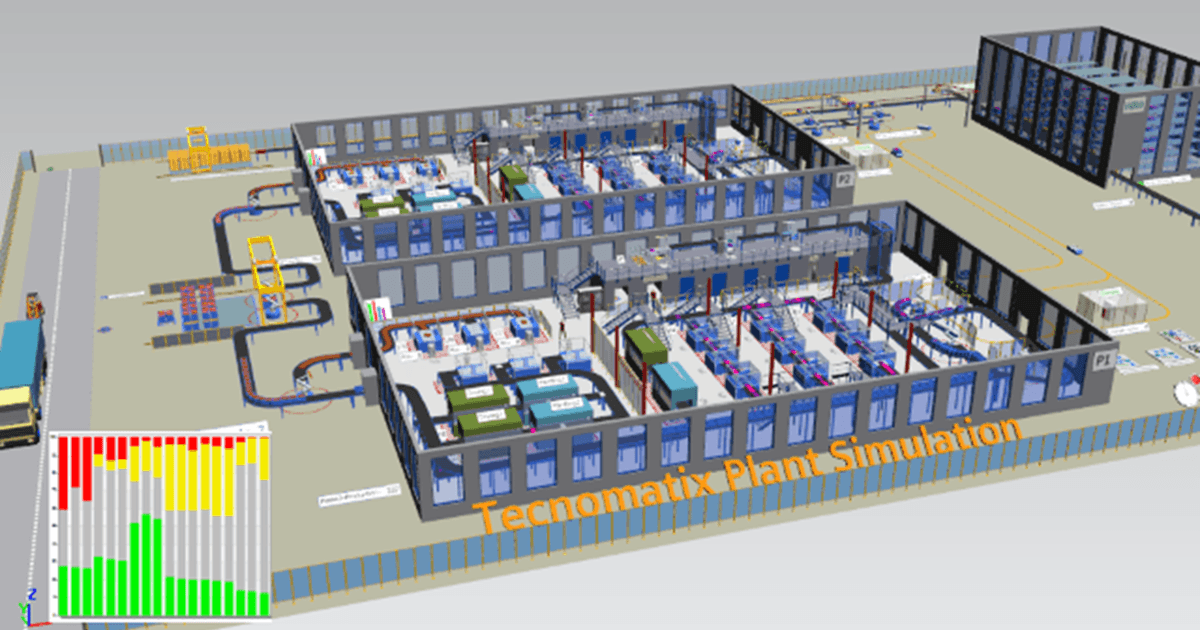
Best BIM Software 2026: The Independent Buyer's Guide for AEC and Owner Organizations
Jun 21, 2026 · 25 min read

Best Operations & Asset Management Software 2026: The CIO's Independent Buyer's Guide
Jun 19, 2026 · 22 min read
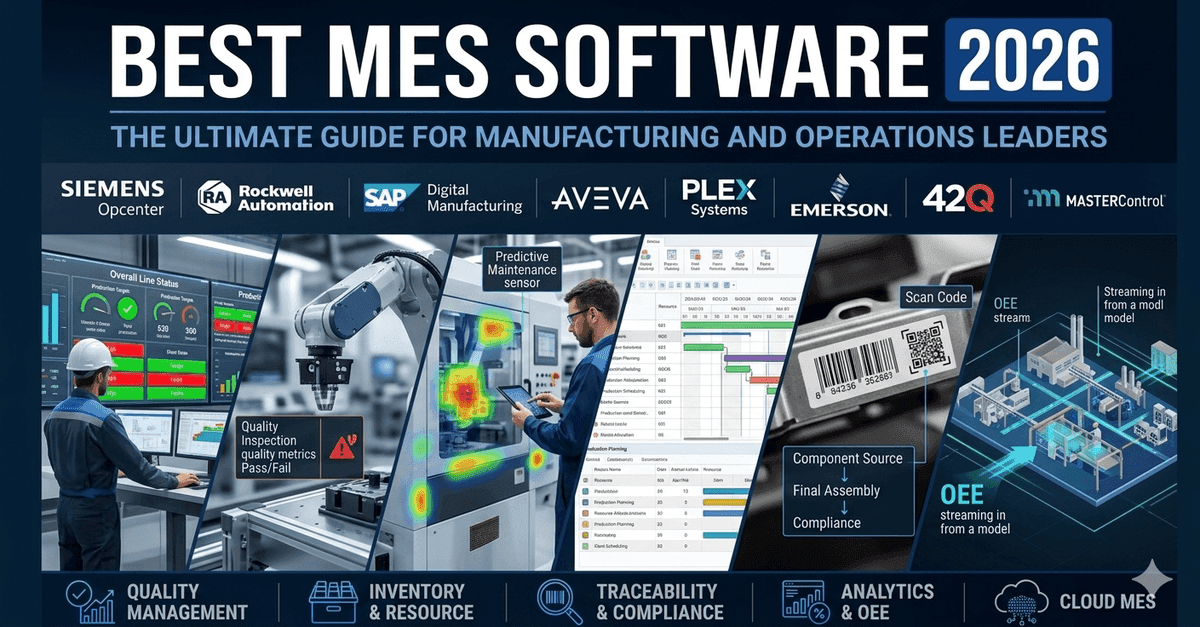
Best MES Software 2026: The Manufacturer's Independent Guide
Jun 9, 2026 · 20 min read