About the guest
Experts from PLM and AI fields discuss real-world implications of integrating AI with PLM systems.
Episode summary
AI is everywhere in enterprise software — but what happens when it hits the messy reality of PLM? Why fixing PLM data and process must come before adding AI.
Key takeaways
- →AI can accelerate information retrieval for engineers when data is well-managed
- →Regulated industries face unique challenges in implementing AI due to compliance risks
- →Fragmented data and weak governance hinder the effectiveness of AI applications
- →Good PLM practices are essential before integrating AI to avoid confusion and inefficiency
- →AI should complement, not replace, robust PLM architecture and human oversight
Topics discussed
Episode Summary
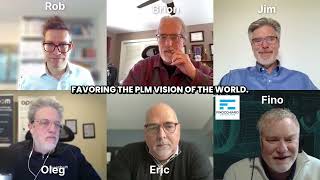
AI is everywhere in enterprise software — but what happens when it hits the messy reality of PLM? Recorded live at the Share PLM Summit in Jerez, this Future of PLM panel — moderated by Michael Finocchiaro — brings together Cristina Jimenez Pavo (Share PLM), Rob Ferrone (Product Data Plumbing), Linda Kangastie (Valmet), Susanna Mäentausta (Novartis), and Oleg Shilovitsky (OpenBOM) to cut through the hype.
The core message: bad PLM plus AI does not create transformation — it creates faster confusion. Good PLM plus AI creates leverage. The panel debates whether AI can help engineers find the right information faster, where it creates risk in regulated industries like pharma and heavy equipment, how change and configuration management workflows shift when agents enter the loop, and whether adding AI reduces or increases the need for lifecycle architecture, data governance, and human judgment.
The discussion cut through the AI hype and focused on the real questions PLM leaders need to answer:
Can AI help engineers find the right information faster? Can it improve change management, configuration management, and product data workflows? Where does AI create risk in regulated industries? What happens when companies add AI on top of fragmented data, weak governance, and unclear ownership? And does AI reduce the need for PLM architecture — or make it more important than ever?
The core message: AI is not a replacement for clean product data, lifecycle governance, traceability, architecture, or human judgment.
Bad PLM plus AI does not create transformation.
It creates faster confusion.
Good PLM plus AI creates leverage.
This panel is a practical, grounded conversation for anyone working in PLM, engineering, manufacturing, digital thread, product data, enterprise architecture, or industrial AI.
Featuring:
Cristina Jimenez Pavo — Share PLM Rob Ferrone — Product Data Plumbing Linda Kangastie — Valmet Susanna Mäentausta — Novartis Oleg Shilovitsky — OpenBOM Moderated by Michael Finocchiaro — Demystifying PLM / ThreadMoat
#PLM #AI #DigitalThread #ProductLifecycleManagement #EngineeringSoftware #Manufacturing #IndustrialAI #DataGovernance #ChangeManagement #SharePLM #OpenBOM #Valmet #Novartis
Full Transcript
SpeakerThank you, Maria. How's everybody doing? Have a good lunch. Uh, let's start with a little bit of audience participation. It's after lunch. Got to get the circulation going. How many people use an AI tool more than once a day? Whoa. Wow. Because I there's no point in asking the other two. Okay. Um, Gardner just released a survey about uh five six days ago, the uh one the first quarter 26 labor survey about 14,000 people um and it's called the enablement illusion which is giving a bit of a cheat sheet on on some of the numbers. But how many people think that of the employees these 14,000 employees surveyed uh that they say they they they said that they saved zero time in their day. How many think it's less than 10 more than 10? Uh, sorry, less than 10%. That saves zero time. That's a little too skeptical. Okay. How How about less than 20%. How about less than 30%. Okay. The actual number was 19%. So 19% of those 14,000 save zero time despite using AI. Um then they surveyed the executives and the executives h were saying uh how much how many of them have an uh co comprehensive AI strategy. So do you guys how many people think there's 30% or more executives have a comprehensive AI strategy? 20% or more. It's actually 27%. So 27% of executives have a comprehensive strategy. bit worse. Um, how many of those executives think that their employees are ready to use AI in the workplace? More than 10%. More than 20. It's actually exactly 20%. So that's why we're doing this panel. We were obviously we're not really ready. We're a bit bit out there. So I'm uh very pleased to uh to present my panel. Um I have Christina and I have Rob and I have Linda and Susanna and Martin and Oleg. Although you guys switched places, didn't you? Uh, okay. I tried to do boy girl, boy girl, and they didn't.
SpeakerWe did it yesterday. It was the same. We do not change.
SpeakerSo, I'm going to start by asking uh my friend Christina. So, Christina, share PLM works directly with PLM adoption. Um, and of course, you guys have the Nest, which we got to enjoy last night. Thank you very much. Um, communication learning. In the AI era, what do Pelm professionals need to relearn first?
SpeakerSo what I would say is like well you all raise your hand when or most of you raise your hand when you're saying that you are working with AI tools on a daily basis. Um I think something that uh we we get many times is confusing answers. We think like they sound super convincing but they are not true most of the time. So we still have to train that uh AI and I think something that we have to relearn first is uh to have that judgment and that critical thinking to you know identify whether that is a a right or wrong answer whatever you want to use it for making decisions.
SpeakerExcellent answer that that kind of corresponds to what the startup founders are telling me when I'm asking that question. They're saying uh fundamentals fundamentals fundamentals critical thinking. Um Rob, so you've um been more of a a consultant, a PLM consultant um and you've seen lots of programs from implementation to consulting and we saw some interesting examples for example from uh Andreas today which was a really great presentation. Thanks by the way to all the presenters so far. Fantastic job. Um so what does AI actually change in the execution of PLM and what doesn't change at all?
SpeakerUm I think there's three types of change. um that we can think about the the first type of change is the day-to-day operations. So um what I'm talking about is for example um you have high collaboration at the moment and information gathering and people sending information back and forth etc. And um I think the way that that is going to change um is that you'll start to see AI taking on some of that workload um you know gathering information and giving the information to people to make decisions. So the actual um exercise of for example if you make a change finding out what the implications are of the change that is still required so that stays the same but just the way it's executed is going to change. Um the other type of change is um business model change. So I don't know if companies realize just how impacted they're going to be with the potential for um the way that their business model is going to be affected. Um and that has a knock-on implication then to their PLM architecture. So the PLM architecture has to become a lot more fluid, a lot more flexible. It has to be adaptable so that it can adapt to the um the business model requirements. So that's changed and what doesn't change about that is the fundamentals around um you know the importance of product information flow breaking down silos um and all of the you know the core topics that um are the universal language of PLM and and finally the other change is um really the the mindset change that we're all going to have to go through because I think um you know we're very um at a very low level of um AI understanding ourselves Um, and so we're going to have to go through a huge mental leap as as we experience it. Um, and as we learn more. Um, and um, so that's a big change. And at the same time, I think, um, we should not lose sight of the the the core things that make us humans. That shouldn't change. And also some of the the basics around, you know, how you um, operate as a business and the importance of things like communication.
SpeakerThank you, Rob, Linda. uh from the manufacturing industrial side because you're coming from industry. Uh where do you see AI becoming the most useful? Is it going to be useful first in engineering, manufacturing, sourcing, service, handoffs?
SpeakerUm yeah, good question. Uh I think that the hands of hands in in the hands of uh through the life cycle. So for example from engineering to manufacturing side. So what changes we have done uh how it is impacting to the manufacturing uh who needs to act for example. But I think that the the bigger benefits of AI how I see it is that once we have the digital thread in place. So starting from product management, engineering, manufacturing, uh services, install base to the customer customer side is that we could basically see that uh what issues the customers are having and uh in which products in which like model variants we are having those issues. So we can basically track those issues back to the product management and engineering not just like a separate tickets but really like uh um patterns I would say. So I think that there we have really benefits coming through. So the continuous improvement loop
Speakeruh in a way continuous improvement but for example if if services are going to customer site and they are facing customers facing some kind of issue we can basically then track that uh what kind of issue it is uh uh is it coming because of some uh engineering decision or already with some like variance or configuration from our product so we can send that information back to to where it was firstly defined and then we can act on it.
SpeakerThank you for that answer. Um Susanna so from a enterprise and you're coming from the pharmaceutical industry which is well known to be very regulated but you've also told us how everything's regulated in some way or another. Um what changes when AI enters the the work of product life cycle? Where does it help and where does it become too risky in terms of regulatory compliance?
SpeakerI think there's similarities what Rob already mentioned that there's this opportunity to better gather information across complex big organization to get ideas get prompts of what could be done better. So if we think of product changes understanding the opportunities what could we do with our portfolio I think that's where we can get a lot more ideas easy and and that's in in a huge organization a big benefit because you always have deep silos between functions but when it comes to the regulations I think there's a fine line of managing the hype of applying AI everywhere that when we come to that core product defining information. We need to really frame that into where's the authorative source of that information because it may be in multiple places in in your um data architecture but you need to really have a definition where is that true source of truth that your AI engines don't pick it up from multiple places and and treat them equally. So I think that's where at least in our organization we need to balance that some of the basics of who's owning the data, who's defining the data and what what's the evidence that needs to stay somehow much more controlled and and not to get into the same same co-pilot um day-to-day application.
SpeakerAll right. So clean separation of actionable data and that's really good. It also reminded me a little bit of uh Javius presentation about Kerry, right? Because the food industry also has a lot of that traceability stuff. Um Martin, you're of course one of the grandfathers or the grandfather of PLM. Um from an architecture and systems engineering perspective. Uh does AI reduce the need for a clean PLM architecture or does it make the architecture even pime more primordial than before? By the way, I would like to mention I'm not Waldo from the Muppet Show, but grandfather is okay. Yeah. First, we have Thanks for the presentation in the morning. I really like it because PLM is a little bit ambivalent for me. What we get delivered from the solution providers is PDM. PLM in the original semantical meaning means product excuse me product life cycle management along the product life cycle. So it's much more and we have seen in the presentation uh it's get more it is marked up. So what our mandate when we when we use this PLM philosophy, our mandate is to orchestrate complex highly complex interdicciplinary products and connected systems along the product life cycle and this should be supported by AI as well for design support and I'm coming more from the administration process even for the admin processes. So that is my first statement. The next is what could be the solution. We have seen in the morning and that's my recommendation too and others. We are not we are not able to change the fragmented isolated legacy system structure right now. So what can we do? We can extract the data from the legacy system and build up what I call an umbrella a semantic umbrella on top of the leg system. We call it digital threat. That is step one. Step one, we think about step two. Uh we added reasoning that we call product memory. But let's stay with the digital thread. So the digital threat is for me the representation from our original discussion what we have end of the '9s. What is PLM as a philosophy? So now you ask regarding the architecture. First comment AI is not substituting an architecture. It's a consumer of architecture and so I feel we have two gaps in architecture. The one is a context gap when we deliver or extract data from ALM PLM requirement management ERP whatever then we have a context PLM a context ALM and context ERP and it's for the first it's standalone so we have to bring this partial context together I push my customer to use a common part number and or to map the part numbers between so it's very easy to app when we bring together ALM CAD MCAT E-CAT software PLM or PDM and MRP we can deliver 80% of the so-called configuration items configuration items ISO 10,0007 is very important because it's all the related information objects related to change management quality management release management so then we can cover a big amount but we have to build up the context An agent is an agent and is not able to work without context. He's not able to produce relable validate planning and execution and the technology gap uh it's there because what we need is open interface. SP has restricted the interface two weeks ago. Open interface we have a code for PLM openness in Germany from the post organization. We need open uh protocols like MCP very important. We need something like graph databases. I think a digital thread is a lot of recursive operations not able to handle on a relational database. We need graph database and very important is often forgotten. We need the protection of the intellectual property and we need an overarching access mechanism because all the different system has separate access mechanism. We have to bring something on top which brings everything together.
SpeakerBoy, I think the uh PLM Santa Claus is going to be really busy with that Christmas list there.
SpeakerYeah, I think we the digital threat to show a nice example is like parade to 20% 80% ever. The rest is 80% to guarantee the data access and the intellectual property. Yeah, that's
SpeakerThank you. Martin Oleg, you've uh written and you write prolifically about uh PLM's limits and closed systems, rigid data models, difficult difficult integrations. Does uh AI make PLM uh more important or does it expose how much PLM needs to change?
SpeakerWell, I I think again let's just reframe a little bit. I I have a good good news and bad news. So first is just a new technology. So we can consider that technology will not be used and then everything stay the same. It make it more difficult, make it easier. I think what is the most important part in what it what it will change is that it change the way we work and it change the workflows because the some workflows that were logical in the previous before AI might not be relevant and I think Martin and Rob and everyone else were speaking about this. works differently and because it works differently it will it will change the architecture. It will change how we use it and I think from the from from the absolute majority of people that raised their hands and said we use AI today I think the confirmation that people will use it and will figure out how to use it and will force systems and architecture to change. I think it's it's quite be will be a little bit similar to cloud you remember and we ask are you going to use cloud no it's impossible but then everyone put files on Dropbox remember right so it's the same as here like it will change everything it will change architecture
Speakerand I suppose they can come to your workshop tomorrow to to learn more um so now I wanted to go into uh what I call triangle discussion so I'm going to start with the triangle over there the three people in the corner and we're going to talk about how work actually changes is thanks to AI and then we'll talk about workflow after that. So I'll start with a question to Linda. I'll take you for the first one. Uh where does AI help most in daily industrial work finding information connecting it to manufacturing quality? You were already talking about the interfaces and about the context but where does the work actually change the work of the engineer actually change things AI? Um I would like to scope it widely wider than just engineering.
SpeakerSure.
SpeakerSo so basically the whole whole business um I see that uh currently we are struggling on finding the data. We have a lot of data. We have documentation. Uh but those are really like uh all over uh spread it over all over. Uh so I think that um of course we need to change something on on our way of working but I think that uh what AI can do is to find the correct information and basically make it available and then with the available data we can do correct decisions. much quick like much quicker than we do now.
SpeakerOkay, that's fair. Um Rob, does AI reduce the need for consultants or does it increase the demand for people who understand process data and politics?
SpeakerIt what it does is it changes the demand. So it doesn't so it changes it in the way that what you're going to get from the consultant is different. So you've got people like Nina, for example, where it's not going to change the content of her work at all. she's just going to get more busy fixing um implementation disasters. But um you have other big consultancy companies where you have a lot of um effort that was previously put into you know pulling together presentations, summaries um you know performing interviews and um for example um I'm working on some tech which is going to um you know replace the work of 50 consultants in terms of contacting and reaching out to employees and that's going to happen for you know the cost of less than half a consultant. So that the the type of work is going to change. Um and also you've got you go and talk to you know KK wind solutions for example and they've already done their homework in in the past you know 10 years ago if you went and talked to them they they wouldn't be informed about PLM but you know because of the tools that are available they they already have a good level of understanding before you even come in and speak to them. So um it really does change the value proposition from consultancy companies. So consultancy companies are going to, you know, I talked to someone yesterday that says that they're expecting to lose um 40% of their time and material billing that they they had in the past, but at the same time they they will be growing more than 40% um in activities around um you know AI strategy, consulting and implementation. So it's it's going to be give and take but it's it's going to fundamentally change the type of activity and the value proposition from the consulting company. Thank you, Rob. Uh Christine, this is sort of similar to the first question I asked you, but still u because that's really the core uh of shared PLM. What new skills matter the most? Is it prompting? Like how I prompt the the the LM? Is it data literacy? Is it process thinking? Um is it verification or is it really change leadership? What's the most critical piece?
SpeakerIt's confusing, right? There are many things going on around AI. And I would say the first thing is uh going back to the fundamentals as Rob was mentioning in the beginning. So you need to have a clear understanding of the big picture and and the business as such. I would say a second point is to check the AI inputs to make sure they are right or not right because you're going to make uh decisions based on that. And the third one and that's where we also shine as well at sharplm is how to help people adopt the AI right. So, uh, for the the like prompting, I think it's I wouldn't say it's, um, how do you say over
Speakeroverhyped?
SpeakerNo, like you think it's too too too complex. And actually, it's a technique. You just need to learn how to do it. But you really need to understand the business. And for example, when an engineer goes and tries to find the the data, as Linda was saying as well, that's going to be faster. But, uh, he's not only finding the data, he needs to make sure that information is correct. and he needs to understand what is the impact of that data or the change of data in manufacturing or any downstream uh processes right so yeah that that for me it's a very important thing and the the third uh thing that I was mentioning the adopting AI in the company it's we we need to show people uh where they can use AI and where it doesn't make sense to use AI or to be careful there are things like you were saying Rob uh summaries or presentations where you don't need to have that high judgment but maybe there are other things that have a big impacts in in what you are delivering to customers or wherever and there you need to be very careful. So yeah like uh all in all I think yeah that's it's important to to set some rules to educate the people uh otherwise it's going to be messy. It's just another tool another technology but uh no one is adopting it or everyone is using it in their own way which is even worse. Thank you, Christina. For triangle number two, so it'll be the this group here. We'll talk about workflow and how processes are changing um by AI. So, Oleg, since I ended with you, I'll start with you this time. Do AI agents push us away from rigid workflow autom automation towards flex more flexible intent driven uh processes across systems? Well, I think I think what happens is that uh agents or whatever we call them now, I think they will be used differently and as a result of this, the entire workflow is going to change and again if you think about this like everyone raised their hands and said that we use AI in certain way. So no one took the formal education and change but we applied a new skill and we try and we see how it can change the workflow like for example we have we have customer who said every part I use I go to perplexity and I change it now did it change the workflow or yeah so and if tomorrow will be agent that will be checking particular data in the context of the operation will it change the workflow yes so I think The entire scope of work will be different and uh someone will be checking grammar, someone will be checking validation of data, someone will be checking their decision and uh someone will be asking what they missed in this decision. So it will change the framework and because it will change the framework, it will obviously change the way they use everything.
SpeakerYeah. And I think we'll need a mymenities agents to to say I don't believe what you're saying too.
SpeakerOh, that's fine. You can say you don't believe it. Say you are right.
SpeakerExactly. Um Martin, so from a systems and pm architecture perspective, what processes are likely to be redesigned first? Requirements management, change management, configuration management, um validation or engineering release like what processes will be impacted first?
SpeakerYeah, I was responsible when I when I start my career in BAS, I was responsible for worldwide change management. So I can tell you I have had a hard childhood and therefore I am always driven by I think the anaged change management process for me the benchmark is like the north wall that is something you know they the Americans didn't know what is agnar it's called but the Swiss are not able to spell it anyway so the I would like to say it's a it's a change management process release and change, FMA, impact analyzer, all this stupid admin process because there we have a lot of stupid repetitive work. For example, has somebody raise your hand. Has somebody was involved to find the real affected item in an real interdisciplinary highly complex product. That's hard job. We did all the changes three times. Somebody out called Martin, we can't do it. the machine is not able that because we have had no internet we made it via vex and phone. So I think this process to find first to find the potential affected items that is done by the digital threat and then I use AI and we have the first project we trained the artificial intelligence large language model what are the reasons to select out of the potential affected items the real affected items and this will be automatically transferred in the change in the engine change request. I think the the highest return of invest I think will be when we look into large language model they are better suited to help in admin processes than in real design process that's my real opinion
Speakerthanks Martin uh and then to Susanna um in an enterprise environment uh how do you change workflows safely when AI introduces recommendations summaries or decisions that people still have to verify
SpeakerI think this is again giving a lot of opportunities that lots of regulated like pharma product change processes have a lot of controls and controls and controls but with AI you can get recommendations that for that particular context what might not need to be done but I think the tricky part is that how do you educate people to really then assess when that recommendation is actually not correct and I think that is is the biggest challenge that there's a lot of opportunity to lean in the process with recommending based on the context whether some of the activities are not maybe relevant but if you have at the same time a changing workforce that you don't have people staying in their roles for a long long time then how do you educate those people and how do you create those guard rails that guide the people to think when is that recommendation not correct so I think it will take at least a while to also get that confidence that where do we even want to recommend skipping steps or or or removing process steps that may be redundant but there's no clear kind of parameter that tells you that but you still need that human in in the process because it's very very human to think that if I get a recommendation I don't immediately something obvious then I just go and and I think that's the fine fine balance that that we're hitting
Speakerbecause we always choose the easiest path regardless, right? Whether it's the right one or not. Um, so let's change subject again now. Let's talk about architecture adoption and industrial reality. Um, Linda, from the industrial side, what's block scaling first? Integration, data ownership, governance or people?
SpeakerNo cheating from sharpl. Chris told me to say that the people
SpeakerYeah.
SpeakerWell, well, that's the that's the one thing. But uh I would at this point I would like to highlight the uh data ownership data governance meaning that uh basically we cannot utilize the AI if we don't have the data correctly in place and uh without if like if we don't have the clear ownership for certain data we cannot make sure that it's it's updated and the governance uh in a way that we need to specify what kind of like a playground the AI is having. So without going like uh out of that playground or sandbox whatever it is. So that the AI AI know knows the rules and the people also know knows the rules what the AI will use when like uh reading the data and giving it like his its uh inputs or information to the user.
SpeakerThanks Linda Oleg. Is the winning model a smarter PLM platform like Oberenbomb or is it an AI layer across multiple systems?
SpeakerI I think it's none of none of those mentioned. I think I think the point is that and uh is that we work differently with this new technology and the way we change the work will impact uh what will be the result. So for example, if the task if the agent or any task that we associate and call it today AI can be uh produced with the data that we have and the format that we have then it's will become a good result because what I I think there is a huge generalization about how it works but fundamentally if you will go on the very basic level we say if you can tokenize the problem then you can produce result better with the AI technology why software became so successful because it was very easy to tokenize and find patterns. So if we will be able like any task you take any any problem you want to solve if you will be able to tokenize data that you need and bring all this data for the uh for the prompt product for the context you will be able to get good results. If you will not be able to bring this data, it doesn't matter if it's a new system, old system, old architecture, new architecture. It's just this this fundamental task is different and the this probabilistic uh algorithm is different and it requires data to be tokenized. So if you go down to the definition of the problem, we will get results. If we will not, we get what we what what we call hallucination or whatever else.
SpeakerThank you Alec. Um, Martin, are companies trying to scale AI before they've agreed to who owns the product data or the process decisions?
SpeakerI think decisions and yes, what I mentioned before I can make decision when I do an effect analyzis. I think in design what I watched in the in the design support it was people were lucky when they can handle the cat system or cameo via MCP with with natural language approach that is not in in the way in in the decision. So I think in admin we can expect decision support and but the main advantage is the quality and the speed that is I think the main approach right now. Thank you. Um Susanna, in a regulated environment, what must be visible before AI output becomes usable?
SpeakerI think this comes back to the framing that what are we deciding upon? So are we looking at managing and maintaining product descriptive information that's fundamentally used across the company to describe the product? Then we really need to be clear what are the sources and really framing use of AI with more of a framed trained frameworks and agents for that specific use case and not to mix it up with these generic tools that we use in every day. um because you can't compare with the se same validity and same authority different sources if if you compare apples and bananas and oranges um in in a summary of copilot it gives you a wrong flavor. So for those critical product information decisions, I think that's where we need to be really really framed. What is the frame where the AI operates? What are the ground rules? And and then you really need to have that skill set to maintain that when some of the rules change. And I think in the regulated industry, what the path that we've also taken is we try to tie as much as possible to these emerging regulatory frameworks of how do you describe medicinal products? There's emerging ISO standard that's not fully applied yet but we try to keep those very close to what we do because we know that the evolution will be centered around those standards um in in that way. So developing anything would need to be framed into the context where the industry is moving.
SpeakerThank you. Very insightful. Um Rob, in real PLM programs, uh where would you allow AI to act first and where would you absolutely keep a human uh in the loop?
SpeakerYeah, I think the obvious answer here is where the the operational risk is low but the um coordination burden is high. Um but someone had a good analogy the other day where they they said um AI when you certainly when you first implement it is like having an intern, enthusiastic intern. So the question is really imagine that someone dropped you know 20 interns at your desk and said right here you go how you going to use them you know what are the operating uh procedures the the governance the controls etc that you're going to put put in place in order to get the best value from those interns and and just apply that logic to AI.
SpeakerAwesome. Uh and then to uh Christina how do you train people to verify AI outputs without slowing everything back down again? I don't want to repeat the same answers because I'm pretty aligned with what Rob and Susana were saying now and it is about framing and create those uh you know um like the direction to the people to to decide whether this is a high-risk scenario and then I need to have more involvement from people or uh whether I you know it's something like a summary he was mentioning earlier and it's not so risky right so it doesn't mind you you can trust basically so I think that's that's the thing like can I trust this and yeah.
SpeakerOkay, we're going to do one last uh I'll ask the same question to each of you so everybody gets a last chance to answer and that way we'll leave time for two or three questions from the audience. Um the question is in one sentence uh what should every PLM leader do in the next 90 days in order to prepare their organization to working in the era of AI to get from the 20% to 60%. Right? So what's the one thing that the leaders in this room can do to prepare their workforce for uh the working in the era of AI?
SpeakerI don't know if preparing the work the workforce since the very beginning but at least they can already start actioning or identifying some workflows. Uh they can use AI see how AI could operate with human and also identify what is the impact of that way new way of working in the in the in the human aspect in the people. That sounds like a pitch for the nest to me, but we'll just do Rob.
SpeakerUm, so the prerequisite for highly functioning AI is highly functioning PLM. Um, and so, you know, it's it's taken Andreas four years to get there. Um, and that's a very capable person and a very capable company. So, I think we've got some time. Nothing's going to happen in the next 90 days. Um, but ultimately, yeah, create create the PLM, right? And that's that's the best thing you can do to you know leverage AI in the future.
SpeakerLinda,
SpeakerI did that almost you got my my point but um before adding any AI capability on top of or next to BLM uh please make sure that everyone or specify that what is needed to be in place before that.
SpeakerOkay, that's fair. Susanna,
Speakeryou kind of took half of my answer, so I'm going to change my answer. But I I think for every leader, what I would do is create the practice in your teams that they learn to root into their day-to-day asking five times why, five wise, because it's super important that no matter what AI tools and and uh um help we get that people don't switch off their brain. And I think that asking why, why, why, why, and why and start over. That will be my five cents.
SpeakerYeah. It feels like we're giving up our autonomy every time you say, "Can I do that for you?" And you say, "Yes." A little more of your brain fells out. Martin,
Speakerit's hard to be at the end of the row. Everything is said, but I would like to add clear clean your data, build up a context if possible and prepare your employees to be ready for AI and communicate about AI. That's my recommendation.
SpeakerOkay. All right. So what what I think is that everyone who is trying to do something with AI need to go through this simple exercise like if you think about tasks that you want to perform uh you define them and then you identify data that is needed to perform this task. Now if you can map those things together then it will give you a great opportunity to do it with AI because first you will be your task clearly defined which is an opportunity to explain to AI whatever that full full goal what you want to do. Uh and then what data is needed in order to perform it. So if you perform this exercise no matter what what where you go and what what goals I mean this exercise in organization extremely extremely useful and uh again just connect those things together with your team and then this is absolutely first thing to do.
SpeakerAwesome. Um I left a good four minutes for questions. So do we have the mic? Maria has the mic. There's a hand in the back and there's one over over there. So there's one just behind you and then there's one over here. A third one here. So we got three. Do I have four? Four going five. Five five six six. I see.
SpeakerHello. So my question is there are many cases uh from business use cases where you have two options. First option will be that you have AI in your PLN system but maybe that doesn't have any good interface yet or the MCP interface is not prepared. And the second case is that um um the data so you have two options once you put the AI there and the second option is that you bring the data outside your PLM. So what would you recommend and why?
SpeakerMartin go ahead
Speakeronce once again if you add AI on top of PLM PLM systems what they deliver for me it's a decoration of a silo with AI. So my recommendation is at the end you should extract the data on the very thin level with rest they are connected with the legacy system is only the well address the item number the names version or something like that but anyway to bring together PLM once again life cycle along from end to end you are not able with one that's a stupid discussion with single source of truth I almost laughing when somebody tell me yes he has a even the pope has a sorry it's a Latin in Catholic land. But uh even the pope I do not believe has a single source of truth. So we have combined different legacy systems.
SpeakerAnybody else want to pick that one before?
SpeakerNo. Okay. Another question.
SpeakerThank you.
SpeakerIs somebody in the back? Right there. Oh, no. Over there. He was next. He had his hand up first. So this is uh kind of a question followup for for for Martin about um how important the context is the information that the AI needs to be to be effective and uh you said it's important to have your your data cleaned up and and in the right shape. It is extremely cheap now to generate tons of of data right with AI. And what we have found is um once a document has been generated by AI and it might have 20 30 50 or 100 pages that actually humans um are reluctant to doubt that the AI has generated something meaningful or that there's you know a task on them actually to clean this data up. Um same happens with generated uh designs in CAT and once they have been generated the technical term probably slop there's so much information that can just poison the context and what are the the strategies the the mechanisms that you have found that are effective to limit this amount of slop being generated.
SpeakerIt was directed to Martin but somebody else can answer if they feel
Speakeranybody else respond. Like I I I think first of all the context versus generated context I think those are two different things. So I think when we speak about context and I will probably speak a little bit for Martin but correct me when we speak about context it means that for the particular task that we want to perform we want to collect all rel all all information that you need in order to perform it. So if this is all documents you need to collect all documents. If this is extraction of particular data sources, so you need to bring this context because if you will not give this context to the prompt, the brain which is another name for AI will not be able to execute because it cannot imagine anything besides what you give it as a as a context. That's why when you use all the systems they recommend create your profile, upload your specific data, define all this configure, you can do it in JPT, you can do it in cloud and other systems. So why they asking this? Because then you don't need to repeat it all the time because it like define your style, define your rules. So this is about um context. So combining all these context is nothing autogenerated again from my perspective. Now if there is a generated generated documents or generated information by AI, how to reduce the sloppiness is just to be more specific about what you want AI to deliver. This is this is the from my practice what I've seen the more specific you are what you want to get as an output for example there is a practice of structured queries JSON based queries so you can do all this stuff but if you're very specific for example you can you can create a prompt that will re retrieve a digit a single number of cost of depart from the cat catalogs online but you need to be very specific in this query so if this query will be specifically say return me one number cost of the resistor the AI will return you cost of the resistor and if you will tell give me the best cost it will return you bunch of things that you do not expect so it's applies to many scenarios
Speakerthanks about guard rails um
Speakerby the way if it's if it's if the output is slop then stop it or do something different
Speakeranother question here was there another one over here too
SpeakerI think uh yeah he had his hand up first and then uh the lady in in the middle and then we'll be done.
SpeakerHi, I'm Michael. I have a humanentric centric question.
SpeakerUm, how do you tackle the challenge of what they call skill erosion when you have a junior engine the the AI is taken over the junior engineers tasks? How do you become a senior experienced senior engineer?
SpeakerSo I think it's tasks that are going to be replaced rather than activities like for example engineering um I can't imagine that the high value activities are going to be replaced. So I think there'll be low value tasks that are going to be replaced and then the question is if those low value tasks are not there anymore then what are the the higher value tasks that new starters are going to have to pick up and and um and when you have um activities that are more validation based rather than administration based then you know how how are the universities etc going to be providing the skills to those people so that they can have jobs when they come out of university but I do think it's one of the biggest challenges associated with AI for sure.
SpeakerLast question here.
SpeakerYeah, Mike, can I can I just comment on that one? I just want to compliment on that. I think that's really the dilemma for the workforce that that the junior roles will look different, but then how will the junior roles be still equipped to get exposed to what is then needed to scale them up to take more of those more complicated, more vicid validation or or decision points. I think that's where everyone is looking for an answer. So if you have one, I think share it with everyone else.
SpeakerCan can I challenge this junior statement? I may. So I think that it's very kind of I'm hearing a lot about juniors but I think don't call like if you imagine a AI as a person don't call a person that read that read entire internet junior. So I mean this is a mistake taking the assumption. So that's why I think first of all it's not a junior person because it's already read everything that no junior person can do on the other thing is the task that matters and this is where I agree with Rob. So the task might be replaced but the people will not be replaced. So it's just a different different perspective how you think about this.
SpeakerGo ahead please the question.
SpeakerI can't hear yours. Thank you for a great discussion and uh Mike from Techna uh um when we talk about AI it's always usually about efficiency but um does it bring also a real competitive advantage to a company so yeah does it bring competitive advantage to a company
SpeakerI can speak from a pharma industry perspective I think there's a great opportunity to use these technologies to discover new ideas because in in a complex human body system with looking for new medicinal products, new substances. I think that provides a great opportunity to narrow down the variety of different opportunities of interactions, patterns, etc. But it still will not be like solving everything. I think it still requires that curiosity and and ability to imagine for the scientist to bring that together. But I think in that sense there's a huge opportunity. think we need to be selective where that really truly helps to go beyond what kind of the regular without AI u equipped systems what the science can can do
SpeakerI can take
Speakeron the on compet the question was about competitiveness so it's about three things cost result and speed so if you can redefine this formula using AI then you will be competitive so chpt redefined some of these parameters and that's why everyone started to use it. Yes, that's if you can redefine these parameters then you will be competitive.
SpeakerThank you everybody. It's fantastic. Thank you for the questions. Thank you for the panel. Little round of applause.