MES (Manufacturing Execution Systems)
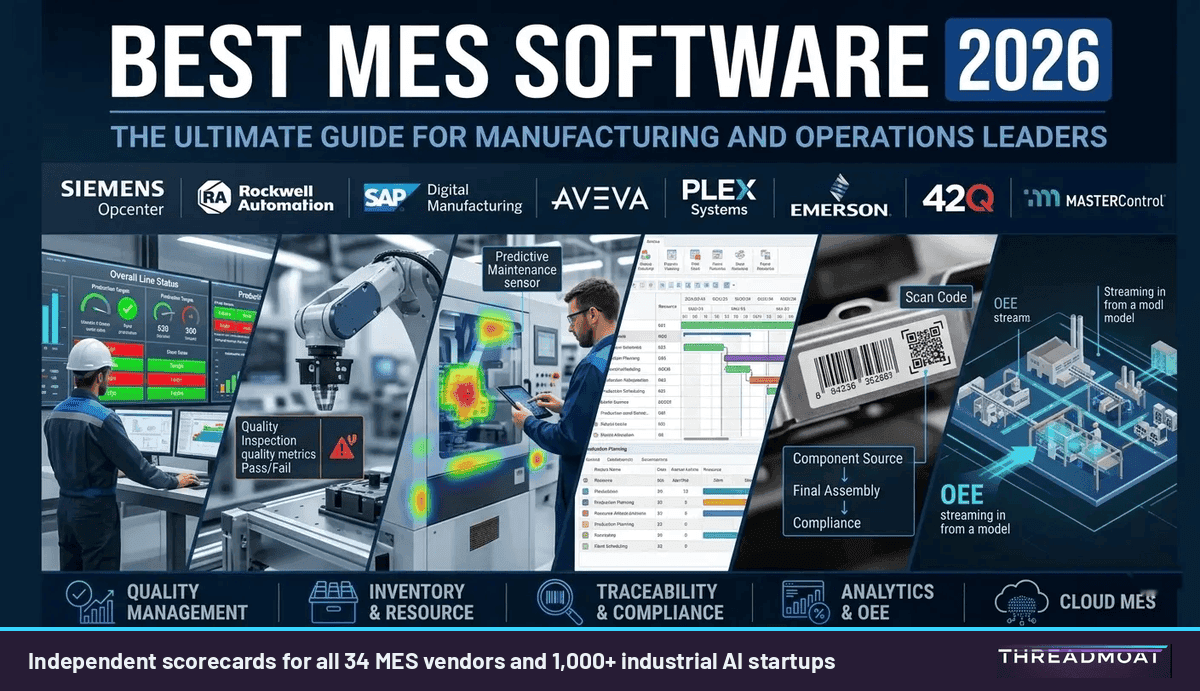
Manufacturing Execution Systems (MES) sit at ISA-95 Level 3, bridging ERP planning (Level 4) and shop-floor controls (Levels 0-2). The established vendors — Siemens Opcenter, Dassault Apriso, AVEVA MES — are being challenged by cloud-native platforms like Tulip, Rhize, and Velotic. The MINT Stack (MES + IIoT + Network + Tools) is the emerging reference architecture for AI-enabled manufacturing.
The MES market is in transition. Incumbent platforms built for complex, multi-site discrete manufacturing carry decades of accumulated functionality for work order management, quality control, material tracking, and operator guidance — but that depth comes with implementation complexity and long deployment timelines. Cloud-native challengers are taking share in greenfield deployments and targeted modernization programs where speed and composability matter more than comprehensive out-of-the-box capability. The architectural question is increasingly whether MES should be a monolithic platform or an orchestration layer over specialized tools.
The PLM-MES integration gap remains one of the most consequential unsealed seams in the industrial software stack. PLM manages the engineering BOM and design change process; MES executes against the manufacturing BOM and process routes. When these systems are poorly integrated, the digital thread breaks at the factory gate. AI-enabled manufacturing — predictive quality, dynamic scheduling, adaptive process control — depends on closing that gap, which is why PLM vendors and MES vendors are both investing heavily in the connectors and data models that make bidirectional synchronization possible.
Related Articles
Last Updated: 2026-06-02 | Category: Insights