Key Takeaways
- Definition of digital maturity explained
- Benefits of achieving higher digital maturity levels
- Impact of digital transformation on business operations
- Strategies for improving digital capabilities outlined
- Case studies demonstrating successful implementation
Short Answer
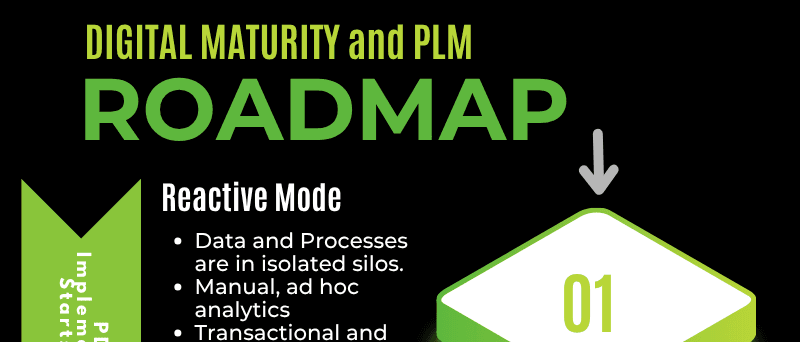
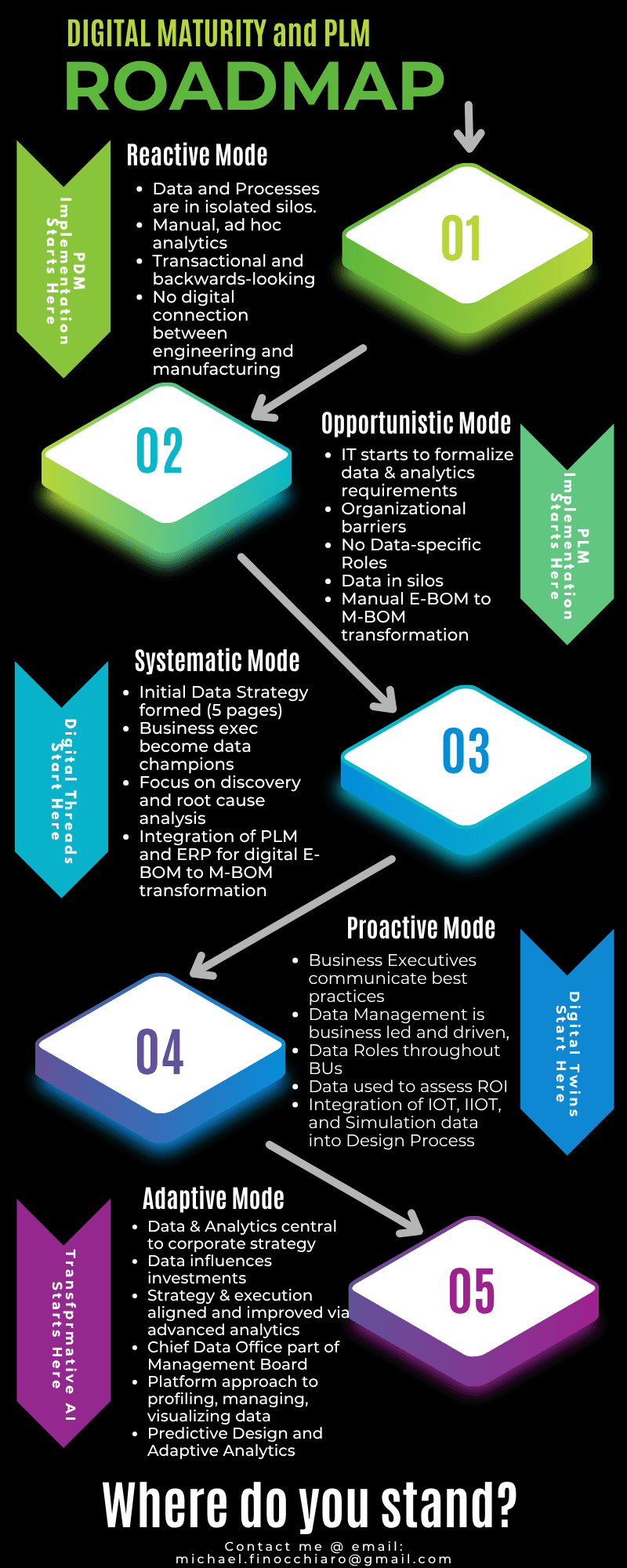
Digital maturity refers to an organization's level of digital transformation and its ability to leverage technology for better business outcomes. It involves the adoption of digital tools, processes, and culture across various departments.
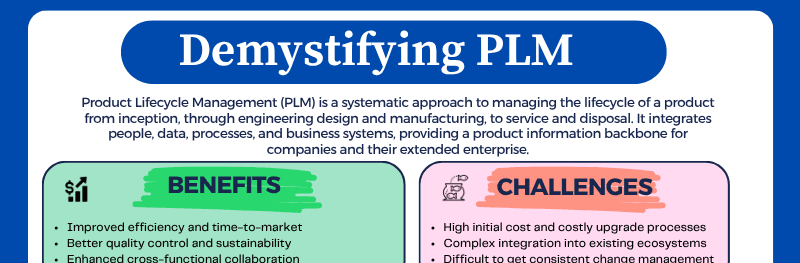
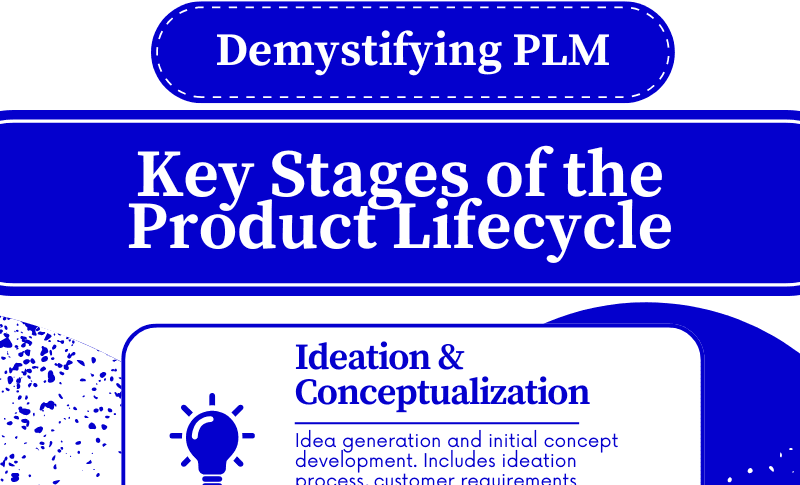
- Involves integration of digital technologies in product lifecycle management
- Enhances collaboration and data sharing among teams
- Improves decision-making through real-time analytics
- Facilitates innovation by enabling faster product development cycles
Why it matters: For PLM practitioners, achieving higher levels of digital maturity can significantly enhance operational efficiency and competitive edge.
Want to listen instead of read? 56 DemystifyingPLM articles are available as audio.
Browse audio →Looking up PLM terminology? Browse the canonical reference.
PLM Glossary →Cite this article
Finocchiaro, Michael. “Digital Maturity.” DemystifyingPLM, December 8, 2024, https://www.demystifyingplm.com/digital-maturity
Michael Finocchiaro (opens in a new tab)
PLM industry analyst · 35+ years at IBM, HP, PTC, Dassault Systèmes
Firsthand knowledge of the evolution from early 3D modeling kernels to today's cloud-native platforms and agentic AI — the history, strategy, and future of PLM.